Myelin Swelling Is Reversible, Science Study Finds
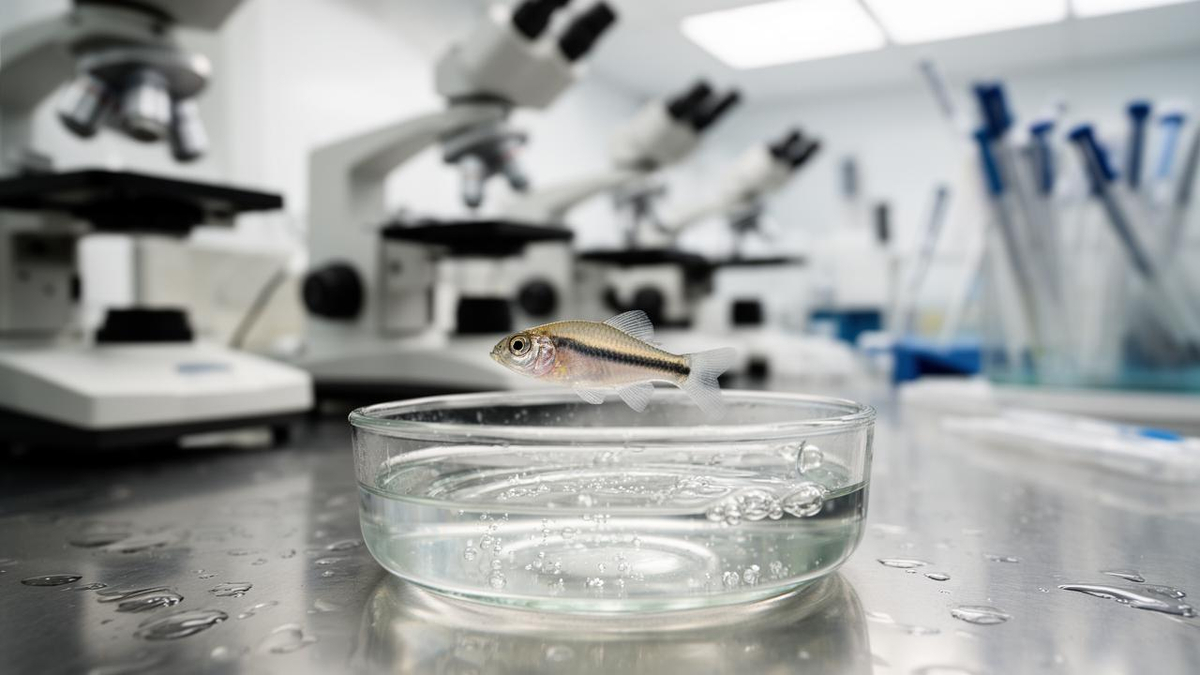
In a zebrafish model of demyelination, 59 percent of tracked oligodendrocytes survived despite targeted ablation, and many showed myelin swelling that shrank or vanished entirely, BigGo 財經 reported.
The finding, published Feb. 12 in Science by David Lyons’ laboratory, challenges the long-held view that myelin damage is irreversible, according to BigGo 財經.
“They found that this early swelling is a hallmark of early injury, and therefore it is potentially reversible,” said Vivian Morrison, a neuroscientist and co-host of the neuroscience podcast TWiN. The team ruled out rapid replacement of damaged myelin. The same sheath was remodeled in place — a metabolically cheaper path for a stressed cell. The pattern held across four systems: zebrafish treated with the NTR ablation method, zebrafish exposed to capsaicin via TRPV1 channels, mouse cortical slices treated with lysophosphatidylcholine (LPC), and post-mortem human corpus callosum tissue from three multiple sclerosis patients. In human tissue, imaged with label-free third-harmonic generation microscopy, about 30 percent of tracked swellings shrank over time; they clustered around active and chronic-active lesions but were rare in normal-appearing white matter and chronic inactive lesions. Neuronal activity worsened swelling.
Both a behavioral optomotor assay and optogenetic stimulation of glutamatergic neurons increased myelin swelling in demyelinated zebrafish, but caused no issues in intact animals. Pharmacologically forcing sodium channels open with veratridine raised oligodendrocyte death from 26 percent to 53 percent and expanded swelling severity, count, area and the fraction of affected myelin. Total swelling area measured shortly after treatment predicted which cells would die. Blocking sodium channels with MS222 cut death rates to roughly 18 percent, compared with about 55 percent in demyelinated controls.
“I just love this kind of science: we did this thing, and then we did the opposite thing, and both point to the same answer,” Morrison said. Vincent Racaniello, TWiN co-host, noted lamotrigine selectively affects rapidly firing neurons.
The authors cautioned that the causal chain from action potentials to fluid accumulation remains unproven; the distribution of swelling at nodes of Ranvier versus along internodes is unresolved; zebrafish percentages do not directly translate to mammals; and the imaging resolution needed to guide lesion-specific therapy does not yet exist in living patients.
Worth a look
- Stanford Study of 10,835 CT Scans Finds No Link Between Overall Abdominal Muscle Size and Low Back Pain
- German Comedian Dieter Nuhr Diagnosed With Hodgkin Lymphoma, Cancels Shows Until Spring 2027
- Euclid Telescope Finds Most Distant Quasar, 630 Million Years Post-Big Bang (newsy-today.com)
- LIGO-Virgo-KAGRA Hits 390 Detections, Catalog Finds New Records (time.news)