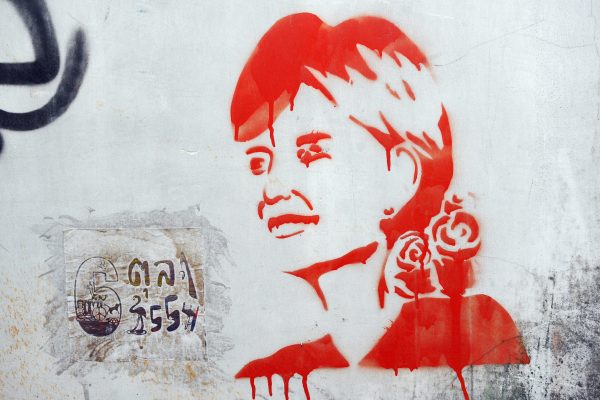
Myanmar’s Military Regime: The Illusion of Change
Aung San Suu Kyi’s transition to house arrest in Myanmar is a strategic maneuver by the military junta to signal a superficial shift toward diplomacy while maintaining absolute control. This calculated deception aims to alleviate international pressure and soften the regime’s global image without implementing genuine democratic reforms or relinquishing power.
The optics are designed to deceive. By moving a high-profile political prisoner from a cell to a residence, the military regime creates a narrative of “leniency” that they can trade on the international stage. But for those tracking the trajectory of power in Naypyidaw, this is not a gesture of goodwill. It is a tactical pivot.
The problem is that this move does nothing to address the underlying systemic violence or the collapse of the rule of law. Instead, it creates a dangerous fog of “progress” that can lull the international community into premature optimism. When the world begins to believe a transition is underway, the appetite for sanctions wanes and the pressure to hold perpetrators of human rights abuses accountable diminishes.
This is a game of perception.
The Architecture of a Calculated Pivot
To understand why house arrest is a weapon rather than a relief, one must look at the historical playbook of Myanmar’s military. For decades, the regime has used the status of political prisoners as diplomatic currency. House arrest is not freedom; it is a controlled environment where the regime can monitor every communication, restrict every visitor, and maintain psychological dominance while claiming to the UN that the prisoner is “no longer in a detention center.”

By shifting the venue of confinement, the junta attempts to decouple the image of the “prisoner” from the reality of the “captive.” This allows the military to engage in low-level diplomatic dialogues, suggesting that they are “open to a political solution” while simultaneously intensifying airstrikes in the periphery. It is a dual-track strategy: diplomatic softness in the capital and brutal repression in the borderlands.
The structural impact of this deception is felt most acutely by those attempting to navigate the legal wreckage of the country. With the judiciary functioning as an arm of the military, there is no independent mechanism to challenge these “administrative” moves. Families of the disappeared and political detainees find themselves in a legal void, where the status of a loved one can change from “incarcerated” to “under house arrest” without a single court order or legal justification.
Navigating this legal vacuum requires specialized expertise. Many families are now seeking the guidance of international human rights attorneys to document these shifts and ensure that “house arrest” is still recognized as a form of arbitrary detention in international courts.
“The transition to house arrest is a psychological operation. It is designed to create a facade of stability to attract foreign investment and ease sanctions, while the actual machinery of repression remains fully operational and unchallenged.”
The Gap Between Optics and Ground Reality
While the world focuses on the residence of a single leader, the regional economy is hemorrhaging. The instability has pushed local infrastructure to the brink of collapse, particularly in the townships where military control is contested. The “stability” the regime claims to be building is a mirage that exists only within the walls of the capital.
In the border regions, the reality is far grimmer. The military continues to utilize scorched-earth tactics, displacing thousands and destroying essential services. The movement of a political figure to house arrest does not rebuild a burned village or restore a destroyed clinic. It is a cosmetic change applied to a crumbling structure.
The economic volatility resulting from this instability has made basic survival a logistical nightmare. With traditional supply chains severed and municipal laws ignored by military commanders, the responsibility for survival has shifted to grassroots networks. In these crisis zones, the role of vetted humanitarian aid agencies has become the only reliable bridge between starvation and survival.
The regime’s calculation is simple: if they can convince the West that they are “moving in the right direction,” they can secure the economic lifelines they need to sustain their military apparatus. They are not seeking a return to democracy; they are seeking a sustainable version of authoritarianism.
The International Dilemma
The danger of this “calculated deception” is that it exploits the inherent desire of the international community to see a peaceful resolution. Diplomacy often requires a “gesture” to begin. The junta is providing that gesture, but it is a hollow one. If the global response is to reward this move with the lifting of sanctions or the restoration of diplomatic ties, the military will have successfully taught the world that they can buy legitimacy with a few shifts in housing.

To avoid this trap, the international community must look past the residence and toward the record. True progress is not measured by where a leader sleeps, but by the restoration of the United Nations‘ standards for human rights and the cessation of violence against civilians.
We are seeing a pattern where the regime uses “legal” maneuvers to bypass international condemnation. They create new decrees, shift prisoner statuses, and hold controlled ballots to simulate a functioning state. For the citizens of Myanmar, these are not steps toward freedom; they are the walls of a more sophisticated prison.
As the situation evolves, the need for transparent monitoring becomes paramount. Local activists and political advocacy groups are working tirelessly to provide real-time data that contradicts the regime’s polished press releases. Their work ensures that the “house arrest” narrative does not overwrite the reality of the ongoing crisis.
| Regime Claim | Actual Impact | Strategic Goal |
|---|---|---|
| “Humanitarian Leniency” | Continued arbitrary detention | Reduce international sanctions |
| “Political Transition” | Entrenchment of military rule | Secure foreign investment |
| “Restoring Order” | Escalated regional violence | Eliminate political opposition |
The military regime is betting that the world has a short memory. They are betting that the image of a “softening” stance will be enough to distract from the blood on the ground. This is not a transition; it is a rebranding exercise for a dictatorship.
The tragedy is that every time the world accepts a deception as a victory, the cost is paid in human lives. The move to house arrest is a signal—not of a coming peace, but of a regime that has mastered the art of the lie. The only way to counter this is with an unwavering commitment to the truth and a refusal to accept cosmetic changes as genuine reform.
As we navigate this volatile landscape, the importance of connecting with verified professionals—from legal experts to humanitarian coordinators—cannot be overstated. The World Today News Directory remains dedicated to bridging the gap between these unfolding crises and the experts equipped to handle them, ensuring that the truth is not just reported, but acted upon.