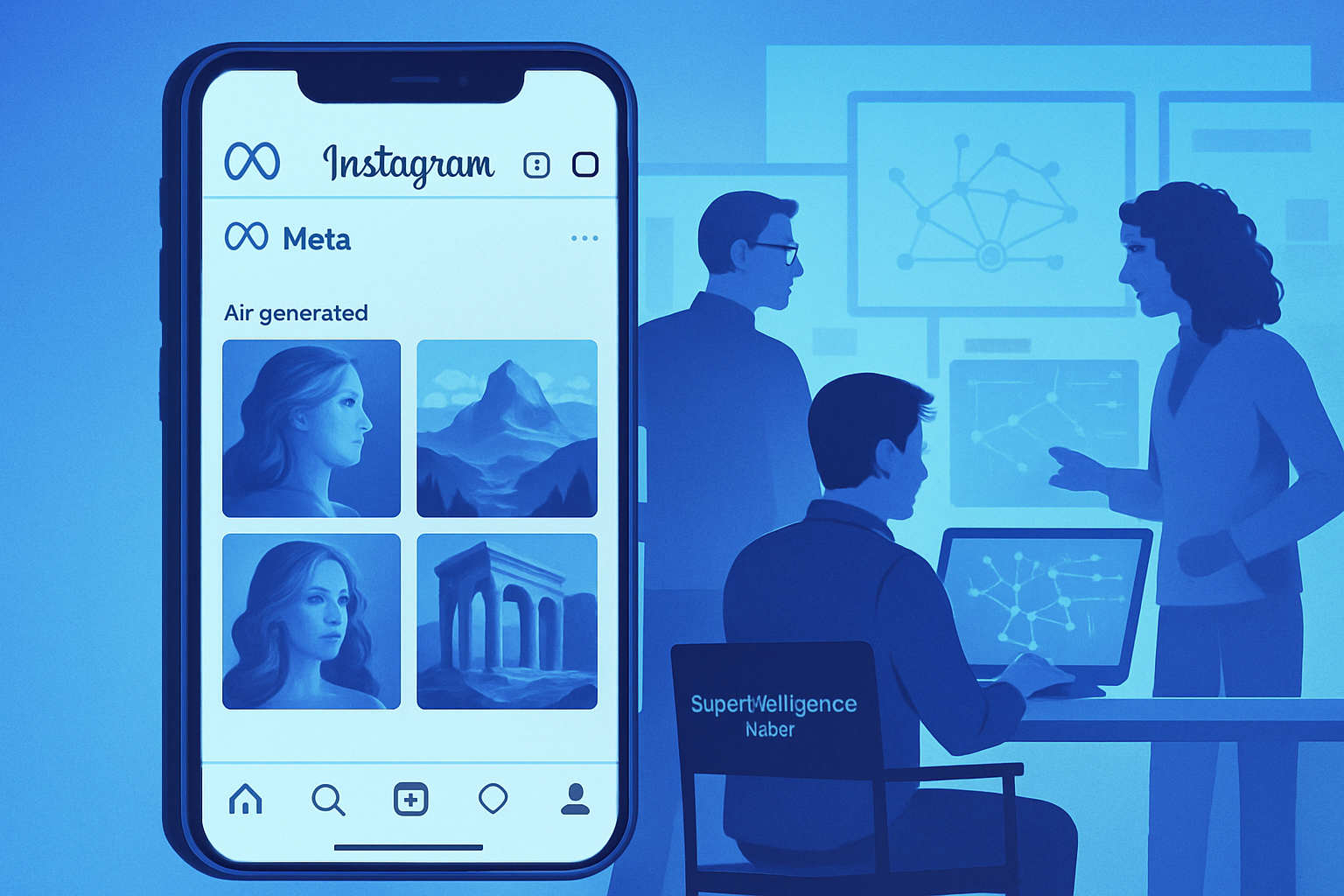
Muse Image to Replace Llama Models on Facebook and Messenger
Meta is integrating Muse Image, a generative AI model designed for personalized image creation, into Instagram, Facebook, and Messenger as of July 2026. According to technical briefings, Muse Image replaces previous Llama-based image generation iterations to provide deeper user-specific customization and faster inference speeds across Meta’s social ecosystem.
- Deployment: Muse Image is replacing legacy Llama image models across Instagram, Facebook, and Messenger.
- Core Function: Shifts from generic prompt-to-image generation to hyper-personalized asset creation based on user data.
- Infrastructure: Optimized for Meta’s internal NPU clusters to reduce latency in real-time social feeds.
The transition to Muse Image marks a shift in how Meta handles latent space manipulation. While previous models relied on broad datasets to generate imagery, Muse Image leverages a more refined architecture to personalize content. This creates a significant compute overhead, shifting the bottleneck from raw GPU throughput to memory bandwidth and NPU efficiency. For enterprise developers, this rollout highlights the move toward “small-model” specialization where a primary LLM orchestrates smaller, task-specific diffusion models.
The Architectural Shift: Muse Image vs. Legacy Llama Models
Meta’s decision to deprecate older image-generation iterations in favor of Muse Image centers on the “personalization gap.” According to reports on the rollout, Muse Image is designed to understand user context more fluidly, allowing for images that reflect a user’s specific style or history rather than generic interpretations of a prompt. This requires a tighter integration between the user’s social graph and the generative weights of the model.

From a systems perspective, this deployment involves heavy use of containerization and Kubernetes to manage the scaling of inference pods. To maintain sub-second latency for millions of concurrent Instagram users, Meta is utilizing advanced quantization techniques to shrink the model size without sacrificing visual fidelity. This is a classic trade-off in AI deployment: reducing precision (e.g., moving from FP32 to INT8) to gain the speed necessary for a mobile-first interface.
| Feature | Legacy Llama-Image | Muse Image |
|---|---|---|
| Primary Goal | General Accuracy | User Personalization |
| Inference Target | Cloud GPU Clusters | Edge-Optimized NPUs |
| Context Window | Prompt-Based | Graph-Integrated |
| Deployment | Batch Processing | Real-time Stream |
Cybersecurity Risks and Data Privacy in Generative Personalization
The ability for an AI to “personalize” images based on user data introduces a new attack surface. Specifically, the risk of “prompt injection” or “data leakage” increases when a model is tuned to a specific user’s identity. If an adversary can manipulate the prompt to force the model to reveal training data or user-specific patterns, it creates a privacy breach.

Security researchers are monitoring for “model inversion” attacks, where a malicious actor attempts to reconstruct the original training images from the model’s output. Because Muse Image is deeply integrated into Facebook and Messenger, the blast radius of a potential leak extends across Meta’s entire identity layer. As these AI features scale, corporations are urgently deploying vetted cybersecurity auditors and penetration testers via [Relevant Tech Firm/Service] to secure exposed endpoints and ensure SOC 2 compliance for any third-party integrations.
To mitigate these risks, Meta is implementing stricter end-to-end encryption for the data pipelines that feed user context into the Muse Image engine. This ensures that the “personalization” happens within a secure enclave, preventing the raw user data from being exposed to the broader inference network.
Implementation: Interfacing with Generative APIs
While Muse Image is primarily a consumer-facing feature, the underlying logic follows standard RESTful API patterns used in Meta’s developer ecosystem. Developers looking to implement similar generative workflows typically interact with these models via authenticated POST requests. Below is a conceptual example of how a personalized image request is structured using a cURL command, assuming a standardized generative endpoint:
curl -X POST "https://api.meta.com/v1/muse/generate"
-H "Authorization: Bearer YOUR_ACCESS_TOKEN"
-H "Content-Type: application/json"
-d '{
  "prompt": "A futuristic cityscape in the style of the users previous posts",
  "personalization_id": "user_987654321",
  "aspect_ratio": "1:1",
  "quality": "high",
  "seed": 42
}'
This request structure demonstrates the “personalization_id” parameter, which tells the Muse Image backend which specific user-weight profile to load into the NPU for the generation process. This is the core of the “Muse” logic: the model isn’t just reading a prompt; it’s reading a user identity.
The Infrastructure Bottleneck and B2B Implications
Scaling this technology requires more than just software; it requires a massive overhaul of the hardware stack. The move toward NPUs (Neural Processing Units) allows Meta to offload these tasks from general-purpose CPUs, reducing thermal throttling and power consumption in their data centers. However, for smaller firms trying to replicate this “personalized AI” experience, the cost of entry is prohibitive.

Mid-sized enterprises attempting to deploy personalized generative AI often struggle with the “cold start” problem—the latency experienced when a model must be loaded into memory for the first time. To solve this, many are turning to Managed Service Providers (MSPs) and specialized software dev agencies like [Relevant Tech Firm/Service] to implement efficient caching layers and model sharding strategies. Without a robust CI/CD pipeline, the deployment of such heavy models often leads to production instability and increased API timeouts.
For those operating in the consumer space, the proliferation of AI-generated imagery also increases the demand for device hardware that can handle high-resolution AI rendering. This is driving a surge in professional hardware maintenance and upgrades, leading users to seek vetted consumer repair shops and hardware consultants via [Relevant Tech Firm/Service] to ensure their devices can handle the latest OS updates required for these AI features.
The trajectory of Muse Image suggests a future where the “generic” internet disappears, replaced by a version of the web that is visually unique to every single user. As Meta moves from static images to personalized video and 3D assets, the pressure on global bandwidth and edge computing will only intensify. The winners in this space won’t be those with the “best” prompts, but those with the most efficient inference architecture.
Disclaimer: The technical analyses and security protocols detailed in this article are for informational purposes only. Always consult with certified IT and cybersecurity professionals before altering enterprise networks or handling sensitive data.