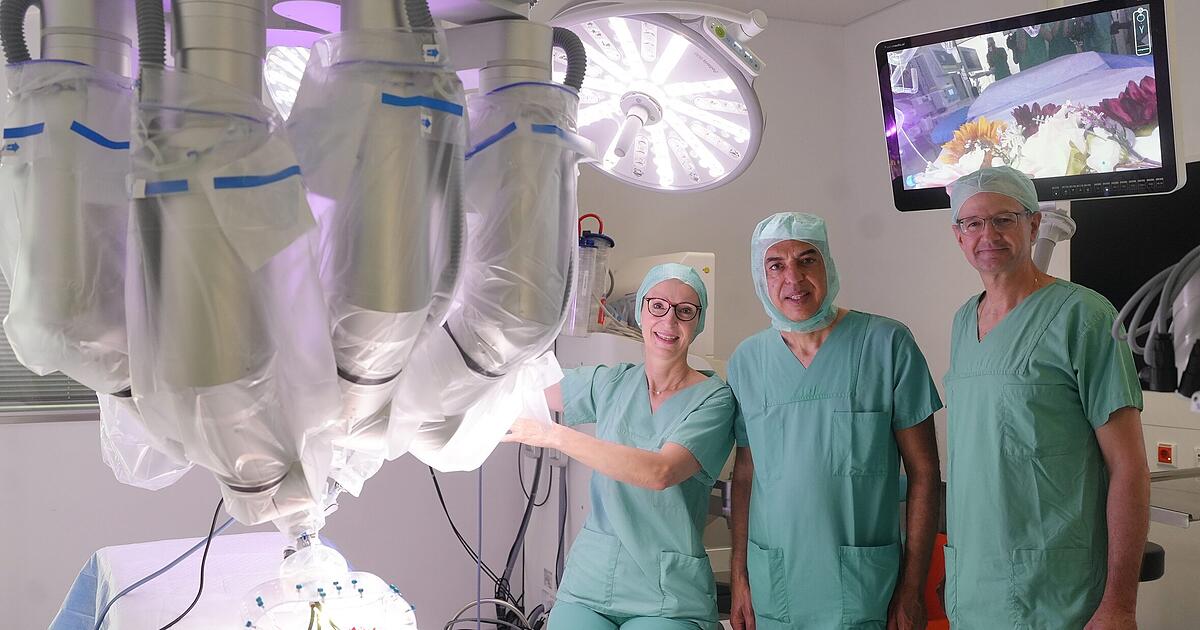
Munich’s First Robotic Surgery Clinic Opens in Bogenhausen
Klinikum Bogenhausen has officially integrated advanced robotic-assisted surgical systems for oncology, marking a significant shift in the German surgical landscape. As the first clinic in Germany and the second in Europe to implement this specific technical architecture for a cohort of nearly 20 patients, the facility is focusing on enhancing precision in complex tumor resections. This transition toward high-fidelity robotic platforms represents a move to reduce intraoperative morbidity and improve long-term oncological outcomes through minimally invasive techniques.
Key Clinical Takeaways:
- Klinikum Bogenhausen has adopted a new robotic-assisted surgical protocol, currently applied to a pilot cohort of 20 patients, to improve precision in cancer resections.
- The adoption of these systems aims to minimize trauma to surrounding healthy tissue, potentially reducing postoperative recovery times compared to conventional laparoscopic or open surgery.
- Patients seeking advanced oncological care should consult with specialized board-certified oncological surgeons to evaluate if robotic-assisted techniques are appropriate for their specific tumor staging and pathology.
The Biological Rationale for Robotic Precision
Robotic-assisted surgery (RAS) functions by overcoming the mechanical limitations of human hands and traditional laparoscopic tools. According to data published in The Lancet Oncology, the primary advantage of these platforms lies in the 3D-HD visualization and wristed instrumentation, which allows for 540-degree articulation. This level of control is critical during the dissection of malignancy near neurovascular bundles or delicate anatomical planes.
In the context of the Bogenhausen initiative, the clinical goal is the mitigation of collateral damage. By utilizing high-definition magnification, surgeons can achieve superior oncological margins—a vital factor in preventing local recurrence. This development aligns with broader European clinical standards for global cancer care, which prioritize reduced surgical trauma to maintain the patient’s systemic immune response during the perioperative period.
Comparative Analysis: Robotic vs. Traditional Approaches
The clinical implementation at Bogenhausen highlights a transition from traditional manual laparoscopy to computer-enhanced telemanipulation. The following table contrasts the mechanical capabilities of these approaches based on standardized clinical performance metrics.
| Feature | Traditional Laparoscopy | Robotic-Assisted Surgery |
|---|---|---|
| Visualization | 2D Standard Definition | 3D High-Definition |
| Instrument Degrees of Freedom | 4 | 7 (Wristed) |
| Tremor Filtration | None | Digital Motion Scaling |
| Ergonomic Fatigue | High | Low (Seated Console) |
Clinical Governance and Infrastructure Requirements
The deployment of such technology requires a rigorous institutional framework. Development of these systems, often supported by major medical technology manufacturers through research grants and collaborative engineering partnerships, necessitates strict adherence to safety protocols. For hospitals and healthcare systems, the integration of robotic platforms is not merely a capital expenditure but a systemic shift in training and credentialing.
“The integration of robotic platforms into oncological pathways is predicated on the surgeon’s ability to map complex anatomy with sub-millimeter precision. When the robotic interface is correctly calibrated, we observe a measurable decrease in the variance of surgical outcomes,” notes Dr. Elena Rossi, a senior researcher in surgical robotics at the European Institute of Oncology.
For healthcare administrators and clinical directors, the procurement of these systems requires an audit of existing surgical throughput and staff certification levels. Many clinics are now engaging healthcare compliance attorneys to ensure that the adoption of these platforms meets both local health agency mandates and international insurance billing standards for minimally invasive procedures.
Future Trajectories in Surgical Oncology
As the Bogenhausen cohort grows, the medical community expects longitudinal data to emerge regarding the impact of these systems on long-term disease-free survival. The current trend suggests that as the learning curve for these robotic systems flattens, they will likely become the standard of care for complex abdominal and thoracic malignancies. For patients, this signifies a move toward shorter hospital stays and faster return to baseline physiological function.
Patients currently exploring treatment options for localized tumors should prioritize centers that maintain high-volume robotic surgical programs. Engaging with specialized surgical consultants can provide the necessary clarity on whether your specific diagnosis is a candidate for these advanced interventions. Clinicians and hospital procurement teams should continue to monitor the European Medicines Agency (EMA) and local health authority guidance as the regulatory landscape for robotic surgical devices continues to evolve in response to real-world clinical performance data.
Disclaimer: The information provided in this article is for educational and scientific communication purposes only and does not constitute medical advice. Always consult with a qualified healthcare provider regarding any medical condition, diagnosis, or treatment plan.