
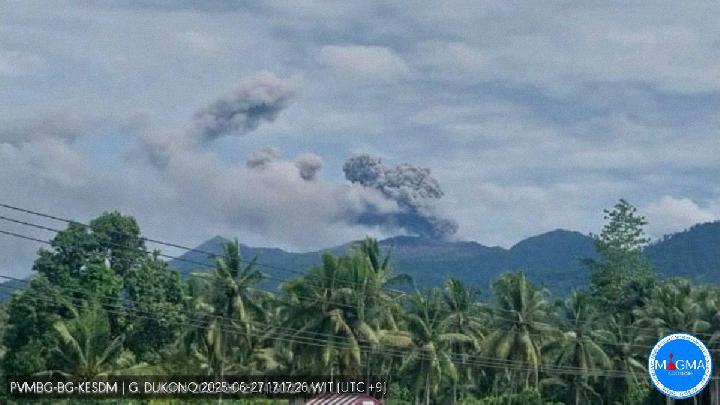
Indonesian Volcanoes Roar to Life: Dukono and Ile Lewotolok Erupt
Dual Ash Plumes Signal heightened Alert Levels in North Maluku and East Nusa Tenggara
Two Indonesian volcanoes, Mount Dukono and Mount Ile Lewotolok, have simultaneously erupted, spewing ash columns into the atmosphere and prompting authorities to raise alert levels and issue safety warnings to nearby communities.
Mount Dukono Unleashes Ash Cloud
Mount Dukono, situated on Halmahera Island in North Maluku, experienced an eruption on Sunday, August 10, 2025, at approximately 07:25 WIT. The 1,087-meter volcano ejected a white to gray ash plume that ascended 800 meters above its crater. The ongoing event was recorded by the Geological Disaster Mitigation and Volcanology Center (PVMBG).
Bambang Sugiono, an observer at the Dukono Volcano Observation Post, confirmed the eruption’s continuous nature as of the report’s filing. The seismic data indicated a maximum amplitude of 14 mm over a duration of 62.38 seconds. The previous day, Mount Dukono also erupted, though the visual confirmation of an ash column was not made.
Mount Ile Lewotolok Active
Meanwhile, Mount Ile Lewotolok in Lembata Regency, East Nusa Tenggara, also erupted on Sunday, August 10, 2025, around 01:20 WITA. This eruption generated a 300-meter ash column. The seismic readings showed a more intense eruption with a maximum amplitude of 35.8 mm lasting 54 seconds, according to Fajaruddin M. Balido, an officer at the PGA Ile Lewotolok.
Increased Danger Zones Declared
The PVMBG has placed Mount Dukono on Alert Level II. Residents and tourists are advised to maintain a safe distance of at least 4 kilometers from the Malupang and Warirang craters. Mount Ile Lewotolok is now on standby at Level III, with a prohibition on entering the area within a 3-kilometer radius of its eruption center. This measure is to mitigate risks from potential landslides, lava avalanches, and hot clouds.
Authorities are also cautioning those living near valleys and rivers originating from Mount Ile Lewotolok to remain vigilant for lahar (volcanic mudflows), particularly during the current rainy season.
The increased volcanic activity in Indonesia highlights the dynamic geological nature of the archipelago. For instance, in early 2024, the National Disaster Management Agency reported that 127 of Indonesia’s 130 active volcanoes had shown some level of activity in the past decade (Antara News, 2024).
