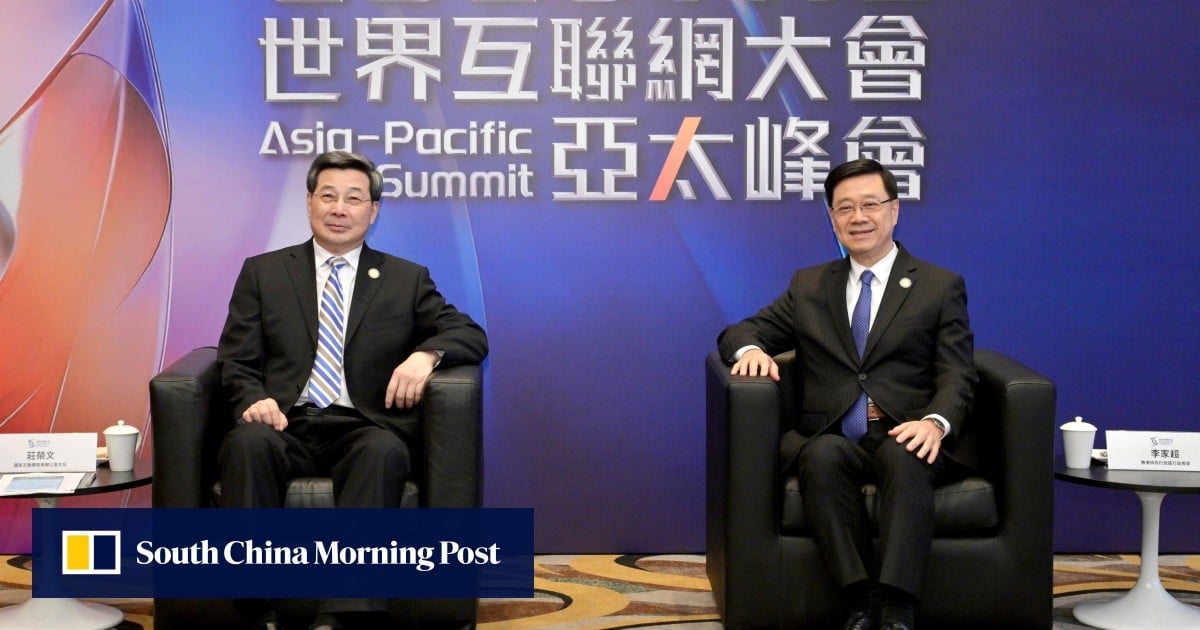
MoU Signed to Advance AI, Blockchain, and Cross-Boundary Data Flow
Hong Kong and mainland China just inked a Memorandum of Understanding (MOU) to synchronize their digital economies. While the press releases are leaning heavily on “milestone” rhetoric, the actual engineering challenge lies in the plumbing: cross-boundary data flow, AI interoperability, and blockchain consensus across two distinct regulatory jurisdictions.
The Tech TL;DR:
- Data Sovereignty: Establishes a framework for cross-border data transfers, potentially reducing latency for HKT-to-Mainland API calls.
- AI Convergence: Focuses on aligning LLM deployment and compute resource sharing to bypass hardware bottlenecks.
- Ledger Sync: Aims for blockchain interoperability to streamline trade finance and digital identity verification.
For the average observer, this is a diplomatic win. For a CTO, it’s a complex migration project. The primary bottleneck here isn’t political; it’s the technical friction of moving massive datasets across the “Great Firewall” while maintaining SOC 2 compliance and ensuring end-to-end encryption. We are talking about the reconciliation of different encryption standards and the potential for massive packet loss or throttling during peak synchronization windows. When you move from isolated silos to a shared digital economy, the blast radius of a single security misconfiguration expands exponentially.
As enterprise adoption scales, firms are finding that “signing a paper” doesn’t solve the problem of asynchronous data replication. To mitigate these risks, companies are increasingly relying on specialized Managed Service Providers (MSPs) to architect hybrid cloud environments that can bridge these two zones without compromising latency or security.
The Tech Stack & Alternatives Matrix
The MOU focuses on three pillars: AI, Data Flow, and Blockchain. Although, the implementation will likely rely on existing containerization and orchestration layers. To achieve the “seamless” flow promised, the architecture must move away from legacy VPNs toward a more robust service mesh approach, likely utilizing Kubernetes for workload portability across regions.
Comparative Analysis: Implementation Pathways
| Feature | Current Siloed Approach | Proposed MOU Framework | Industry Standard (Global) |
|---|---|---|---|
| Data Transfer | Manual Batch/SFTP | Cross-boundary API Gateways | Real-time Kafka Streaming |
| AI Compute | Local GPU Clusters | Shared Resource Pools | Distributed Multi-Cloud (Azure/AWS) |
| Trust Layer | Centralized Clearing | Interoperable Blockchains | Zero-Knowledge Proofs (ZKP) |
When comparing this to the European Union’s GDPR-driven data frameworks, the HK-Mainland approach is more focused on economic acceleration than individual privacy. While the EU prioritizes “the right to be forgotten,” this MOU prioritizes “the speed of the transaction.” For developers, this means a shift toward high-throughput architectures. If you are building for this corridor, you aren’t looking at GDPR; you are looking at the PDPO of Hong Kong and the PIPL of mainland China.
“The technical challenge isn’t just about moving bits; it’s about the semantic interoperability of data. If the AI models in Shenzhen and the financial data in Central aren’t using the same tokenization standards, the ‘digital economy’ is just a fancy word for a fragmented database.”
— Marcus Thorne, Lead Systems Architect at NexusGrid
Solving the Cross-Boundary Latency Bottleneck
To actually implement the “cross-boundary data flow” mentioned in the MOU, developers will need to implement sophisticated API management. We can’t rely on simple REST calls if we want to avoid the dreaded 504 Gateway Timeout during peak cross-border traffic. The move will likely be toward gRPC for low-latency communication and Protobuf for serialized data efficiency.
For those attempting to test connectivity or set up initial handshakes between these environments, a basic cURL request to a cross-border gateway might look like this, assuming the implementation of a mutual TLS (mTLS) handshake for security:
curl --location 'https://api.cross-border-gateway.hk.cn/v1/data-sync' --header 'Authorization: Bearer YOUR_ACCESS_TOKEN' --header 'Content-Type: application/grpc-web+proto' --cert ./client-cert.pem --key ./client-key.pem --data-binary @payload.binThis isn’t vaporware; it’s a necessity. Without strict mTLS and rigorous API versioning, the integration will collapse under the weight of its own complexity. This is where the “Information Gap” becomes a liability. According to the IEEE whitepapers on distributed ledgers, achieving consensus across disparate geographic nodes requires a trade-off between consistency and availability (the CAP theorem). The MOU suggests a preference for availability, which means developers must handle eventual consistency in their application logic.
Given the sensitivity of this data flow, the risk of man-in-the-middle (MITM) attacks increases. Enterprise IT departments cannot afford a “wait and spot” approach. Many are already deploying certified cybersecurity auditors and penetration testers to ensure that the tunnels being built between Hong Kong and the mainland don’t become open doors for state-sponsored actors or opportunistic ransomware groups.
The Blockchain Consensus Problem
The mention of blockchain in the MOU is likely a nod toward the “Digital Yuan” (eCNY) and trade finance automation. However, the real-world deployment of blockchain in government MOUs often suffers from “Consortium Bloat”—where too many nodes are added for political reasons, killing the network’s throughput.
If this is built on a Hyperledger Fabric or a similar private permissioned framework, the focus will be on “channels” to isolate sensitive trade data. For developers, this means managing complex membership service providers (MSPs) and ensuring that the chaincode is optimized to prevent CPU spikes during transaction validation. Looking at the Hyperledger GitHub repository, we see a trend toward improving the performance of the ordering service, which is exactly what this MOU will require to scale to millions of daily transactions.
“We are seeing a shift from public, permissionless chains to highly curated, state-backed ledgers. The goal isn’t decentralization; it’s the digitization of trust.”
— Dr. Elena Shao, Senior Researcher in Distributed Systems
this MOU is a blueprint, not a finished product. The transition from a signed document to a production-ready environment involves thousands of hours of refactoring, security patching, and infrastructure tuning. Whether you are a startup scaling your AI inference nodes or a multinational bank syncing ledgers, the friction is in the implementation.
As these systems go live, the demand for high-tier technical support will spike. From optimizing NPU utilization for AI workloads to ensuring SOC 2 compliance for data transfers, the need for expert intervention is clear. Those who fail to audit their stacks now will be the ones dealing with the outages tomorrow. For those looking to harden their infrastructure, we recommend consulting specialized software development agencies that have a proven track record in cross-border systems integration.
Disclaimer: The technical analyses and security protocols detailed in this article are for informational purposes only. Always consult with certified IT and cybersecurity professionals before altering enterprise networks or handling sensitive data.