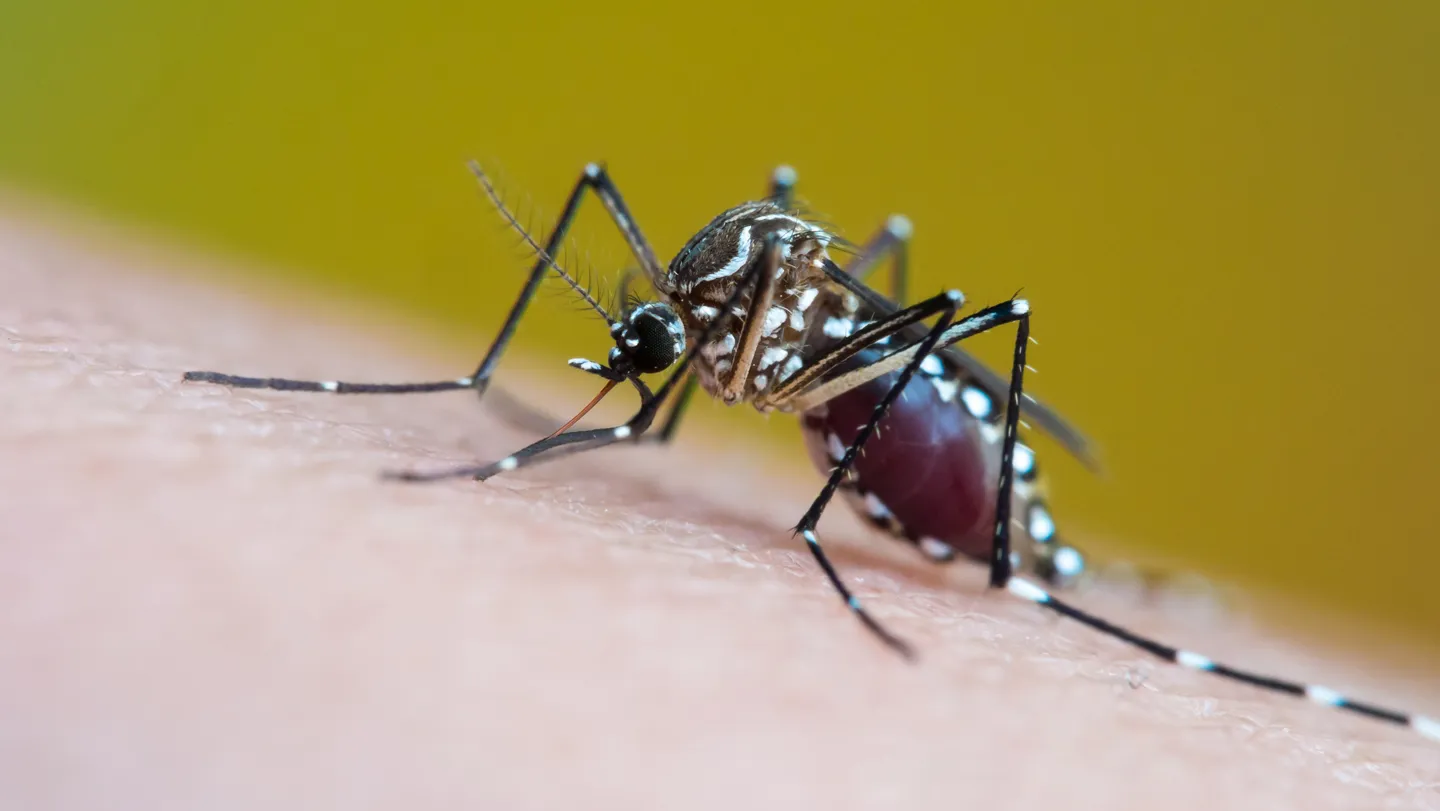
Mosquitoes’ ‘Full’ Signal Found in Gut Could Halt Bites
Mosquitoes may have a surprising off-switch for their relentless biting: their rectum. New research published March 20 in Current Biology reveals that specialized cells in the insect’s rectal pads block the drive to feed once a female mosquito has taken in enough blood, potentially opening avenues for novel mosquito control strategies.
For decades, scientists have observed that female mosquitoes dramatically reduce their interest in seeking a blood meal after feeding, a behavior crucial for reproduction as blood provides essential proteins and nutrients for egg development. “We’ve known for decades that after the females take this big meal of blood, they almost completely turn off their attraction to find and bite humans,” explained Laura B. Duvall, a neuroscientist at Columbia University, and lead author of the study.
The research builds on previous work identifying neuropeptide Y (NPY) as a key player in regulating appetite and feelings of fullness in various animals, including mosquitoes. Earlier studies by Duvall and her team demonstrated that disrupting the NPY-like receptor 7 throughout the mosquito’s body prevented NPY from suppressing hunger, leading females to continue seeking blood even after becoming engorged.
The latest investigation pinpointed the location of receptor 7 activity to an unexpected area: the very conclude of the mosquito’s gut. Using genetic analysis of the dengue mosquito, Aedes aegypti, researchers found the gene responsible for producing the receptor was exclusively active in cells within rectal pads. These pads are located near nerve cells that release a chemical called RYamide after a mosquito feeds.
“We found it in a really unexpected place,” Duvall said. “Most of these kinds of receptors involved with appetite and fullness are found in the brain.” To visualize the receptor’s location, the team used genetic manipulation to cause the rectal cells containing the receptor to glow with a fluorescent protein.
The study revealed that RYamide interacts with the receptors in the rectal pads, triggering an increase in calcium levels – a process similar to nerve cell signaling. These rectal cells also appear to release compounds involved in nerve cell communication, suggesting they function much like neurons, interpreting signals of fullness and relaying that information to the brain. Similar gut cells with neuron-like behavior have been observed in mammals, according to the research.
Rebecca Johnson, a medical entomologist at the Connecticut Agricultural Experiment Station in New Haven, noted the significance of the findings. “This work indicates that mosquitoes are highly complex organisms,” she said, expressing interest in further research exploring how these rectal cells influence the mosquito’s nervous system.
The discovery could pave the way for new methods of mosquito control. Duvall suggests that identifying a chemical capable of triggering the appetite-reducing effect in the rectum could potentially prevent mosquitoes from biting in the first place. This approach offers a potentially accessible target for intervention, as gut tissues are more easily reached than the brain.
Current mosquito control strategies include releasing genetically modified mosquitoes and utilizing repellents to disrupt their sense of smell. Duvall believes that targeting the rectal receptors presents a new avenue for intervention. “Now you have a target that you can access by just feeding a compound to mosquitoes,” she said.