
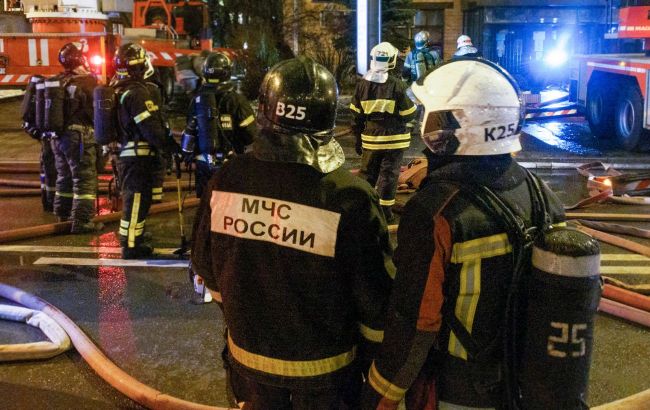
Moscow is now at the center of a structural shift involving aerial security and internal stability. The immediate implication is an elevated risk of strategic escalation and domestic pressure on russian defense and political leadership.
The Strategic Context
Moscow has faced a series of low‑altitude aerial incursions since late 2023, coinciding with Russia’s intensified military engagement in Ukraine and heightened western support for Kyiv. The pattern reflects a broader multipolar contest in which state and non‑state actors exploit asymmetric tools-commercial‑off‑the‑shelf drones, improvised explosive devices, and cyber‑enabled targeting-to impose costs on a high‑value target without provoking full‑scale conventional retaliation.Within the Russian security architecture, the capital’s air‑defense network, historically designed for strategic bomber threats, is now being tested against swarms of small, fast‑moving platforms. This operational stress intersects with domestic political dynamics: the Kremlin’s narrative of invulnerability and control is challenged by visible disruptions to civilian infrastructure and transport hubs.
core Analysis: incentives & constraints
Source Signals: Unidentified drones were reported approaching Moscow, with explosions heard in the Kashira area of the Moscow region. Social media posted footage of both drones and blasts. The Russian Ministry of Defense claimed to have shot down 56 drones between 1600 h and 2000 h, including two over the Moscow region, with a regional breakdown of engagements. No official comment has been made by the Moscow mayor, and no impact assessment has been released for the capital.
WTN Interpretation: The drone activity serves multiple strategic purposes.For Ukrainian‑aligned actors, it demonstrates the ability to project force into the Russian heartland, eroding the perception of a secure rear area and forcing the Kremlin to allocate air‑defence assets away from the front. For domestic dissent groups, the visible disruption can be leveraged to signal governmental vulnerability and galvanize public unease. Russia’s rapid claim of high interception numbers reflects a constraint: the need to project defensive competence and maintain morale, while avoiding admission of any breach that could be exploited for propaganda. The absence of a mayoral comment suggests a controlled facts habitat, possibly to prevent panic or to manage the narrative centrally. The broader constraint is the limited capacity of existing air‑defence systems to reliably detect and neutralize low‑observable, low‑cost drones, especially when operating in dense urban airspace.
WTN Strategic Insight
“The emergence of persistent low‑altitude drone incursions into Moscow signals a shift from conventional front‑line contestation to a ’security‑by‑disruption’ paradigm, where the battle for legitimacy is fought in the capital’s airspace.”
Future Outlook: Scenario Paths & Key Indicators
Baseline Path: If drone activity remains at the current low‑to‑moderate level, Russian authorities will likely invest in layered counter‑UAS systems (electronic warfare, directed‑energy weapons) and tighten air‑space restrictions around critical infrastructure. The Kremlin will continue to emphasize successful interceptions, preserving the narrative of control while gradually adapting it’s defensive posture.
Risk Path: If the frequency, scale, or sophistication of drone attacks escalates-e.g., coordinated swarms, payloads targeting high‑value assets, or attacks timed with political events-the Kremlin may respond with broader air‑defence alerts, temporary closures of civilian airports, and perhaps retaliatory strikes beyond the Ukrainian front. Such a response could raise the risk of inadvertent escalation and strain civil‑military coordination in the capital.
- Indicator 1: Weekly counts of reported drone sightings and interceptions in the Moscow region, as released by the Ministry of Defense or regional authorities.
- Indicator 2: Procurement announcements or field tests of counter‑UAS technologies by Russian defense firms, especially those aimed at low‑altitude, small‑RCS platforms.
