Morocco’s Rise: Turning Post-Colonial Challenges Into an Economic Model for Africa’s Future
Morocco’s New Model Economy: In 2026, the North African nation leverages its strategic location, renewable energy investments, and industrial policy reforms to emerge as a manufacturing and logistics hub for Europe and Africa, drawing foreign direct investment into automotive, aerospace, and green hydrogen sectors while addressing youth unemployment and regional inequality through public-private partnerships.
The Industrial Leap: From Phosphate Dependence to Green Hydrogen Ambition
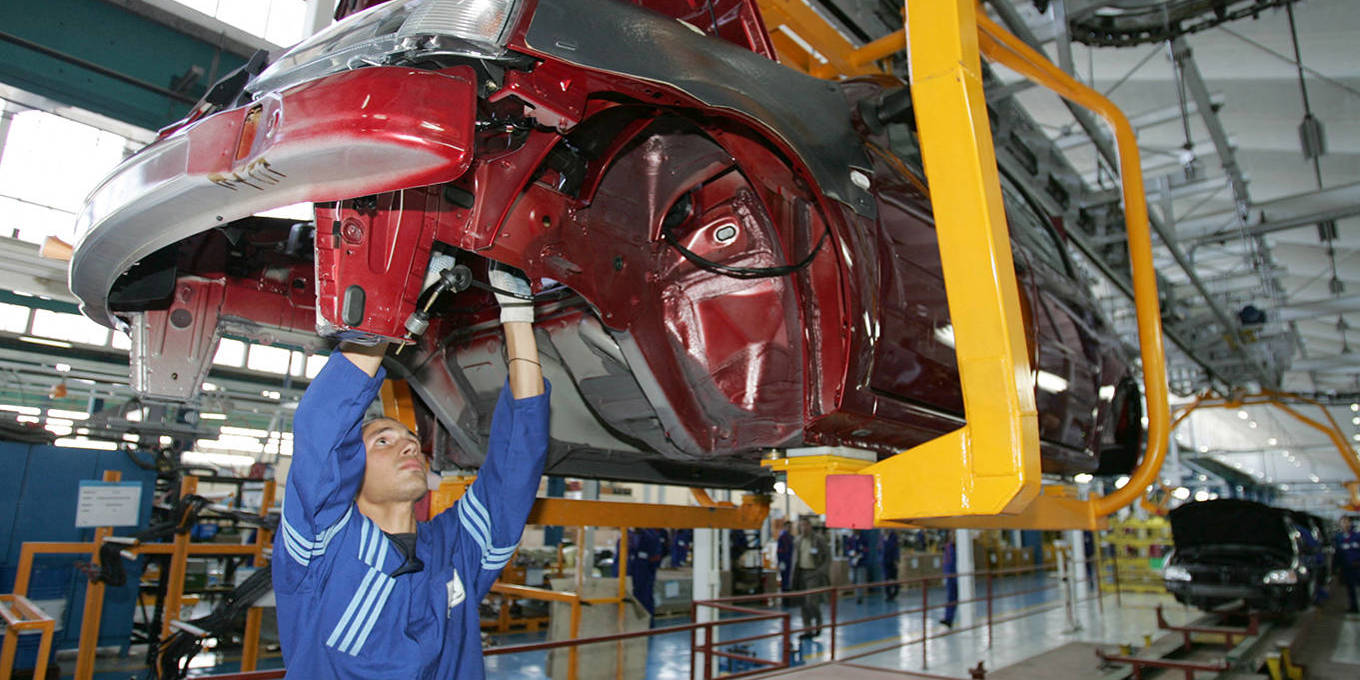
Morocco’s economic transformation is no longer aspirational—it is measurable. In Q1 2026, the country recorded a 7.2% year-on-year increase in industrial production, driven by a 41% surge in automotive exports and a tripling of green hydrogen project announcements since 2023, according to the Ministry of Industry and Trade’s quarterly bulletin. The Tangier Med port complex, now Africa’s busiest by container volume, handled 8.4 million TEUs in 2025, a 19% increase from the prior year, as reported in its annual performance statement. This logistics backbone enables just-in-time delivery to European automakers, reducing lead times by up to 30% compared to Asian alternatives.

Yet the real inflection point lies in energy. Morocco’s Noor Ouarzazate solar complex, the world’s largest concentrated solar power plant, achieved a 45% capacity factor in 2025—exceeding initial projections—and now supplies 38% of national electricity demand. This renewable surplus is being redirected toward green hydrogen production, with the government targeting 1 GW of electrolyzer capacity by 2030. A recent feasibility study by the Moroccan Agency for Solar Energy (MASEN) estimates that green hydrogen could generate $1.2 billion in annual export revenue by 2030, primarily to Germany and the Netherlands under existing EU-Morocco green partnership agreements.
Bridging the Skills Gap: Youth Employment and Industrial Policy
Despite macroeconomic gains, structural challenges persist. Youth unemployment remains at 22.1%, according to the Haut-Commissariat au Plan’s latest labor survey, with rural regions lagging behind urban centers in access to technical training. To counter this, the government’s Industrial Acceleration Plan 2021-2026 has allocated $1.8 billion to vocational training partnerships between multinational firms and local technical institutes. Companies like Renault Maroc and Boeing’s Casablanca subsidiary now co-design curricula with the Office of Vocational Training and Employment Promotion (OFPPT), resulting in a 65% job placement rate for graduates in aerospace and automotive tiers.
This public-private model is attracting attention from global investors seeking de-risked entry points into African markets. As one institutional investor noted during a recent Emerging Markets Roundtable hosted by the African Development Bank:
“Morocco isn’t just offering cheap labor—it’s offering a trained workforce, stable regulatory frameworks, and access to two continents. That’s a rare combination in today’s fragmented supply chain landscape.”
The sentiment echoes in corporate boardrooms, where CFOs are reevaluating nearshoring strategies. A VP of Global Operations at a Tier-1 automotive supplier told World Today News off-record:
“We’ve shifted 40% of our North African sourcing to Morocco since 2023. The combination of port efficiency, energy security, and labor trainability has cut our total landed cost by 18% compared to Southeast Asia.”
The B2B Imperative: Enabling Scale Through Specialized Services
Morocco’s rapid industrial scaling creates acute demand for specialized B2B support. Foreign investors navigating joint venture structures and local content requirements increasingly rely on corporate law firms with expertise in Moroccan commercial law and foreign investment codes to structure compliant, tax-efficient operations. Simultaneously, the complexity of integrating renewable energy into industrial parks drives demand for energy consulting firms capable of designing microgrid solutions and power purchase agreements tailored to off-taker profiles in free zones like Tangier Automotive City and Atlantic Free Zone.

as local suppliers strive to meet Tier-1 automotive and aerospace quality certifications (IATF 16949, AS9100), they turn to quality management consultants to implement statistical process control systems and audit readiness programs. These services are not ancillary—they are enablers of scalability. Without them, bottlenecks in compliance, certification, and energy management could stall the very momentum Morocco has worked to build.
Morocco’s model proves that economic transformation does not require perfection—it requires focus, sequencing, and the courage to act on comparative advantage. As the country moves toward its 2030 industrial targets, the real opportunity lies not just in what Morocco builds, but in how global firms partner with it to build smarter, faster, and more resilient supply chains. For investors and corporations seeking vetted partners to navigate this evolving landscape, the World Today News Directory remains the essential gateway to specialized B2B providers who turn macroeconomic trends into executable strategy.