
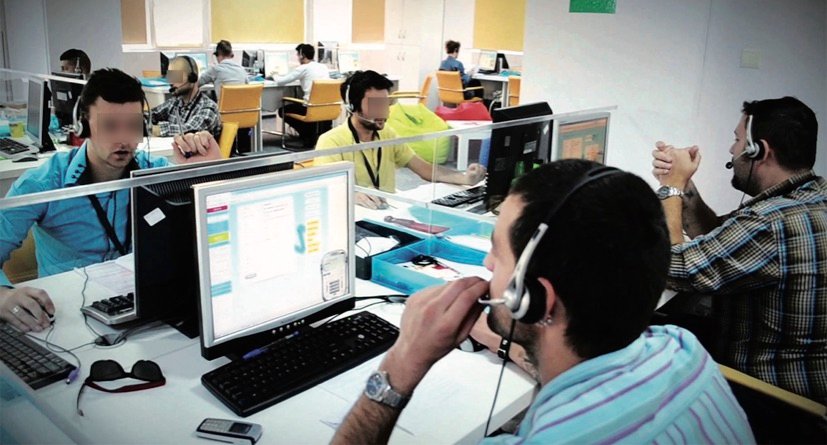
Morocco is undertaking a major overhaul of its offshoring strategy, aiming to nearly double export revenues to 40 billion dirhams and increase sector employment to 270,000 positions by 2030. The initiative, a cornerstone of the national Maroc Digital 2030 strategy, seeks to move beyond traditional business process outsourcing (BPO) towards higher value-added digital services.
A strategic meeting held in Rabat, chaired by Minister of Digital Transition and Administrative Reform Amal El Fallah Seghrouchni, brought together public and private stakeholders to strengthen coordination and address intensifying international competition, according to a statement released by the Ministry. The meeting underscored the importance of human capital, innovation, and skills development in supporting the sector’s evolution.
By the end of 2024, Morocco’s offshoring sector employed 148,500 people, representing a net increase of 18,500 jobs over two years, and generated 26.22 billion dirhams in service exports. These figures demonstrate the sector’s significant contribution to the national digital economy, officials say.
The renewed strategy focuses on upgrading Morocco’s offerings, developing advanced skills, and strengthening research and development. Key areas for growth include cloud and managed services, data engineering and analytics, cybersecurity, software and product engineering, and applied artificial intelligence. The government is prioritizing the development of specialized training programs and dedicated institutes to prepare Moroccan talent for these emerging digital professions.
Redouane El Haloui, President of the Moroccan Association of Outsourcing Companies (APEBI), emphasized the need to move beyond simply growing the sector to “better growth.” He stated that whereas BPO should remain a base for volume, growth and job quality will primarily come from technological professions. El Haloui highlighted the importance of cloud management, data security, and data governance as immediate opportunities.
To bolster its competitiveness, Morocco is expanding a one-stop shop across all Integrated Industrial Platforms (P2I Offshoring) zones, offering fully digitalized procedures and reduced processing times for investors. Operators located outside these platforms will also have access to the same incentive scheme through a centralized national platform. The government has identified five priority segments: ITO, CRM, BPO, ESO, and KPO.
New fiscal mechanisms include a 20% cap on taxable gross income, reduced to 10% for secondary P2I zones (Fès, Oujda, Tétouan), applicable from July 1, 2025, to December 31, 2030. A state contribution covering up to 56% of corporate tax due is also being introduced, alongside employment and training incentives of 17% of taxable gross income for each new permanent hire and 3.5% for training, granted over five years.
El Haloui stressed the need to strengthen advantages beyond cost, including proximity to Europe, stability, and experience. He called for a focus on execution quality, competence, and client relationships, emphasizing the importance of bilingualism (French and English), international certifications, robust digital infrastructure, and reliable data centers. He also noted the increasing importance of regulatory clarity and connectivity.
Three major agreements were signed to support the renewed strategy, including a training grant scheme to strengthen national skills and improve employability in the offshoring sector. The government is also working to streamline administrative procedures and reduce processing times for investors.
A key challenge remains the need for a massive increase in training to reach the target of 270,000 jobs. El Haloui proposed the creation of a sector-specific skills committee for ICT, responsible for anticipating needs, adjusting training programs, and coordinating public and private sector actors. He also recommended common professional standards to align universities and businesses, and an institute to train trainers to rapidly disseminate updated skills throughout the ecosystem.
The initiative aims to shift the focus from simply providing offshore teams to designing and exporting Moroccan technological solutions, fostering a complete ecosystem involving startups, SMEs, and large groups. The government views the offshoring sector as a potential catalyst for digital sovereignty and domestic innovation, creating intellectual property and enhancing Morocco’s technological standing.
