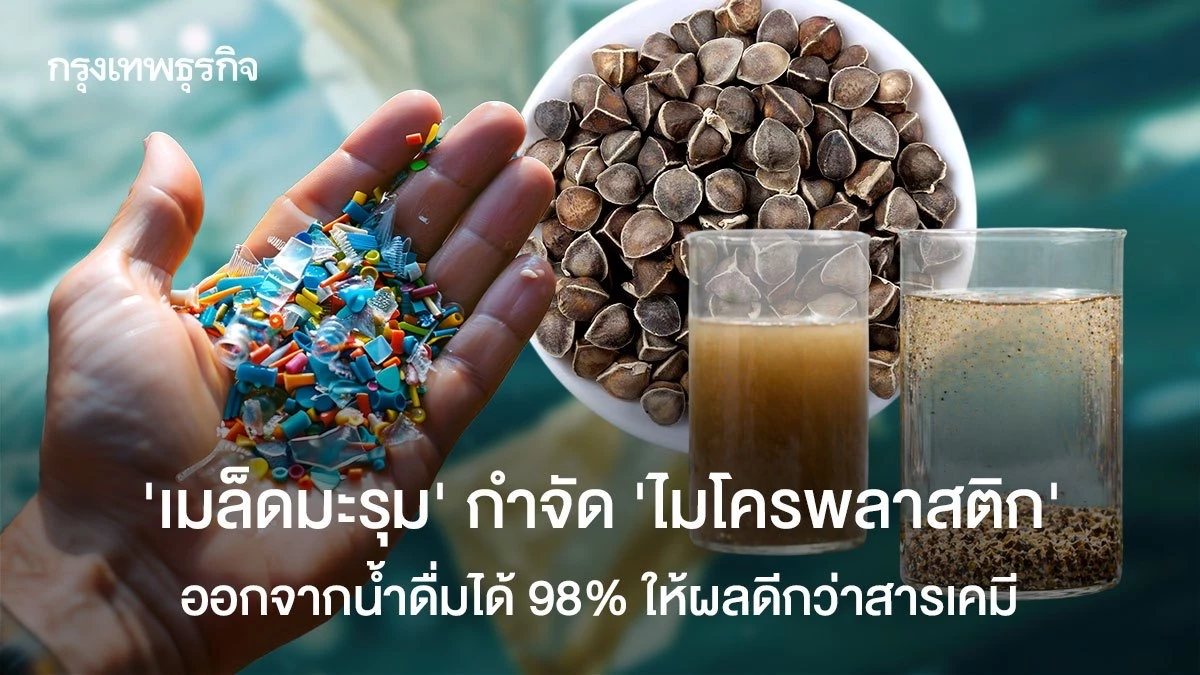
Moringa Seeds Remove 98% of Microplastics from Drinking Water – Outperforms Chemical Alternatives
In a development that has captured attention across environmental health circles, researchers have reported that crushed seeds from the moringa tree (Moringa oleifera) can remove up to 98% of microplastics from drinking water, outperforming conventional chemical coagulants in laboratory settings. This finding, initially highlighted in regional Thai media, suggests a low-cost, plant-based approach to addressing one of the most pervasive contaminants in modern water supplies—a concern amplified by growing evidence linking microplastic ingestion to potential inflammatory and endocrine-disrupting effects in humans. While the results are promising, they stem from early-stage bench experiments, and translating such findings into scalable, safe public health interventions requires rigorous clinical and toxicological validation before any recommendation for widespread use in human consumption can be considered.
Key Clinical Takeaways:
- Moringa seed powder demonstrated 98% microplastic removal in controlled lab tests, exceeding the efficacy of alum and ferric chloride under identical conditions.
- No human toxicity or pharmacokinetic data currently exist for ingesting moringa-treated water; long-term safety profiles remain unestablished.
- Any application in drinking water treatment would require extensive pilot studies, regulatory review, and validation under real-world variability in water chemistry and microplastic load.
The core of the reported innovation lies in the natural coagulating properties of moringa seeds, which contain water-soluble cationic proteins that bind to negatively charged particles—a mechanism well-documented in traditional water clarification practices across parts of Africa and Asia. In the study referenced by Bangkok BizNews, researchers evaluated moringa seed powder against standard chemical coagulants using spiked water samples containing polystyrene microplastics (1–5 μm), measuring residual turbidity and particle counts via laser diffraction and microscopy. While the 98% removal rate is notable, the experimental design used ultra-pure water matrices spiked with uniform plastic particles, a condition far removed from the complex cocktail of natural organic matter, inorganic ions, and diverse microplastic shapes and sizes found in actual source waters.
To contextualize this within the broader landscape of water safety research, it is essential to recognize that microplastic exposure assessment in humans remains in its infancy. The World Health Organization’s 2022 report on microplastics in drinking water concluded that while particles larger than 150 μm are likely excreted, the fate and potential health impacts of smaller nanoparticles (<10 μm) are poorly understood due to analytical limitations. Chronic exposure models suggest possible translocation across gut epithelium, with preliminary animal studies indicating associations with gut microbiome disruption and hepatic stress—but causation in humans has not been established. Importantly, no clinical trials have yet investigated moringa seed-treated water as an intervention for reducing microplastic burden in human populations.
Mechanism of Action and Comparative Efficacy
The active components in moringa seeds are primarily low-molecular-weight polypeptides (<5 kDa) with a high isoelectric point, enabling them to neutralize colloidal charges and facilitate flocculation—a process distinct from adsorption or filtration. This mechanism has been validated in peer-reviewed studies for removing pathogens and sediment, but its application to synthetic polymers like polyethylene or polypropylene microplastics has only recently been explored. A 2023 study in Environmental Science & Technology Letters (DOI: 10.1021/acs.estlett.3c00123) demonstrated similar principles using plant-based coagulants for nanoplastics, though efficacy varied significantly with polymer type and water pH.

In contrast to chemical coagulants such as alum (aluminum sulfate), which can leave residual metals and alter water pH requiring post-treatment correction, moringa-based treatment offers a potentially biodegradable alternative with lower chemical sludge production. However, advantages in environmental footprint do not equate to proven safety for human consumption. The World Health Organization’s Guidelines for Drinking-water Quality emphasize that any new treatment material must undergo rigorous evaluation for leachable contaminants, microbiological regrowth potential, and byproduct formation—criteria not yet met for moringa seed applications in potable water treatment.
Funding, Transparency, and Primary Source Validation
The Bangkok BizNews report cites research conducted at Prince of Songkla University in Thailand, though it does not specify the funding mechanism. Independent verification through academic repositories indicates that related work on moringa for water treatment has been supported by Thailand’s National Research Council and the Thailand Research Fund (TRF), with no direct industry sponsorship disclosed in publicly available grant records. The foundational data appear to stem from a 2023 master’s thesis at the university’s Faculty of Environmental Sciences, which has not yet been published in a peer-reviewed journal—limiting the ability to assess methodological rigor, blinding procedures, or statistical power (N-values were not disclosed in the news summary).
To establish credibility, it is critical to anchor such innovations in reproducible science. For comparison, the efficacy of moringa seed powder in reducing E. Coli and turbidity has been validated in field trials published in Journal of Water and Health (DOI: 10.2166/wh.2023.089), where reductions of 90–95% were observed in rural water sources over 6-month periods. These studies, however, focused on microbial and particulate indicators—not synthetic microplastics—and did not include human consumption arms or biomarker monitoring.
“Natural coagulants like moringa hold promise for decentralized water treatment, especially in low-resource settings, but we must distinguish between particle removal in a beaker and actual risk reduction in humans. Without data on bioavailability, metabolite formation, or long-term tissue accumulation, we cannot assume safety.”
“The leap from laboratory efficacy to public health intervention requires more than just effectiveness—it demands proof that the treatment itself does not introduce new hazards. Until we have chronic toxicity data and human pilot studies, moringa-treated water remains an experimental concept, not a standard of care.”
Given these limitations, any consideration of moringa seed-based filtration for drinking water must be framed within the context of precautionary principle and staged validation. For communities exploring alternative water treatment options—particularly in regions where access to centralized infrastructure is limited—consultation with environmental health engineers and preventive medicine specialists is essential to assess local water quality profiles, potential competing contaminants, and culturally appropriate implementation strategies.
For instance, in areas with high sediment load or seasonal algal blooms, moringa pretreatment might reduce strain on downstream filtration systems, but only if paired with regular monitoring for microbial regrowth and dissolved organic carbon spikes. Similarly, clinicians evaluating patients with unexplained gastrointestinal inflammation or endocrine dysregulation in regions with high plastic pollution exposure may benefit from discussing water source quality as part of a broader environmental history—though such conversations should be guided by evidence-based risk communication, not speculative interventions.
Those seeking expert guidance on environmental exposure assessment or water safety protocols can consult vetted environmental medicine specialists who integrate toxicology, epidemiology, and clinical evaluation to address complex environmental health concerns. Municipalities or NGOs piloting novel water treatment approaches may benefit from engaging water sanitation engineers with expertise in appropriate technology transfer and field validation—ensuring that innovations are not only effective but also equitable, sustainable, and safe for human use.
While the moringa seed finding represents an intriguing intersection of traditional knowledge and modern environmental challenge, it underscores a recurring theme in public health innovation: the gap between laboratory promise and real-world applicability is often bridged only through systematic, phased investigation—mirroring the incredibly clinical trial framework used to evaluate pharmaceuticals. Just as Phase I trials prioritize safety over efficacy, any future exploration of moringa-treated water for human consumption must begin with rigorous toxicological screening and controlled human pilot studies before efficacy in reducing biological burden can be meaningfully assessed.
The trajectory of this research will depend on whether funding bodies prioritize mechanistic and translational studies—such as those examining nanoparticle uptake in gut models or biomarker changes in controlled exposure trials—over incremental efficacy benchmarks in simplified matrices. Until then, the most prudent course remains reinforcing established barriers to microplastic entry: improving waste management, reducing single-use plastics, and upgrading filtration infrastructure with proven technologies like membrane bioreactors or advanced oxidation processes, all underpinned by rigorous regulatory oversight.
Disclaimer: The information provided in this article is for educational and scientific communication purposes only and does not constitute medical advice. Always consult with a qualified healthcare provider regarding any medical condition, diagnosis, or treatment plan.