
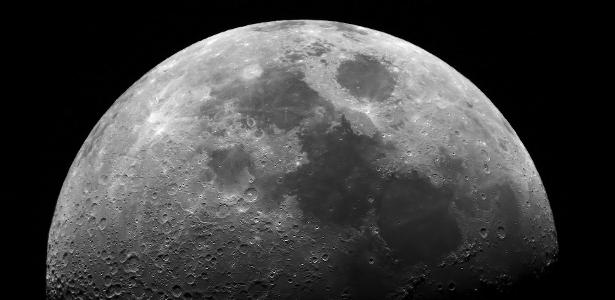
Moon Enters Waning Gibbous Phase Tonight, November 24th, 2025
Skywatchers can expect a Waning Gibbous Moon to dominate the night sky tonight, November 24th, 2025. This phase, occurring after the Full Moon and before the Last Quarter Moon, will see approximately 88% of the lunar surface illuminated.The lunar calendar for November 2025 indicates this phase will continue through November 26th, gradually decreasing in illumination each night.
Understanding the Moon’s phases isn’t just about astronomical observation; it impacts everything from tidal patterns to historical cultural practices. While modern science has debunked many long-held beliefs about lunar influence, the Moon remains a powerful symbol and a key component of Earth’s natural systems. As the Moon progresses through its cycle, continued observation and study provide valuable data for scientists and inspire curiosity in observers worldwide.
Scientific Aspects and Lunar Curiosities
The Moon, Earth’s only natural satellite, boasts a diameter roughly equivalent to a quarter of the planet’s size. Its average distance from Earth is approximately 384,400 km,though this varies due to its elliptical orbit. At its closest point (perigee), the Moon is around 363,000 km away, while at its farthest (apogee), it can reach 405,000 km.
The appearance of the Moon’s illumination differs depending on the observer’s hemisphere. In the Southern Hemisphere, the illuminated portion of a crescent Moon appears to face left, whereas in the Northern Hemisphere, it faces right - a difference stemming from the viewing angle.
A engaging characteristic of the Moon is its synchronous rotation. It takes the same amount of time to rotate on its axis as it does to orbit Earth, resulting in us always seeing the same side. The far side, often mislabeled the “hidden face,” does receive sunlight but is only visible through space probes and equipment.
Despite its notable influence on Earth’s tides, lunar gravity has no proven direct impact on the human body. Currently, there is no scientific evidence to support claims that lunar phases affect mood, health, or behavior.
With data from a report published in https://www.uol.com.br/tilt/noticias/redacao/2025/07/28/parto-cabelo-sono-afinal-qual-e-a-influencia-da-lua-sobre-nossa-vida.htm on July 28, 2025.
