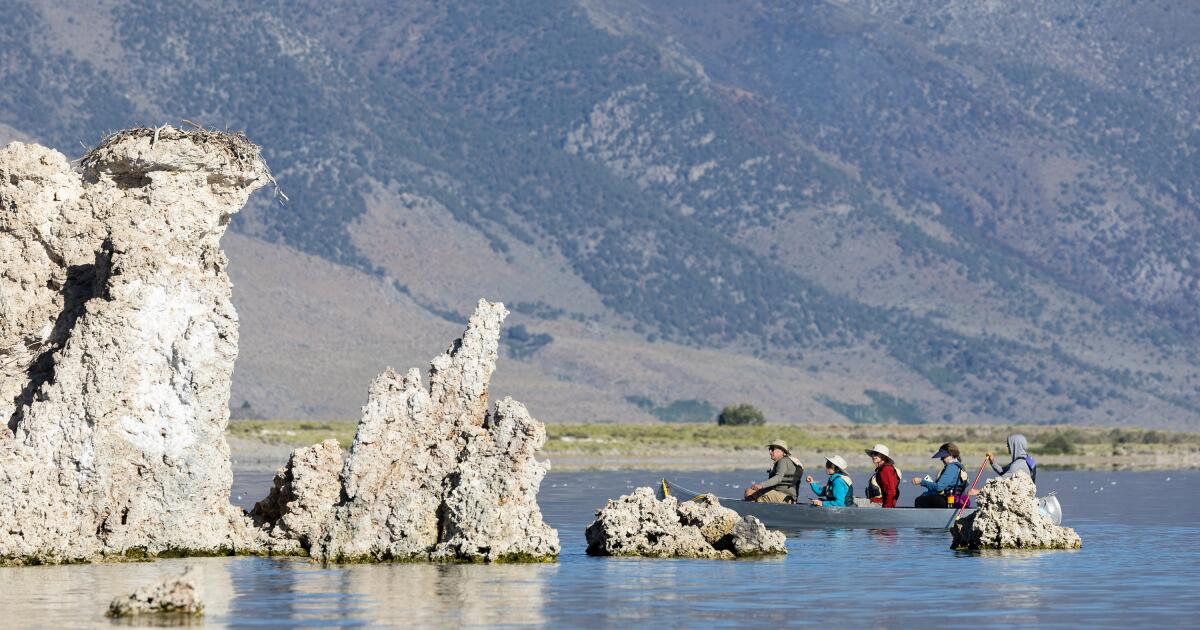
Mono Lake Recovery Stalled: LA Water Use Under Scrutiny After 30 Years
SACRAMENTO – California water regulators are reexamining the decades-old agreement governing Los Angeles’ water diversions from the Mono Lake basin, following a new UCLA study suggesting the lake may not recover to mandated levels without significant changes to water usage. The study, presented to the California State Water Resources Control Board on Tuesday, concludes that halting Los Angeles’ water exports would roughly double the likelihood of Mono Lake reaching its target level within the next 20 years.
The 1994 decision by the State Water Resources Control Board required the Los Angeles Department of Water and Power (DWP) to limit water diversions and take steps to raise the lake level 17 feet. While Mono Lake is higher now than it was in 1994, it remains approximately nine feet below the 6,392-foot target elevation. The new analysis indicates that, absent L.A.’s water use, the lake’s water level would be about four feet higher.
“The way the exports are regulated, meeting lake level objectives is unlikely,” Alex Hall, a UCLA climate scientist, told board members. The UCLA team’s modeling also attributes roughly 2.6 feet of the lake’s shortfall to the effects of climate change, but emphasizes the dominant role of water exports. As reported by the Los Angeles Times, the findings are stirring debate over the future of water management in the region.
DWP officials are questioning the UCLA analysis. Eric Tillemans, the department’s interim aqueduct manager, told the board that DWP studies suggest Mono Lake levels are “more dependent on precipitation, evaporation and runoff than any other factors.” He characterized the UCLA modeling as “highly technical and a scientifically novel effort” but argued it “wasn’t developed through a facilitated process or expert peer-reviewed,” requiring further scrutiny. Anselmo Collins, DWP’s chief operating officer, echoed this sentiment, stating the analysis needs thorough vetting before informing policy decisions.
The debate comes as Los Angeles currently obtains about 2% of its water supply from creeks within the Mono Basin. Environmental advocates are pressing for reduced diversions to support the lake’s ecosystem, which is crucial for migratory birds. Richard Katz, former president of the Los Angeles Board of Water and Power Commissioners, has proposed a temporary pause in DWP’s water use from the Mono Basin as the “fastest and most cost-effective way” to raise the lake level. He also pointed to the city’s recent expansion of a water recycling project as an opportunity to reduce reliance on Eastern Sierra water sources.
The Bishop Paiute Tribe also voiced concerns at Tuesday’s meeting. Noah Williams, a tribal member, urged the board to prioritize raising the lake elevation, stating, “It’s been far too long that this has been allowed to happen.” Former L.A. City Councilmember Ruth Galanter, who was involved in the original 1994 agreement, warned against further delays, arguing that such inaction undermines the credibility of the regulatory system.
Geoffrey McQuilkin, executive director of the Mono Lake Committee, asserts that DWP has not voluntarily moved to restore the lake over the past three decades and supports a pause in water exports. “DWP has shown that it will not restore this national treasure voluntarily,” McQuilkin said.
Janisse Quiñones, DWP’s departing top executive, countered these arguments in a March 13 letter to the state board, maintaining that Los Angeles has already reduced its water use from the Mono Basin since 1994. She argued that further reductions are unlikely to significantly accelerate the lake’s recovery and that DWP’s actions, combined with existing state protections, represent a success story, particularly when compared to the declining conditions of other saline lakes in the West, such as the Salton Sea and the Great Salt Lake. Quiñones warned that reducing or halting water diversions would impose an “undue financial burden” on Los Angeles ratepayers.
The State Water Resources Control Board has not indicated when it will reconvene to discuss the matter further, leaving the future of Mono Lake’s recovery – and the balance between Los Angeles’ water needs and environmental preservation – unresolved.
Keep reading
- Leeds United vs Newcastle United: Premier League Preview and Team News
- La Sylphide Storytime at William Paca Garden Featuring Ballet Theatre of Maryland
- Why Virginia and New Jersey Elect Their Governors in Odd Years (daybreakwire.com)
- Gemini 11’s 1966 Earth Orbit Altitude Record Broken After 58 Years (newsy-today.com)