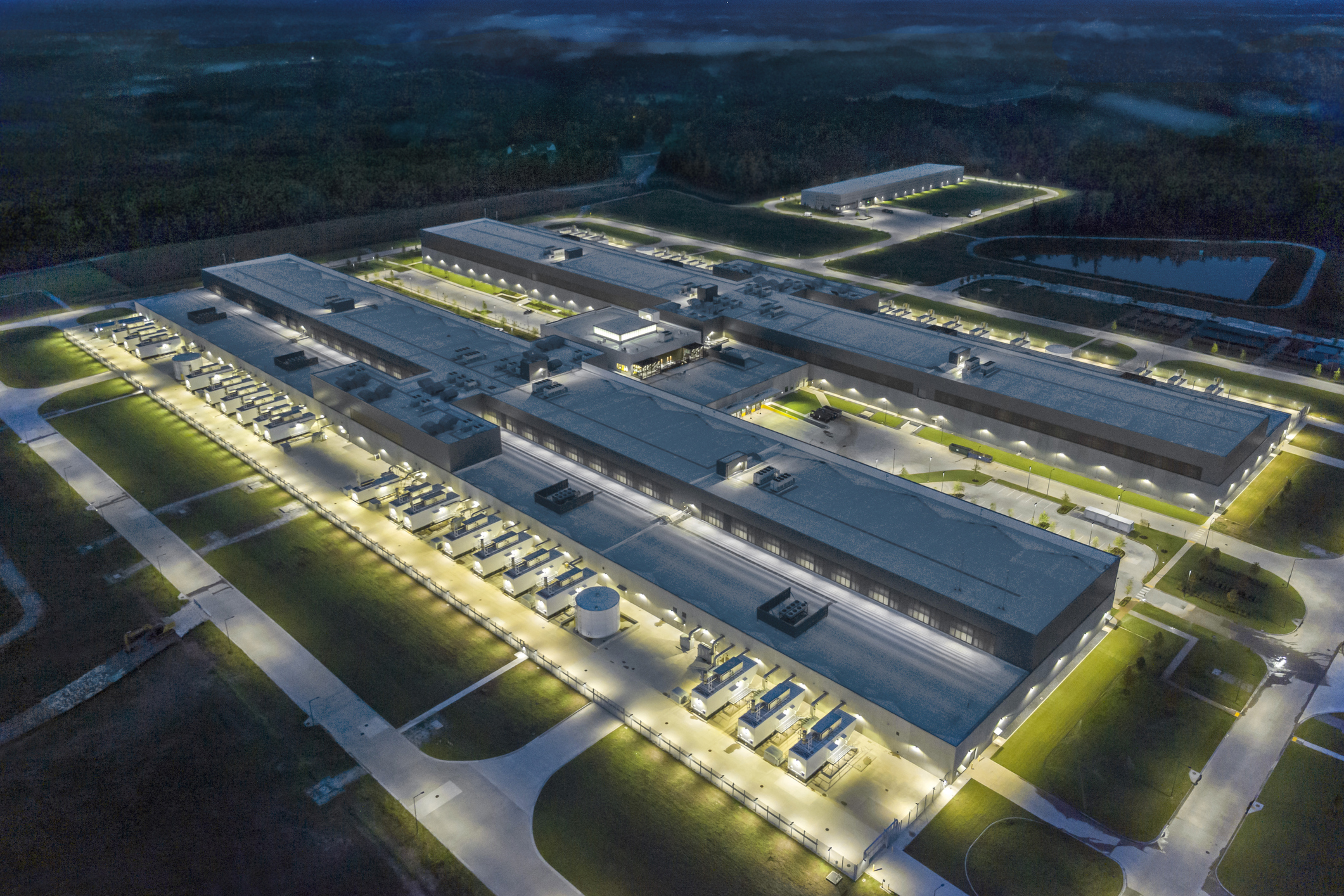
MIT Study Links Data Center Power Demand to 650 U.S. Premature Deaths Via Widespread Air Pollution
Data centers drove air pollution linked to roughly 650 premature deaths nationwide in 2023, according to a [study published in Environmental Research Letters] on November 19, 2023.
Researchers from the Massachusetts Institute of Technology, the University of California at Irvine, and Yale University mapped how power demands from digital facilities ripple through the nation’s grid.
Particulate Ozone Drive Electricity Related Deaths
Fine particulate matter and ground-level ozone drove the death toll, accounting for 513 and 137 fatalities respectively, [AfroTech reported]. These mortalities represented 5.3 percent of U.S. electricity-related deaths, even though data centers made up 3.8 percent of national generation that year, AfroTech noted.
The Lawrence Berkeley National Laboratory estimated that data center electricity use represented about 4 percent of total U.S. demand in 2023, producing about 4.4 percent of overall national emissions, [according to MIT’s computing portal].
Regional Disparities in Midwest
Per-capita death rates spiked in Midwestern states far from major digital hubs, [Yahoo News reported]. Nebraska and Iowa registered some of the highest per-person figures, reaching 6.5 deaths per million people in Nebraska, while states like Kansas, South Dakota, Missouri, and Arkansas also showed elevated rates despite low local data center loads.
By contrast, Virginia and Texas hosted the largest electricity loads, but their per-person death rates ran roughly half those in most Midwestern states, Yahoo News reported. Grid models attribute this to generators answering Virginia’s demand via older coal and gas plants in the Ohio Valley.

Oxides Generate Particulate Matter Estimate
Nitrogen oxides and sulfur dioxide emissions drive the atmospheric reactions behind the mortality estimates, as nitrogen oxides contribute to ground-level ozone formation while both pollutants produce fine particulate matter. Gathering the necessary inputs required tracking more than 10,000 power generators across the country, a task described by MIT graduate student Yuang Chen as a significant data challenge.
The reported death toll carries a 95 percent confidence interval ranging from 559 to 740 fatalities, a span reflecting solely health calculation uncertainties rather than variations in emissions or air-quality models. Alternative projections cited in the research include another team’s 2023 estimate of about 401 deaths alongside an earlier forecast pointing toward 1,300 annual fatalities by 2030.
Growing Demand Pushes Mortality Upward
Noelle Selin explained to Newsweek that growing electricity demand will inevitably push mortality numbers upward as the power grid becomes increasingly stressed. The senior study author also said that many digital facilities are beginning to construct dedicated power sources rather than relying on grid connections, a factor excluded from the 2003 grid-focused analysis that could intensify local pollution.
To capture these localized effects, the research team aims to investigate on-site generation models, including gas-fired systems currently marketed by vendors. The study itself assumed digital operations draw power continuously around the clock, matching methodologies from prior research while shifting focus to hourly responsive generation instead of broad grid averages.
Broad Regional Impacts
The modeling framework tracks how electricity usage propagates across interconnected power grids, tracing hourly generation shifts primarily to natural gas and coal plants. Researchers warn that communities sitting far outside immediate tech hubs face unexpected health risks from transported pollutants.
Tracing its transformation as a major research enterprise to World War II projects such as the Radiation Laboratory, the Massachusetts Institute of Technology expanded into the nation’s largest non-industrial R&D contractor. In the postwar decades, faculty members helped shape federal support for basic science, enabling the institute to develop prominent programs spanning basic science, engineering, and environmental research.
“When people think about the negative impacts of data centers, they usually focus on the neighbors. But our study indicates that the air quality impacts of data centers are very widespread across a large region. Even if you don’t think you are affected because there is not a data center near you, think again,” said Noelle Selin, a professor in MIT’s Institute for Data, Systems, and Society and Department of Earth, Atmospheric and Planetary Sciences, director of the Center for Sustainability Science and Strategy, and senior author of the study, [as shared by AfroTech].