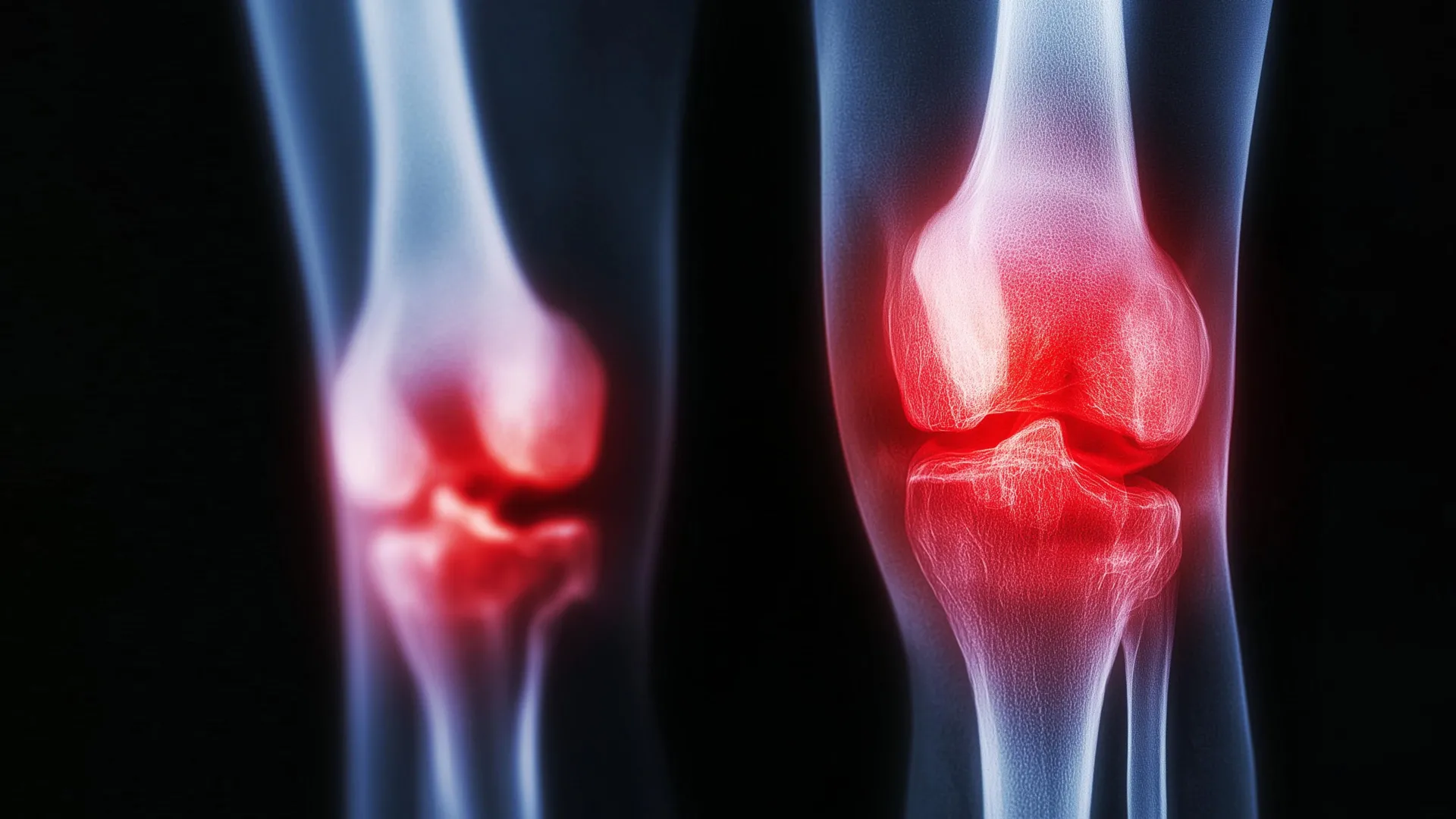
Minimally Invasive Artery Embolization Offers Lasting Relief for Knee Osteoarthritis
A minimally invasive procedure targeting abnormal blood vessels in the knee could provide lasting relief for osteoarthritis patients, offering an alternative to joint replacement surgery. In a study involving 194 patients, researchers found that genicular artery embolization using rapidly dissolving microspheres led to substantial pain reductions and mobility improvements lasting at least 12 months.
Key Clinical Takeaways:
- Genicular artery embolization uses a thin catheter to block abnormal blood vessels feeding joint inflammation.
- A study of 194 patients showed that 80% of participants assessed at one year reported clinically meaningful pain relief.
- The procedure uses gelatin-based microspheres that dissolve within hours, preserving normal knee circulation while reducing pain.
Osteoarthritis Treatment Gaps and the Prevalence of Knee Pain
The disease develops as protective cartilage deteriorates, but pathology extends deeper into joint inflammation, tissue remodeling, and increased sensitivity in pain-signaling nerves. Everyday activities like walking or climbing stairs become difficult as conventional care—including physical therapy, anti-inflammatory medications, and injections into the knee—loses effectiveness.
Florian Nima Fleckenstein, deputy head of Interventional Radiology Campus Mitte at Charité — Universitätsmedizin Berlin, noted that a real treatment gap exists for patients.
How Genicular Artery Embolization Modulates Joint Inflammation
The investigated technique approaches osteoarthritis by targeting hypervascularity rather than replacing damaged cartilage. Abnormal blood vessels frequently develop around the synovium, multiplying and encouraging the growth of sensory nerves that transmit chronic pain. During genicular artery embolization, a thin catheter is guided into the targeted arteries using real-time fluoroscopy. Microspheres are then delivered to block selected vessels, interrupting the pathological neurovascular environment.
Researchers in this study utilized rapidly resorbable, gelatin-based microspheres engineered to dissolve within hours. This contrasts with permanent particles or temporary blocking agents used in prior investigations. Dr. Fleckenstein described the approach as a method that may alter disease progression by normalizing vessel structure and neuronal environment around the joint.
Pain Scores Decline After Successful Knee Procedures
The prospective single-center study included 114 women and 80 men with a median age of 69 years. Procedures took place between July and November 2024. Forty-five participants received treatments in both knees, totaling 239 successful procedures. Safety outcomes showed no moderate or severe adverse events, with mild, temporary complications occurring in 6.7% of procedures.
Pain and functional assessments tracked patients at six weeks, three months, six months, and twelve months. Median pain scores on a zero-to-ten scale fell from 7 before treatment to 4 at six weeks, declining further to 3 at six months and remaining at 3 through the twelve-month follow-up. Standardized Knee Injury and Osteoarthritis Outcome Scores demonstrated meaningful progress across daily activities, symptoms, recreation, and overall quality of life. At the one-year mark, 80% of participants who completed the assessment exceeded established thresholds for clinically meaningful improvement.
The findings join a growing body of literature examining vascular embolization for knee osteoarthritis, with varying levels of certainty reported across recent trials. A randomized study published in Clinical Radiology in 2026 evaluated 50 patients and reported a 72.7% pain improvement in the embolization group compared to 24.2% in standard care. Conversely, a randomized, sham-controlled study published in European Radiology in April 2026 followed 58 patients for twelve months and found no statistically significant difference in pain reduction between the embolization and sham groups.
Disclaimer: The information provided in this article is for educational and scientific communication purposes only and does not constitute medical advice. Always consult with a qualified healthcare provider regarding any medical condition, diagnosis, or treatment plan.