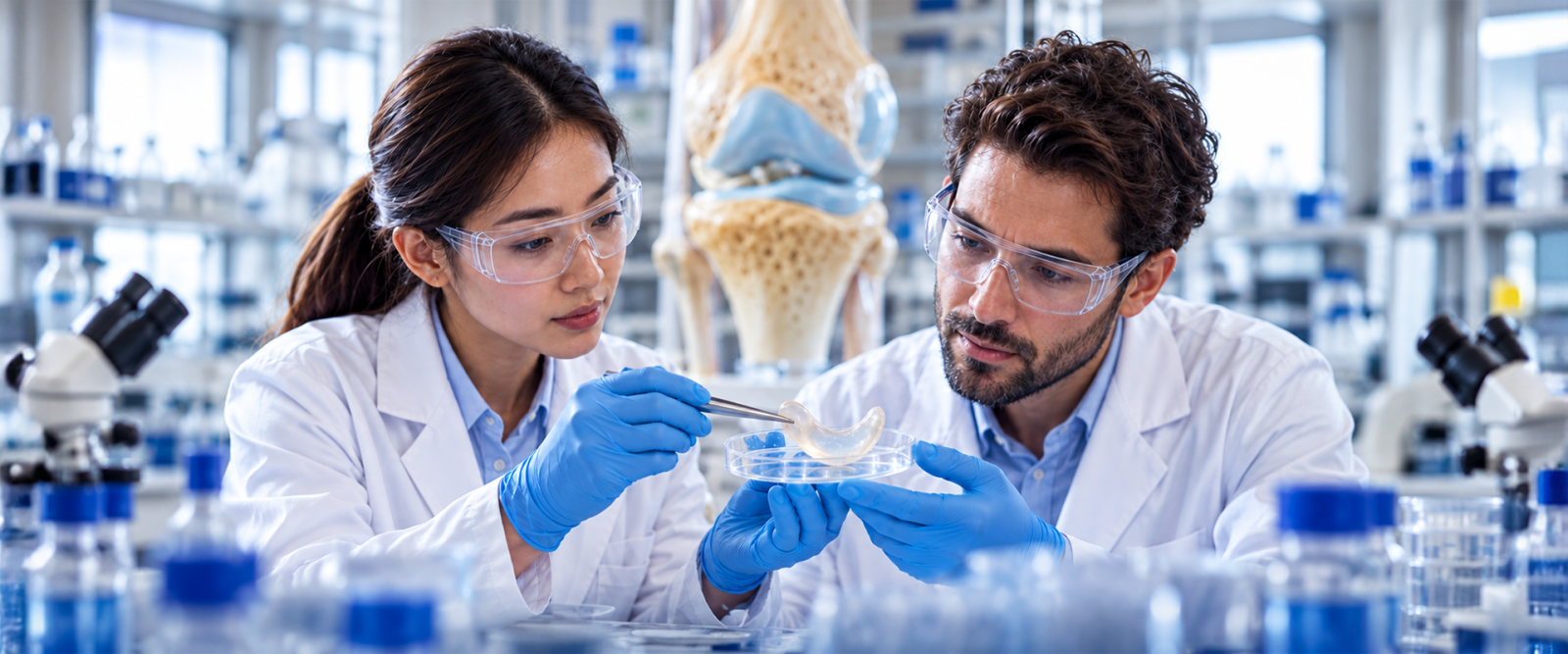
Stanford researchers find protein target to regenerate knee cartilage
Researchers at Stanford University have identified a protein target that triggers the regeneration of hyaline cartilage in adult joints without relying on stem cells, offering a potential alternative to joint replacement surgery for osteoarthritis patients.
-
Key Clinical Takeaways:
- Inhibiting the protein 15-PGDH causes worn joint cartilage to self-rejuvenate, growing thicker and stronger by prompting existing chondrocytes to build new hyaline cartilage.
- Laboratory tests on old mice, mice with torn anterior cruciate ligaments (ACL), and human cartilage tissue from recent knee replacements all demonstrated successful tissue regeneration.
- While human clinical trials have not yet begun for cartilage repair, oral inhibitors of the 15-PGDH enzyme are already undergoing Phase I safety trials for muscular dystrophy.
The Limits of Palliative Joint Care and the Search for Molecular Causes
For decades, aging individuals and patients with severe joint injuries such as torn anterior cruciate ligaments faced limited options for chronic knee pain and degeneration. Standard care relied on analgesics to manage daily discomfort, while end-stage degeneration required total knee arthroplasty because no existing therapeutics targeted the root cause of cartilage loss. Seeking an upstream mechanism, Stanford researchers isolated the 15-PGDH protein, which increases with age and drives tissue degradation.
Blocking 15-PGDH to Regenerate Hyaline Cartilage Without Stem Cells
By inhibiting the 15-PGDH protein, investigators found that worn cartilage could rebuild itself into smooth, frictionless hyaline cartilage essential for joint mobility. The treatment does not require stem cell intervention; instead, it signals resident chondrocytes to stop self-destruction and resume tissue synthesis. Helen Blau, the lead researcher of the team, stated that this discovery represents a novel method for adult tissue regeneration with high therapeutic potential for arthritis linked to aging or trauma. Experiments across aged mice and murine models with ACL tears showed that blocking the enzyme successfully restored cartilage thickness and protected against joint inflammation. Tests utilizing human cartilage tissue harvested from recent knee replacement procedures replicated these exact results, showing active cellular recovery and new matrix formation.

Clinical Development Pathways and Ongoing Phase I Safety Trials
Nidhi Bhutani, a co-researcher on the study, noted that no previous pharmaceutical agent has achieved this level of direct cartilage restoration. Although the intervention remains in early development before human clinical trials specifically for arthritis can begin, oral 15-PGDH inhibitors are currently undergoing Phase I safety evaluations in patients with muscular dystrophy. If these safety profiles hold and subsequent trials succeed, patients might eventually regenerate joint tissue through oral medication rather than undergoing invasive joint replacement surgery.
Disclaimer: The information provided in this article is for educational and scientific communication purposes only and does not constitute medical advice. Always consult with a qualified healthcare provider regarding any medical condition, diagnosis, or treatment plan.
