
“`html
London Exhibition Spotlights Jean-François Millet, Revealing a Complex Vision of Rural Life – A major retrospective at the National Gallery in London is offering a fresh viewpoint on the work of Jean-François Millet, challenging conventional interpretations of his depictions of 19th-century French peasant life.
Jean-François millet (1814-1875) emerged as a pivotal figure during a period of rapid societal change in France. While Paris underwent Haussmann’s renovation, transforming into a city celebrating modernity and middle-class leisure, Millet focused on the enduring realities of rural existence. His paintings often depict scenes of hardship and labor,a stark contrast too the optimistic narratives favored by many of his contemporaries.This deliberate focus distinguished him from the prevailing artistic trends, which often romanticized or ignored the struggles of the working class.
Millet’s work resonated deeply with artists seeking authenticity and emotional depth. Vincent van Gogh, especially drawn to Millet’s portrayal of peasant life, explicitly aimed to emulate him. Drawings like “A Man Ploughing and Another Sowing” (circa 1850-1853) demonstrate a clear connection to Van Gogh’s later works,notably his wheatfield paintings created in Auvers-sur-Oise in 1890,shortly before his death. The imagery of crows rising from the fields in Millet’s drawing foreshadows the birds frequently depicted in Van Gogh’s landscapes.
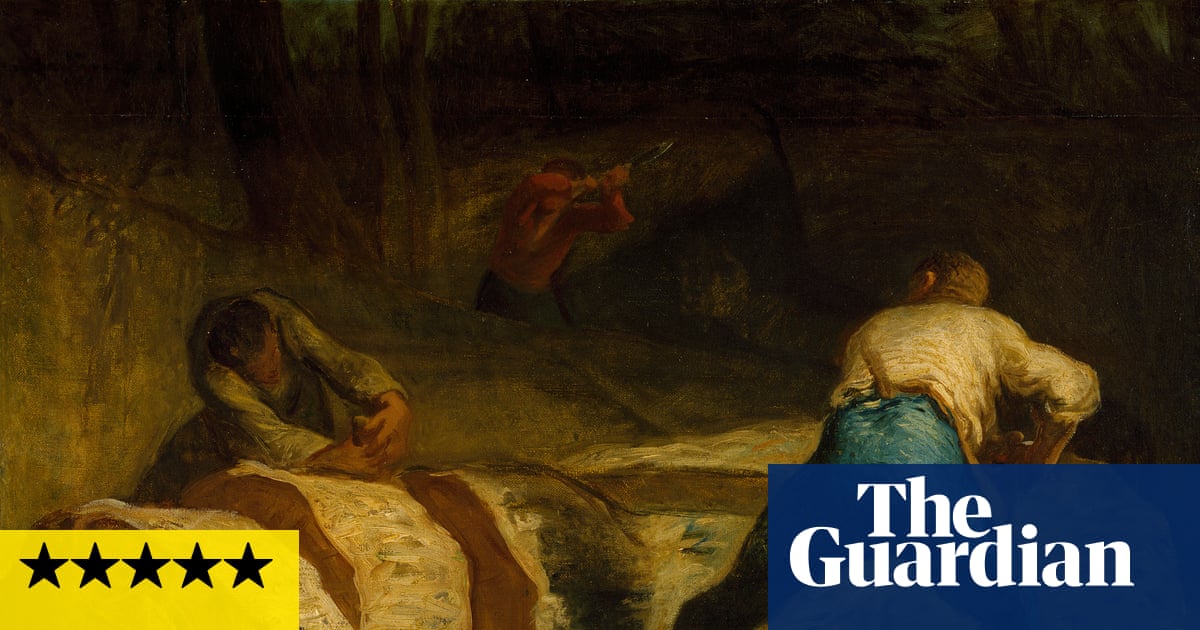
Beyond his compassionate depictions of labor, Millet’s paintings reveal a subtle yet potent sensuality. The physicality of the figures in “The Wood Sawyers” (1853) has been interpreted as possessing a distinctly sexual charge, while his portrayals of shepherdesses and milkmaids, such as “The Goose Girl at Gruchy” (1866), hint at adolescent desires and romantic longing. Van Gogh himself noted the sensuality of millet’s women, comparing them to the characters created by Émile Zola, a prominent naturalist author known for his frank depictions of sexuality and social issues. This intersection of Millet’s work with the literary realism of zola and the psychological depth of Thomas Hardy’s novels highlights a shared interest in exploring the unspoken passions of rural communities.
The exhibition culminates with “The Angelus” (1857-1859), arguably Millet’s most famous work. The painting depicts a peasant couple pausing their work to recite the Angelus prayer at dusk. Its enduring power lies in its timeless quality and its depiction of a way of life largely lost to history. Millet’s figures are rendered with a monumental quality, resembling statues rooted in the earth, suggesting both their resilience and their eventual return to the land.
