
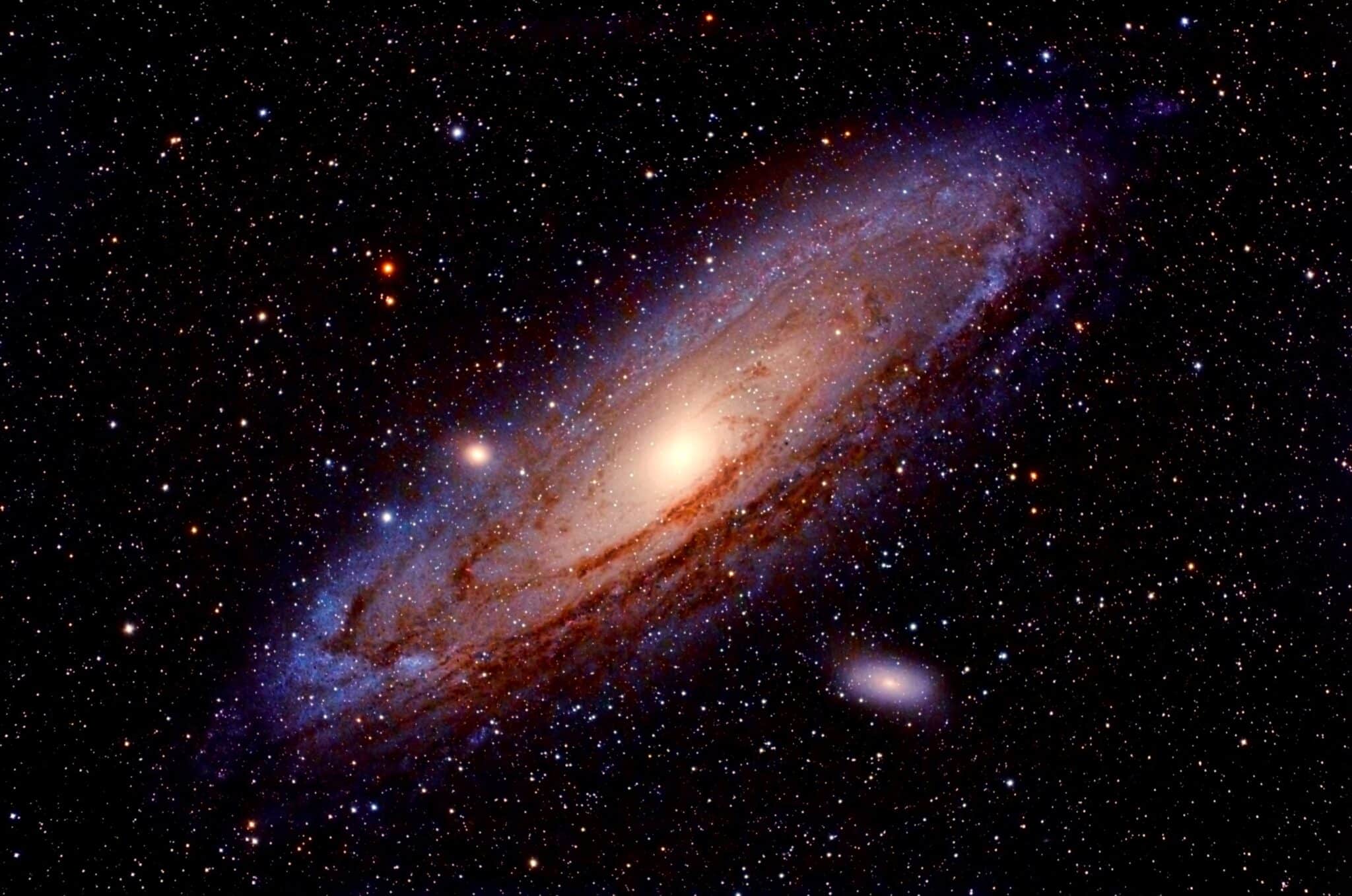
A Galactic Ripple: Vast Wave of Stars Discovered Crossing the Milky Way
A newly identified structure, dubbed the “Great Wave,” is rippling through the Milky Way, causing stars to move in a coordinated fashion over hundreds of light-years. The revelation, detailed in a study published in Astronomy & Astrophysics, marks the first time such a massive wave-like feature has been confirmed in our galaxy.
The Great Wave spans an astounding 9,300 light-years in length and is located between 6,500 and 10,000 light-years from Earth. What sets it apart is its scale and the clear, arc-like pattern it creates in the distribution of stars above the galactic disk. Researchers analyzing data from the European Space Agency’s (ESA) Gaia mission observed that stars within this region exhibit a consistent, upward motion, indicating they are part of a larger, coherent structure.
“its a realy surprising discovery,” explains Dr. Eloisa Poggio, a co-author of the study. “It shows us that our galaxy is far from static or simple.”
This isn’t the first evidence of such galactic undulations. A smaller, closer wavy structure, the Radcliffe wave, was identified several years ago, extending over 9,000 light-years at a distance of approximately 500 light-years. Whether the Great Wave and the Radcliffe wave are connected remains an open question for researchers.
Current theories suggest these ripples are a consequence of the Milky Way’s turbulent history,potentially stemming from past interactions with smaller satellite galaxies. These cosmic encounters, common on an astronomical scale, can generate immense waves within the galactic disk, analogous to the ripples created by a stone dropped into water.
The study’s primary focus was to document and characterize the great Wave, rather than pinpoint its exact origin. Though, the hypothesis of a collision or interaction with a satellite galaxy is considered a leading possibility.
“The more we study our galaxy, the more we discover its complexity and fascination. There is still so much to explore,” Dr. Poggio summarizes.
The discovery arrives shortly after the conclusion of Gaia’s primary operations. Over more than a decade, Gaia has compiled the moast precise map of the Milky Way to date, charting the positions and movements of over a billion stars.Future data releases, anticipated in the coming years, will offer even greater detail, particularly regarding variable stars like cepheids, potentially unlocking further insights into the Great Wave and other hidden structures within our galaxy.
As the data reveals, the Milky way, once thought to be well understood, continues to hold surprises, reminding us that even our “cosmic home” remains largely unexplored territory.
https://www.aanda.org/articles/aa/abs/2025/07/aa51668-24/aa51668-24.html
