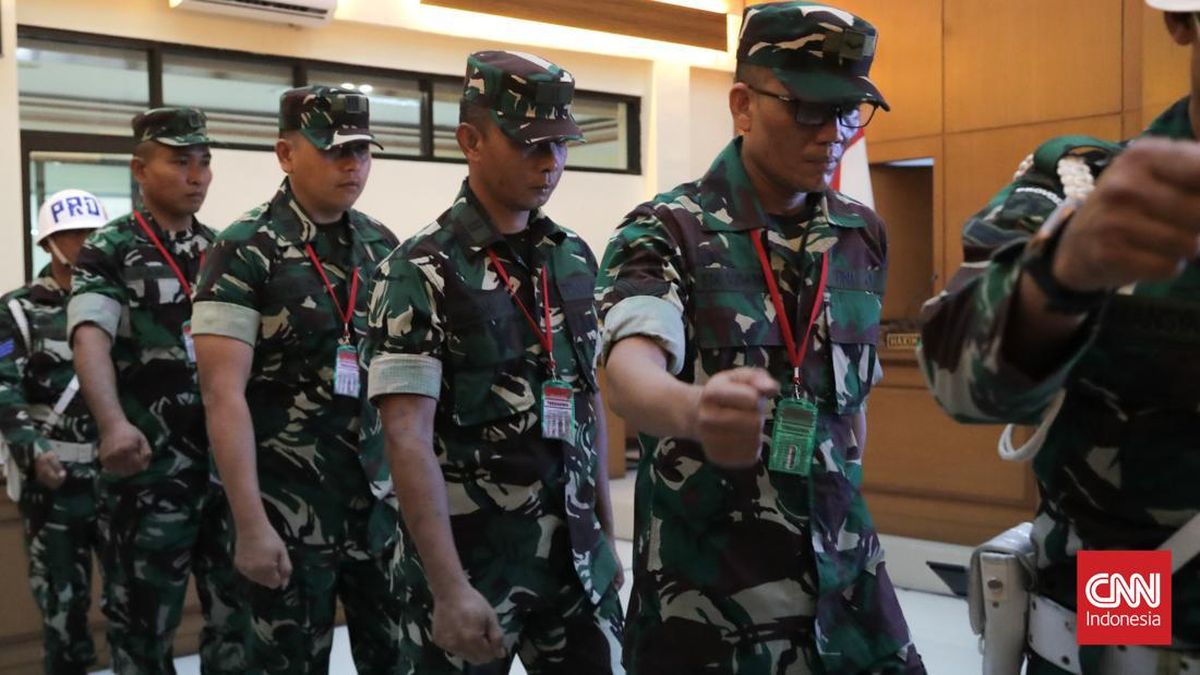
Military Trial Drama: Andrie Yunus Overacting Allegations Spark Controversy
In a Jakarta military court, defendant Serda Edi Sudarko has sparked outrage by claiming victim Andrie Yunus is “overacting” and “arrogant” following a brutal acid attack. The trial, marked by the victim’s absence and the judge’s demand to verify injury severity, raises critical questions about accountability within the Indonesian military justice system.
The courtroom has become a theater of the absurd. When a soldier is accused of splashing acid on a civilian, the expected narrative is one of restitution and remorse. Instead, the proceedings have devolved into a character assassination of the victim. By labeling Andrie Yunus as “overacting,” the defense isn’t just fighting a legal battle; they are attempting to invalidate the physical and psychological trauma of a chemical assault.
This is more than a criminal trial. It is a collision between military privilege and civilian rights.
The Strategy of Minimization
During the hearings, Serda Edi Sudarko did not merely deny the severity of the act; he attacked the persona of the man he harmed. Sudarko described Andrie Yunus as “arrogant,” suggesting that the victim’s reactions and public presence are a performance rather than a result of genuine suffering. This tactic—shifting the focus from the perpetrator’s actions to the victim’s personality—is a classic legal maneuver designed to mitigate sentencing by painting the victim as an undeserving or unreliable witness.
The audacity of the defense reached a peak when Sudarko claimed that he, too, was a victim of the incident. He testified that he was hit by splashes of the acid during the attack, describing the sensation as “hot and itchy.”
The juxtaposition is jarring. On one side, a victim facing potential permanent disfigurement; on the other, a defendant complaining of an “itch.”
For those watching the case, this narrative shift is an affront to the concept of justice. When the state’s agents are accused of violence, the burden of proof regarding the injury should be a matter of medical record, not a debate over the victim’s level of “acting.” Victims of such violent crimes often find that the legal process is as traumatizing as the event itself, requiring the support of specialized human rights attorneys to ensure their voices aren’t drowned out by institutional defense strategies.
A Judicial Gap in the Military Court
The trial has been plagued by procedural tensions. In a recent session, Andrie Yunus was absent from the courtroom. Rather than proceeding with the evidence at hand, the military judge expressed a desire to personally witness the extent of the injuries, stating, “We want to see how severe the wounds are.”
While this may seem like a quest for empirical evidence, it places an undue burden on the victim to “perform” his pain for the court to believe it. It reinforces the defendant’s claim that the injury is a matter of perception rather than a medical fact.
This dynamic highlights the inherent friction in Indonesia’s military court system. The National Commission on Human Rights (Komnas HAM) has long advocated for greater transparency and civilian oversight in cases where military personnel are accused of crimes against civilians. The current structure often leaves victims feeling like outsiders in a system designed to protect its own.
“The trial of Andrie Yunus defies common sense.”
This blunt assessment comes from Novel Baswedan, a prominent figure known for his relentless pursuit of corruption and institutional accountability. Baswedan’s critique underscores a broader societal frustration: the feeling that the military judiciary operates on a different plane of logic than the civilian world.
The Long-Term Cost of Chemical Violence
Beyond the legal arguments, there is the physical reality of an acid attack. Chemical burns are not “overacting”; they are progressive injuries that often require years of surgical intervention. The skin does not simply heal; it scars, contracts, and often requires multiple stages of grafting to restore basic functionality to the face or body.
The psychological toll is equally devastating. The loss of identity associated with facial disfigurement often leads to severe depression and social withdrawal. For victims in Jakarta and across Indonesia, accessing high-quality care is a logistical hurdle. Recovering from such an attack requires a multidisciplinary approach, involving specialized reconstructive surgeons and long-term psychiatric support to handle the PTSD associated with targeted violence.
When a court suggests that these injuries might be exaggerated, it doesn’t just hurt the individual victim—it sends a message to every civilian that their pain is negotiable if the perpetrator wears a uniform.
Institutional Accountability vs. Internal Loyalty
The core problem here is the “culture of the corps.” In many military structures, there is an instinctive drive to protect comrades from the full weight of civilian law. By framing the victim as “arrogant” or “overacting,” the defense is attempting to create a moral equivalence or a justification for the aggression.

However, the international community and local activists are increasingly calling for a shift. The transition toward a more democratic Indonesia requires that the military be subject to the same legal standards as any other citizen. The principles of international human rights law dictate that victims of state-sponsored or military violence must have access to an impartial tribunal—one that does not view the victim’s character as a defense for a crime of violence.
If the court accepts the “overacting” narrative, it sets a dangerous precedent. It suggests that the severity of a crime is determined not by the act itself, but by how “likable” the victim is to the judge.
This case is a litmus test for the Indonesian judiciary. Will it prioritize the internal loyalty of the military, or will it uphold the dignity of a citizen who has been physically scarred by those sworn to protect the state?
The trial of Serda Edi Sudarko is not just about one man’s actions; it is about the visibility of justice in a society struggling to balance military power with civilian rights. As the proceedings continue, the world is watching to see if “common sense” will prevail or if the machinery of military protection will once again shield the perpetrator at the expense of the victim. For those navigating the aftermath of such systemic failures, finding verified, independent legal consultants and medical experts is the only way to reclaim a sense of agency in a system that often tries to erase it.