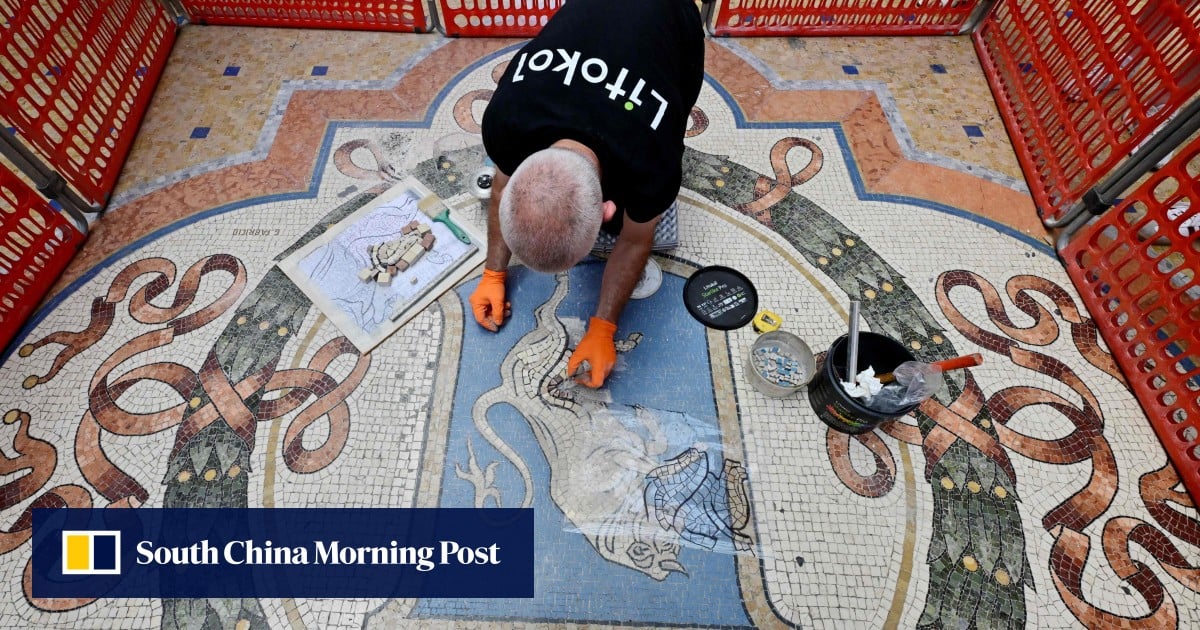
Milan’s Legendary Bull Mosaic Gets a Delicate Restoration After Tourists Wear Down Its Iconic Testicles
Restorer Gianluca Galli is currently repairing a 19th-century bull mosaic at Milan’s Galleria Vittorio Emanuele II after years of tourist foot traffic eroded the artwork. The tradition of grinding one’s heel on the bull’s testicles to guarantee a return to the city has created a structural crater requiring professional intervention.
The Galleria Vittorio Emanuele II, a historic shopping arcade adjacent to the Duomo di Milano, stands as one of the world’s oldest and most prestigious covered shopping centers. While it serves as a central hub for commerce and tourism, the physical toll of millions of annual visitors highlights a growing tension between the preservation of heritage sites and the realities of mass tourism. As Milan manages a population exceeding 1.3 million, the maintenance of such high-traffic cultural assets has become a recurring fiscal and logistical challenge for municipal authorities.
The Mechanics of Cultural Erosion
The damage to the mosaic is not merely superficial; it is a clear example of mechanical wear caused by repetitive, localized pressure. City officials noted that the pink tesserae—the small, distinct pieces of stone used to form the mosaic—have been physically ground down by the soles of shoes. This process, repeated thousands of times, has resulted in a literal cavity in the floor, compromising the integrity of the 19th-century craftsmanship.

Restoration in such a high-traffic environment requires a delicate balance. Galli, tasked with the repair, utilized historical designs to ensure the new stone pieces are authentic to the period. However, the choice of adhesive highlights the modern necessity of durability. By opting for epoxy resins over the traditional lime and sand mortar, the city is prioritizing long-term structural resilience over strict material purism.
The Economic and Logistical Burden of Heritage
Maintaining a city that functions simultaneously as a living community and a global tourism landmark requires sophisticated management. When public infrastructure suffers from “death by a thousand cuts”—or in this case, a thousand pirouettes—the costs of constant remediation fall upon the taxpayer. For cities facing similar degradation of historic assets, the solution lies in specialized procurement.

Municipalities often find themselves in need of historic preservation specialists who understand the intersection of ancient materials and modern wear-and-tear. The legal and administrative framework required to protect these sites often necessitates the involvement of public works and heritage policy consultants to ensure that current restorative efforts do not inadvertently violate preservation statutes.
“The gallery’s lucky spot has become worn out over time,” noted Milan deputy mayors Emmanuel Conte and Marco Granelli in a recent statement regarding the necessity of the repairs.
The Precedent of Public Stewardship
This represents not the first time the bull mosaic has required attention; the last recorded restoration occurred in 2017. The recurrent nature of this damage poses a broader question for urban planners: at what point does a “charming gesture” transition into an unsustainable liability? As Gianluca Galli noted while working on the site, the tradition is undeniably damaging to the work of art, regardless of the cultural sentiment attached to it.
For city managers tasked with balancing visitor engagement with artifact longevity, the challenge is universal. Whether dealing with marble floors in Italy or historic masonry in other global hubs, the requirement for certified infrastructure maintenance contractors is paramount. These professionals provide the technical expertise required to reverse damage that, if left unchecked, would result in the permanent loss of historical context.

| Challenge | Restoration Method | Material Strategy |
|---|---|---|
| Surface Erosion | Manual Stone Cutting | Hand-matched tesserae |
| Structural Cavity | Epoxy Resin Binding | High-durability bonding |
| Historical Integrity | Period-Design Review | Authentic visual reconstruction |
The transition from a cultural landmark to a maintenance liability is often subtle. When public spaces face significant degradation, the immediate response is often aesthetic, yet the systemic solution requires a deeper engagement with urban planning and heritage management services. These experts help local governments establish protocols that protect assets while allowing for the continued flow of public life.
As the restoration concludes, the bull will once again be whole, though the underlying tension remains. The cycle of wear and repair is a testament to the city’s endurance, but it also serves as a warning. Without careful management and the application of modern technical solutions, the physical history of our urban centers risks being ground away by the incredibly public that seeks to celebrate it. For those managing historic districts, identifying the right architectural conservation firms is the final, essential step in ensuring that the symbols of our cities survive for the next generation.