
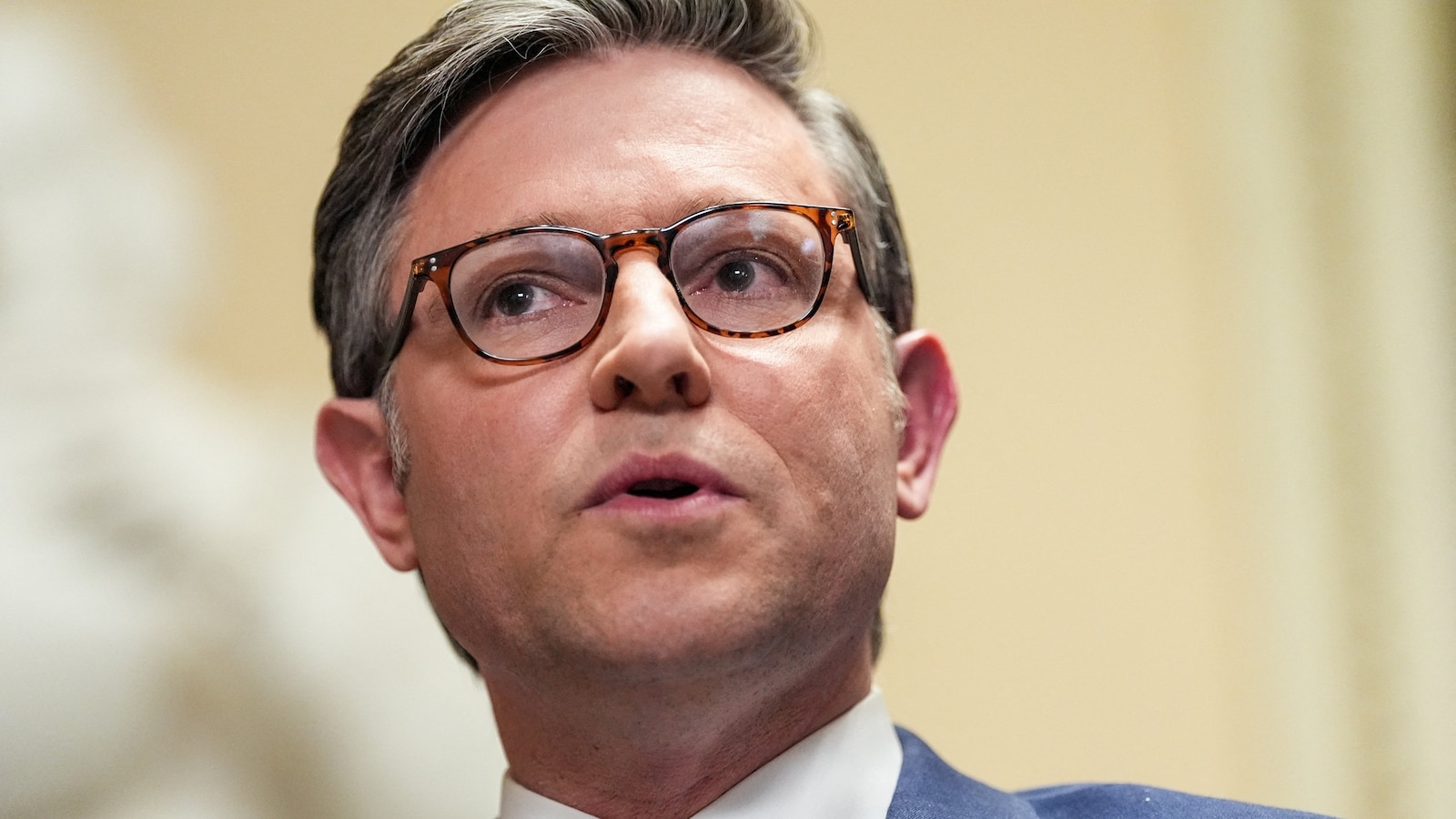
Mike Johnson Rejects Senate DHS Bill Excluding ICE
House Speaker Mike Johnson has officially rejected the Senate’s partial funding bill for the Department of Homeland Security, creating a legislative standoff that threatens to paralyze federal operations by late March 2026. For the entertainment industry, this is not merely a political maneuver but a logistical crisis; the DHS oversees USCIS, the agency responsible for processing O-1 and P-1 visas essential for international talent, as well as customs clearance for high-value production equipment. The rejection forces studios to confront immediate risks regarding cast availability, location security permits, and the potential freezing of cross-border intellectual property transfers.
The corridors of Capitol Hill are often distant from the soundstages of Burbank and Atlanta, but the seismic tremors of a government funding dispute travel fast. When Speaker Johnson labeled the Senate’s attempt to fund most of the department—excluding ICE—as a “joke,” he wasn’t just scoring political points; he was inadvertently signaling a potential shutdown of the bureaucratic machinery that keeps global Hollywood running. In the high-stakes ecosystem of 2026 media, where a single day of production delay can burn through six figures, uncertainty is the most expensive line item on the budget.
This legislative gridlock arrives at a precarious moment in the industry calendar. We are currently in the thick of principal photography for the summer 2026 blockbuster slate, with major franchises relying on international co-productions and talent imports. The Department of Homeland Security is not just a border enforcement agency; it is the gatekeeper of the global workforce. A lapse in funding or a shift in operational priority away from administrative processing toward enforcement can create a bottleneck at USCIS that leaves A-list directors waiting on green cards and below-the-line crew stranded at customs.
“The intersection of federal funding and creative logistics is where the real danger lies. If USCIS processing times spike due to a funding gap, we aren’t just talking about delayed shoots; we are talking about breach of contract lawsuits and insurance claims that could destabilize mid-budget productions.”
The problem facing studio executives is multifaceted. It is a legal nightmare involving immigration compliance, a financial risk regarding production insurance, and a PR minefield. In an era where brand equity is fragile, studios cannot afford to be seen as beneficiaries of controversial immigration policies, nor can they afford the operational paralysis of a frozen visa department. This is precisely where the industry turns to specialized immigration and visa legal experts who navigate the complex web of federal mandates to secure talent mobility regardless of the political climate.
The Logistics of Legislative Chaos
To understand the magnitude of this disruption, one must look at the dependency of modern filmmaking on fluid borders. The “runaway production” phenomenon, where projects flee the U.S. For tax incentives in the UK or Canada, is exacerbated by domestic instability. If the DHS cannot guarantee the swift entry of specialized crew or the import of proprietary camera rigs and VFX hardware, the economic argument for shooting domestically weakens.
According to data from the FilmL.A. production tracking reports, over 30% of major studio shoots in the first quarter of 2026 utilized foreign-born key department heads. A disruption in DHS funding directly threatens this pipeline. The Customs and Border Protection (CBP), also under DHS, manages the ATA Carnets required for temporary importation of equipment. A slowdown here doesn’t just delay a scene; it halts the entire unit.
The industry response to such volatility is rarely public, but the backend maneuvering is aggressive. Production companies are immediately activating contingency clauses in their contracts. This often involves a rush to secure completion bond and production insurance firms that specifically cover “force majeure” events related to government shutdowns. The cost of such coverage skyrockets during election years or budgetary standoffs, eating into the margins of already tight indie productions.
Brand Safety and the PR Tightrope
Beyond the logistics, there is the reputational risk. In 2026, audiences are hyper-aware of the political affiliations of the corporations behind their favorite content. A funding battle centered on ICE and border enforcement places studios in an uncomfortable position. If a production is delayed because of these policies, or if a star is detained due to visa complications arising from the funding gap, the resulting media cycle can be devastating.
We saw the precursors to this in the late 2010s, but the stakes are higher now. Social sentiment analysis tools indicate that “government shutdown” and “Hollywood” are increasingly correlated in negative brand sentiment clusters. Studios are proactively engaging crisis PR and reputation management firms to draft holding statements and manage the narrative before a single camera rolls. The goal is to decouple the creative product from the bureaucratic failure, ensuring that the audience blames Washington, not the studio.
- Visa Processing Delays: A funding gap often leads to reduced staffing at USCIS service centers, extending O-1 visa approval times from weeks to months, jeopardizing casting for fall releases.
- Location Security Permits: DHS grants often overlap with local law enforcement coordination for large-scale shoots; uncertainty here can void location agreements in sensitive zones.
- Intellectual Property Seizures: CBP plays a role in stopping counterfeit merchandise; a distracted or underfunded agency may depart franchise IP more vulnerable to piracy at the border.
The Path Forward for Producers
Speaker Johnson’s insistence on an alternative bill suggests a prolonged period of instability. For the entertainment sector, the “wait and see” approach is a luxury few can afford. The smart money is moving toward diversification and legal fortification. Producers are increasingly looking at dual-shoot strategies, preparing to move units to jurisdictions with more stable administrative frameworks if the U.S. Federal machinery grinds to a halt.

This environment underscores the critical need for a robust professional network. It is no longer enough to have a great script and a attached star; you need a legal and logistical team that can insulate the production from federal volatility. Whether it is securing the right entertainment litigation and contract attorneys to navigate force majeure clauses, or hiring specialized event security and logistics vendors who can operate independently of federal slowdowns, the infrastructure of the industry must be resilient.
As the March 27th deadline looms and the political rhetoric heats up, the entertainment industry watches with a practiced, cynical eye. The display must go on, but in 2026, keeping the show on the road requires more than just creative genius; it requires a fortress of legal and logistical expertise capable of withstanding the whims of Capitol Hill. For those navigating this turbulence, the difference between a completed film and a shelved asset often lies in the quality of the professional counsel retained before the crisis hits.
Disclaimer: The views and cultural analyses presented in this article are for informational and entertainment purposes only. Information regarding legal disputes or financial data is based on available public records.