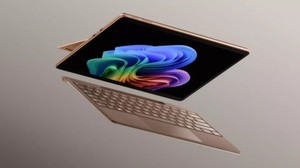
Microsoft and Qualcomm drop Copilot+ PC and AI PC branding in marketing
The aggressive marketing push behind AI-branded personal computers has officially flatlined. Major hardware and software stakeholders, most notably Microsoft and Qualcomm, are quietly backing away from the “Copilot+ PC” nomenclature, signaling an unceremonious early exit for the “AI PC” brand category just two years after its aggressive market introduction.
The Tech TL;DR:
- The Shift: Microsoft and Qualcomm have dropped heavy reliance on the “Copilot+ PC” and “AI PC” monikers in promotional materials, pivoting back toward traditional high-performance classifications.
- The Root Cause: Initial adoption was driven largely by pandemic-era hardware refresh cycles and NPU integration rather than explicit consumer demand for artificial intelligence features, compounded by severe privacy backlash over the Recall feature.
- The Market Reality: According to market data from IDC, manufacturers struggled to sell the AI-centric message to consumers, culminating in a silent industry-wide retreat from front-facing AI branding.
The Origin Story of a Manufactured Category
To understand why the terminology is vanishing from marketing collateral, one must examine how the category materialized. Data indicates that when these devices initially hit store shelves, consumers were not buying them because they specifically desired an AI-branded machine. Instead, a natural post-pandemic hardware replacement cycle collided with a strategic pivot by Microsoft to mandate Neural Processing Units (NPUs) in new system architectures. Microsoft defined these systems as “AI PCs,” prompting global manufacturers to rapidly rebrand their product lineups to match.

By late 2024, Microsoft CEO Satya Nadella asserted that Copilot+ PCs were successfully attracting new customers, while holiday season data from early 2025 indicated that these machines captured roughly 15% of premium laptop sales in the United States. The initial hardware definition established a strict baseline: an NPU capable of at least 40 TOPS (Tera Operations Per Second) paired with a minimum of 16GB of RAM. Competitors quickly followed suit, with AMD baking “AI” designations directly into mobile CPU nomenclature and Microsoft and Qualcomm launching their first Arm-based Windows machines under the Copilot+ umbrella.
The Dilution of Marketing and the Recall Controversy
Despite early sales figures, the messaging failed to sustain momentum. Historical records from the Internet Archive’s Wayback Machine show that as recently as May, Microsoft’s landing pages touted Copilot+ PCs as the “fastest, most intelligent Windows PCs ever built.” Today, those URLs redirect to standard “performance PCs” descriptions, with the specific AI branding relegated to fine print. IDC analysts noted that manufacturers faced persistent friction trying to pitch the AI PC concept, a challenge that intensified before physical RAM constraints further complicated production realities.
Compounding the marketing fatigue was severe pushback regarding foundational features. The rollout of the “Recall” feature—designed to continuously log and index a user’s screen history—ignited immediate, sustained security and privacy controversies. Privacy advocates raised alarms over the architectural risks of persistent local data logging, dealing a lasting blow to the consumer trust required to anchor a brand-new device category.
Technical Realities Behind the Architectural Pivot
Beneath the marketing retreat, local hardware acceleration has not disappeared; rather, the industry has stopped treating “AI” as a standalone product category.
# Checking NPU and hardware acceleration availability via CLI
# Typical diagnostic check for local LLM runtimes on Windows on Arm
dxdiag /t hardware_report.txt
findstr /i "NPU Neural" hardware_report.txt
Editorial Kicker: Beyond the Hype Cycle
The quiet retirement of the AI PC label marks a maturation phase for client-side hardware. When a feature ceases to be a marketing buzzword and becomes a standard silicon specification, the industry has moved past the initial hype cycle.
*Disclaimer: The technical analyses and security protocols detailed in this article are for informational purposes only. Always consult with certified IT and cybersecurity professionals before altering enterprise networks or handling sensitive data.*