Mexican Cartels Use South Africa to Supply Meth to Australia
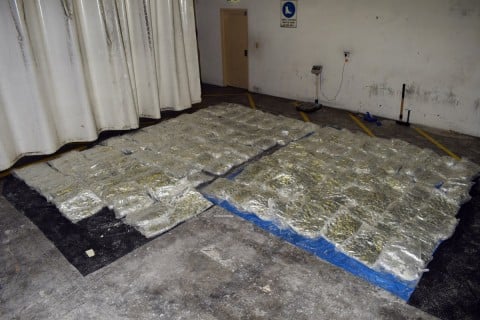
Mexican drug cartels are actively targeting Australia’s illicit drug market by establishing industrial-scale methamphetamine laboratories in South Africa, law enforcement agencies confirmed. Brigadier Devon Naicker, head of the South African Narcotics Enforcement Bureau (SANEB), stated that authorities are investigating whether specific meth hauls intercepted in Australia originated from a laboratory raided in Swartruggens, South Africa, due to packaging similarities and transit routes through the port of Durban.
Australian Market Demand and Cartel Expansion Across Southern Africa
Police forces in Australia and New Zealand have previously established that local chapters of the Comancheros biker gangs source their supply directly from the Sinaloa cartel.
Law enforcement agencies are uncovering a vast supply chain woven across southern Africa to feed this persistent Australian demand. The operational footprint mirrors tactics seen in Nigeria, where authorities arrested four Mexican nationals during meth lab raids earlier this year. In South Africa, however, the scale is significantly larger. Authorities have arrested 16 Mexican nationals in raids on clandestine laboratories since 2024.

Industrial-Scale Laboratories on Isolated South African Farms
The first laboratory bearing distinct cartel trademarks was uncovered in the farming town of Marble Hall, northeast of Johannesburg, in 2020. By May, when police raided a property in the farming town of Swartruggens two and a half hours northwest of Johannesburg, the sheer magnitude of the operation pointed directly to the Sinaloa syndicate. Five of the 13 suspects arrested at the Swartruggens farm were Mexican chemists. Police established that these chemists began cooking crystal meth shortly after arriving on three-month tourist visas in March 2025.
Investigators also arrested two Mozambicans, one Zimbabwean, and four South Africans at the Swartruggens location. Three of the South African suspects are members of the Afrikaner family that owned the extensive game reserve. According to sources close to the case, cartels “seem to approach farmers who are struggling” but not always. The family in question had purchased the game farm in 2024, following previous court appearances involving the rental of land for the illegal local manufacturing of the hypnotic sedative mandrax, also known as methaqualone.
Clandestine labs consistently utilize isolated rural farms situated within easy reach of major transport corridors, such as the N4 national route near the Swartruggens property. These operations require continuous deliveries of precursor chemicals and rapid transport methods to move finished substances away from the laboratories. Nearly a third of South Africa’s international trade is conducted with those two nations, providing ample cover for industrial solvent shipments.
Chemical Odors and US Support Aid Drug Seizures
The manufacturing process generates intense chemical odors detectable over vast distances. Brigadier Naicker stated that the precursor production stinks and can be smelled kilometers away depending on wind direction. In August, police seized five tonnes of solvents, catalysts, and reagents during a raid on a laboratory in Musina near the Zimbabwean border. That operation involved direct support from the US Drug Enforcement Administration and the US Department of Homeland Security.
Investigators previously tracked a suspicious container entering South Africa through the port of Durban in April 2023. That shipment led authorities to five storage units filled with chemicals and equipment in Midrand, located between Pretoria and Johannesburg. Last month, SANEB busted another industrial-scale laboratory on a farm in Klipvoor, approximately 175 kilometers north of Johannesburg. Law enforcement recovered large reaction tanks with capacities of several hundred liters each. Investigators confirmed the equipment is industrial yet entirely handmade, indicating that the cartels transport their own specialized boilermakers to construct the custom vessels on-site.
Border Arrests Reveal Mexican Syndicate Links to South Africa
Smuggling methods extend beyond maritime cargo. In January, border security arrested a 32-year-old woman at Sydney airport arriving on a flight from South Africa carrying 39 kilograms of powdered methamphetamine in her luggage.
While Australian authorities confirmed an increased targeting of their domestic illicit market by Mexican syndicates, operational sensitivities preclude further public comment on active cartel operations within South African jurisdiction. SANEB’s ongoing investigations continue to track the syndicate across southern Africa.