
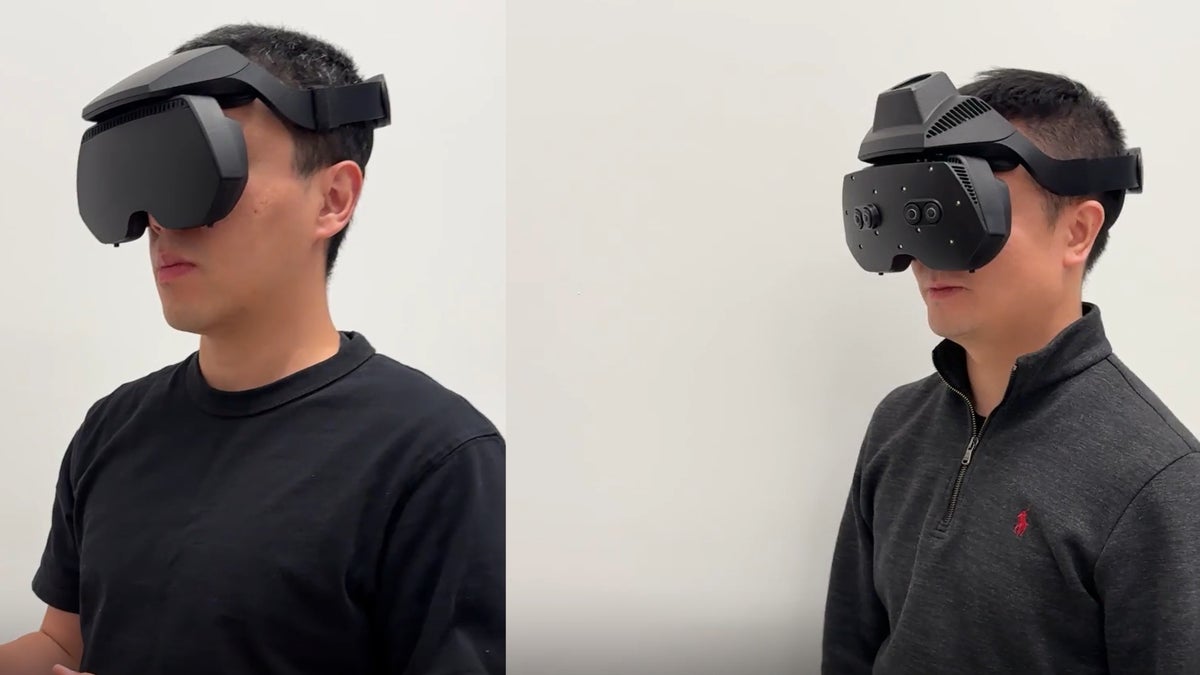
Meta Unveils Compact VR Headsets with Expansive Field of View
Future of Virtual Reality Promises Deeper Immersion and Comfort
Meta’s virtual reality division, Reality Labs, is pushing the boundaries of VR technology with new prototype headsets designed to be significantly lighter, smaller, and offer a dramatically wider field of view (FOV) than current market leaders.
Bridging the Gap Between Reality and Virtual
Even top-tier VR devices, such as the Meta Quest 3, can become uncomfortable during extended use. A common limitation is their relatively narrow FOV, forcing users to adapt. Meta’s latest prototypes, resembling large goggles, aim to overcome these issues, providing a more seamless and less cumbersome experience for prolonged immersion.
Expanding the Horizon
The current Meta Quest 3 boasts a horizontal FOV of 104 degrees. In comparison, human vision typically spans 200-220 degrees. These new prototypes, however, achieve an impressive 180-degree FOV. This significant expansion could drastically enhance the immersion of VR games and applications, making them far more lifelike.
While other headsets with wide FOVs exist, like those from Pimax, they often sacrifice portability by being even bulkier. Meta’s innovative design appears to strike a balance, potentially blending the immersive capabilities of VR headsets with the compact nature of emerging AR glasses.
The Race for Augmented Reality Dominance
Meta is actively pursuing advancements in this space, as demonstrated by its Orion AR glasses prototype, a device envisioned to one day supersede the smartphone. The company faces stiff competition, notably from Apple, where CEO Tim Cook reportedly views AR glasses as a significant future focus. However, achieving the performance of devices like the Quest 3 or Apple Vision Pro in a glasses form factor remains a costly challenge due to miniaturization.
The compact prototypes from Reality Labs represent a compelling direction for Meta, offering a potential glimpse into the future design of the Meta Quest 4. Investing in this technology while concurrently developing AR glasses could prove a strategic advantage for the company.
Wider FOVs and more compact designs in mainstream VR headsets would not only improve user experience but also potentially attract more newcomers to virtual reality, fostering industry growth and enabling even more sophisticated immersive experiences. This push aligns with a broader trend, as the global VR market is projected to reach $117.7 billion by 2030 (Grand View Research, 2024).
