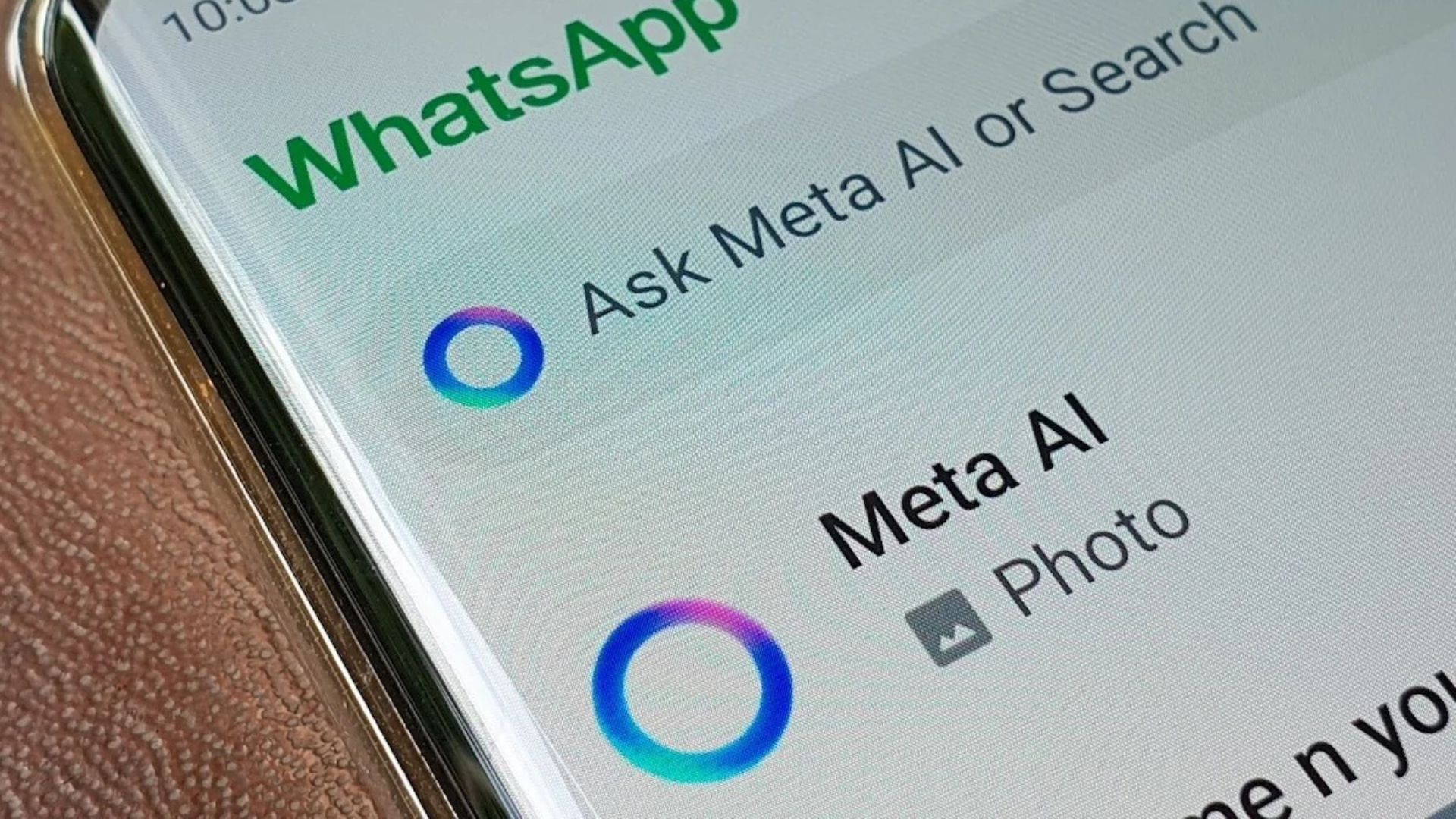
Meta AI’s New Purple Icon in WhatsApp
The sudden appearance of a purple circular icon in the WhatsApp interface has triggered a wave of user confusion, but for those of us tracking the deployment cycle of Large Language Models (LLMs), it is a predictable UI pivot. This isn’t a new feature launch; it is a visual rebranding of Meta AI, the integrated assistant designed to wedge generative AI into the primary communication flow of billions.
The Tech TL;DR:
- UI Shift: The purple icon is a cosmetic update to the existing Meta AI integration, signaling a deeper systemic embedding rather than a new tool.
- Architecture: Powered by the Llama family of models, the assistant handles natural language processing (NLP) via cloud-based inference.
- Security Friction: The integration creates a conceptual boundary shift between end-to-end encrypted (E2EE) user chats and the non-encrypted AI processing layer.
From an architectural standpoint, the “purple icon” is merely the frontend manifestation of Meta’s push toward an AI-first interface. The real story lies in the inference pipeline. When a user interacts with Meta AI, the query exits the E2EE tunnel—which protects standard peer-to-peer messages—and hits Meta’s server-side LLM. This creates a distinct security perimeter that enterprise users and privacy-conscious developers must account for. If your organization relies on WhatsApp for sensitive coordination, the presence of this icon marks the point where data leaves the encrypted enclave and enters the training and processing loop of the model.
The Tech Stack: Llama Integration and Inference Latency
Meta AI is built upon the Llama (Large Language Model Meta AI) architecture. While Meta keeps the specific production version of the WhatsApp integration proprietary, the system likely utilizes a quantized version of their latest weights to maintain acceptable token-per-second (TPS) rates on mobile hardware. The goal is to minimize “time to first token” (TTFT), ensuring the assistant feels responsive rather than sluggish.
The integration utilizes a RAG (Retrieval-Augmented Generation) framework, allowing the AI to pull from real-time web data to answer queries. This requires a high-performance vector database and an efficient orchestration layer to handle the transition from a chat message to a search query and back to a synthesized response. For developers, this is a textbook example of scaling a stateful AI interaction across a massive, globally distributed user base.

“The challenge with embedding LLMs into messaging apps isn’t the model itself, but the orchestration of context. Maintaining a coherent conversation thread while minimizing API latency across varying network conditions is where the real engineering battle is fought.” — Lead AI Architect, Open Source LLM Community
Because this integration bypasses the traditional E2EE protocol for its specific queries, companies are increasingly auditing their mobile communication policies. Many are deploying cybersecurity auditors and penetration testers to map out exactly how corporate data might leak into generative AI training sets through “shadow AI” usage on personal devices.
AI Assistant Matrix: Meta AI vs. The Competition
To understand where this purple icon fits in the broader ecosystem, we have to look at the competitive landscape of integrated mobile AI.
| Feature | Meta AI (WhatsApp) | Google Gemini (Messages) | Apple Intelligence (Siri/iOS) |
|---|---|---|---|
| Primary Model | Llama Series | Gemini Pro/Flash | On-device/Private Cloud |
| Encryption | Hybrid (E2EE for chats / Cloud for AI) | Cloud-based | On-device priority / Private Cloud Compute |
| Integration | Omnichannel (FB, IG, WA) | Android OS Deep Link | System-wide OS Integration |
| Primary Use Case | Social/Information Retrieval | Productivity/Ecosystem | Personal Context/Automation |
While Google and Apple are pushing for deeper OS-level integration, Meta is leveraging its ownership of the communication layer. By placing the AI directly in the chat list, they are reducing the friction of AI adoption, essentially turning the messaging app into a primary OS for information retrieval.
The Implementation Mandate: Simulating the AI Request
For those curious about how these requests are structured under the hood, a typical interaction with a generative AI endpoint follows a RESTful pattern. While the WhatsApp client uses a proprietary binary protocol for efficiency, the logical flow mirrors a standard API call to an LLM provider. Below is a conceptual cURL request demonstrating how a client might send a prompt to a Llama-based backend via a managed gateway.

curl -X POST https://api.meta.ai/v1/chat/completions -H "Content-Type: application/json" -H "Authorization: Bearer $META_AI_TOKEN" -d '{ "model": "llama-3-70b-instruct", "messages": [ {"role": "system", "content": "You are a concise assistant integrated into a messaging app."}, {"role": "user", "content": "What is the current latency for the Singapore region?"} ], "temperature": 0.7, "max_tokens": 150, "stream": false }'This request highlights the “System Prompt” (the instructions that define the AI’s persona) and the “Temperature” (the randomness of the output), which are critical for maintaining a consistent user experience across millions of devices. Organizations looking to build similar internal tools often partner with software development agencies to implement custom RAG pipelines that keep data within their own VPC (Virtual Private Cloud) to avoid the privacy pitfalls inherent in public AI integrations.
The Bottleneck: Privacy vs. Utility
The core technical conflict here is the “Privacy Paradox.” WhatsApp’s brand is built on the Signal protocol’s end-to-end encryption. However, an LLM cannot “read” an encrypted message on the server side to respond to it. The purple icon represents a deliberate “opt-in” to a non-encrypted channel. Every time a user interacts with the AI, they are effectively stepping outside the encrypted vault.
This architectural choice is a calculated risk. Meta is betting that the utility of an instant, integrated AI outweighs the privacy concerns of the average user. However, for the senior developer or the CTO, this is a red flag for SOC 2 compliance and data sovereignty. The movement of data from an E2EE environment to a cloud-based inference engine is a significant shift in the threat model of the application.
For further technical deep-dives on the underlying architecture, developers should consult the official Llama GitHub repository, explore the Stack Overflow community for implementation hurdles, or track the latest LLM benchmarks on Ars Technica.
The purple icon is not a “feature”—it is a signal. It marks the transition of WhatsApp from a pure utility for communication into a portal for Meta’s broader AI ambitions. As the line between the messenger and the model continues to blur, the real winners will be the firms that can implement these capabilities without compromising the fundamental security of the underlying transport layer. For those struggling to balance AI adoption with strict security mandates, engaging with professional security auditors is no longer optional; it is a prerequisite for survival in the generative era.
*Disclaimer: The technical analyses and security protocols detailed in this article are for informational purposes only. Always consult with certified IT and cybersecurity professionals before altering enterprise networks or handling sensitive data.*