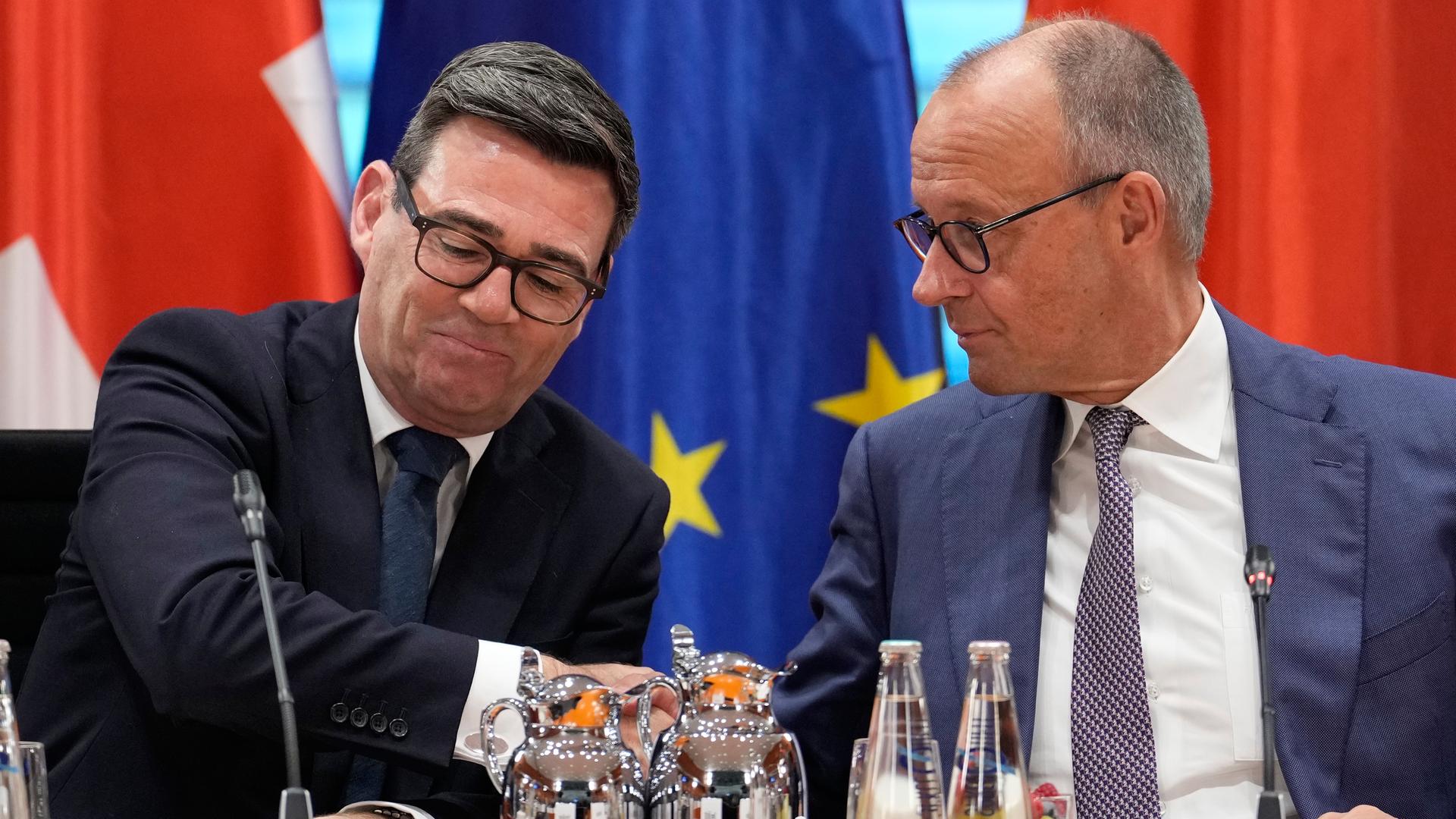
Merz and Burnham Exchange Kensington Treaty Instruments in Berlin
German Chancellor Friedrich Merz and British Prime Minister Andrew Burnham exchanged the ratification instruments of the Kensington Treaty in Berlin on October 8, 2026, officially bringing the bilateral friendship agreement into force. The accord establishes a new strategic foundation for security, economic cooperation, and youth mobility between the two nations following the United Kingdom’s departure from the European Union.
The formal exchange took place in the German Chancellery during Burnham’s inaugural visit to Berlin, according to reporting by bundesregierung.de and Deutschlandfunk. Originally signed in London on July 17, 2025, the treaty aims to deepen ties across defense policy, economic innovation, and civil society. Chancellor Merz characterized the finalized pact during the ceremony as a historic moment for European collaboration, emphasizing that the agreement demonstrates how closely Britain and the European Union remain intertwined.
Treaty Enables Visa-Free School Trips and Direct Rail Links
The treaty introduces concrete travel simplifications designed to foster cross-border exchanges among younger generations. Deutschlandfunk reported that the accord establishes visa-free travel for school trips alongside provisions for extended student stays. Leaders from both governments also advanced plans to establish a direct rail connection linking Germany and the United Kingdom, improving transit infrastructure for travelers and businesses alike.
Chancellor Merz echoed that sentiment in his official statement, noting that granting young people unhindered access to both countries ensures they experience firsthand the enduring relationship between British and European societies.

Fighter Jet Collaboration Proposals
Beyond civic and travel measures, Prime Minister Burnham used his inaugural visit to pitch an unexpected defense collaboration, according to Deutschlandfunk. The British leader invited Germany to join the Global Combat Air Programme, known as GCAP, a next-generation fighter jet initiative currently involving Italy and Japan. This proposal follows the collapse earlier in the summer of the competing Future Combat Air System, or FCAS, project that Germany had pursued alongside France. Prior to Burnham’s offer, Germany’s most likely alternative for fighter jet development was widely considered to be a separate bilateral cooperation with Sweden.
The defense overture arrives as both London and Berlin seek to restructure their security partnerships on the continent.