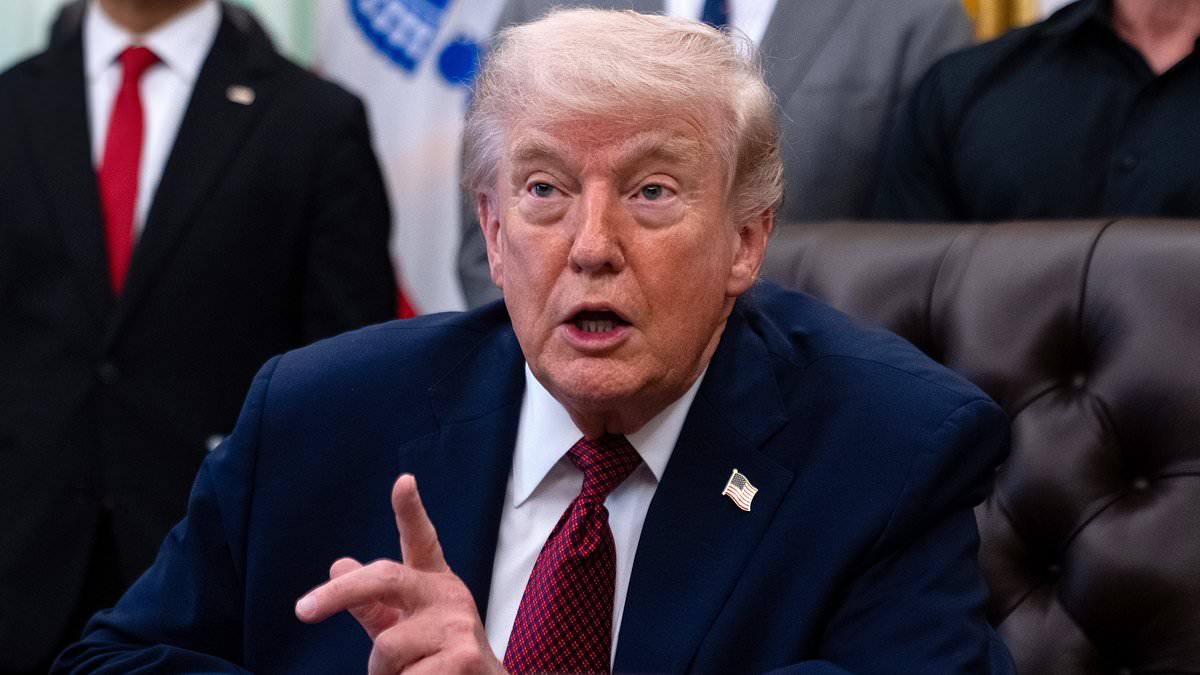
Megyn Kelly Mocks Trump’s Iran Strategy, Compares Him to Jan Brady in Latest Critique
Megyn Kelly’s sharp critique of President Donald Trump’s Iran strategy, likening his approach to the fictional character Jan Brady from ‘The Brady Bunch,’ underscores growing bipartisan concern over the administration’s inconsistent foreign policy as of April 23, 2026, raising questions about strategic coherence in Middle East diplomacy and its real-world implications for regional stability and U.S. Credibility.
The comparison to Jan Brady—the often-overlooked middle child known for plaintive cries of ‘Marcia, Marcia, Marcia!’—is more than a pop culture jab; it reflects a perception among foreign policy analysts that Trump’s Iran policy lacks the sustained focus and sequential logic needed to address complex nuclear proliferation risks. Kelly, a former Fox News host turned independent commentator, made the remark during a syndicated radio segment that quickly circulated across conservative and progressive media outlets, reigniting debate over whether the administration’s reliance on sanctions and abrupt diplomatic reversals constitutes a coherent strategy or reactive posturing.
This commentary arrives at a critical juncture. In early 2026, the U.S. Intelligence Community assessed that Iran had advanced its uranium enrichment capabilities to 60% purity—a significant technical leap toward weapons-grade material—while diplomatic channels with Tehran remained largely dormant. The administration’s public stance oscillates between offering renewed negotiations and threatening military action, creating what Kelly described as a ‘Jan Brady effect’: loud demands for attention without the follow-through to resolve underlying issues.
The Strategic Vacuum in U.S. Iran Policy
The absence of a clear, multi-year framework for Iran engagement has tangible consequences beyond the Beltway. Regional allies such as Israel and Saudi Arabia report increased uncertainty in their own defense planning, while Iraqi militias aligned with Tehran have exploited perceived U.S. Indecisiveness to expand influence along the Syria-Iraq border. In April 2026 alone, the United Nations Assistance Mission for Iraq (UNAMI) documented a 22% increase in cross-border rocket attacks originating from Iranian-backed factions—a trend analysts link to perceived gaps in U.S. Deterrence credibility.
Domestically, the volatility complicates long-term planning for industries tied to global energy markets. U.S. Gulf Coast refiners, which process a significant portion of imported crude, face volatile input costs whenever Strait of Hormuz tensions flare—a direct consequence of unpredictable U.S.-Iran relations. According to the U.S. Energy Information Administration, even brief spikes in regional risk premiums can add $0.15 to $0.30 per gallon to national gasoline averages, affecting consumer spending and transportation logistics nationwide.
Historical Context: From JCPOA to Strategic Drift
To understand the gravity of Kelly’s critique, the policy trajectory since 2015. The Joint Comprehensive Plan of Action (JCPOA), though imperfect, provided a verifiable framework that slowed Iran’s nuclear advance in exchange for sanctions relief. Its abandonment in 2018 initiated a cycle of escalation and retreat, with each administration attempting to leverage pressure without offering a sustainable off-ramp for Tehran.
By 2024, backchannel talks in Oman had produced a tentative framework for mutual steps—limited sanctions easing in exchange to Iran’s nuclear program—yet the White House publicly rejected the outline, citing insufficient concessions. This pattern of initiating dialogue only to abandon it when expectations aren’t met has led critics to argue that the U.S. Is not negotiating in decent faith but rather performing for domestic audiences.

“What we’re seeing isn’t strategy—it’s signaling. And in the Middle East, signaling without substance gets people killed.”
Hassan’s assessment, shared during a private briefing with Gulf diplomatic envoys in March 2026, echoes concerns raised by former negotiators who warn that inconsistent messaging undermines the very leverage sanctions are meant to create. When adversaries cannot predict whether concessions will be met with relief or renewed hostility, they have little incentive to compromise.
The Human Cost of Policy Inconsistency
Beyond geopolitical theory, the human toll of this strategic ambiguity is most acute in frontier communities. In Khuzestan Province, Iran—home to a significant Arab minority and critical oil infrastructure—repeated cycles of sanctions relief and reimposition have corroded local economies. Municipal officials in Ahvaz report that small businesses dependent on import licenses face whiplash: one month cleared to purchase medical equipment, the next barred from international banking channels due to secondary sanctions fears.
This instability doesn’t stay contained. Refugee flows from Iran’s western provinces have increased steadily since 2023, with Turkish and Iraqi border authorities noting upticks in asylum seekers citing economic desperation rather than direct persecution. In Erbil, the Kurdistan Regional Government’s Ministry of Migration reported a 17% rise in Iranian nationals seeking temporary residency permits in Q1 2026, straining local housing and labor markets.
“We don’t necessitate another speech about red lines. We need a partner who shows up consistently, even when the cameras are off.”
Karim’s plea, delivered during a virtual town hall with U.S. State Department officials in February 2026, underscores a fundamental disconnect: while Washington debates optics, communities on the ground live with the consequences of unpredictability. His office has since partnered with international NGOs to establish a cross-border trade facilitation hub—one example of local innovation attempting to fill the void left by inconsistent federal policy.
Where Institutions Step Into the Breach
When federal strategy appears fractured, other institutions often attempt to stabilize the environment. In this case, regional economic corridors and civic diplomacy initiatives have taken on outsized importance. The Iraq-Jordan Petroleum Pipeline, though operating below capacity due to payment disputes, remains a critical artery for energy stability—its continued function relies not on White House directives but on technical agreements between sovereign entities and private operators.

Similarly, track-two dialogues facilitated by universities and retired diplomats have kept channels open where official ones have frayed. Programs like the Princeton-Lausanne Iran Initiative continue to host binational academic exchanges, preserving expertise and relationships that could prove vital if formal diplomacy resumes.
For businesses and local governments navigating this uncertain landscape, access to specialized expertise becomes essential. Energy importers seeking to hedge against Strait of Hormuz disruptions frequently consult commodity risk management specialists who understand both market mechanics and regional political triggers. Municipalities dealing with refugee influxes or economic spillover turn to cross-border development advisors who can design programs resilient to shifting policy winds. And when legal entanglements arise—such as sanctions compliance questions or frozen asset disputes—entities turn to law firms specializing in sanctions and anti-money laundering regulations to navigate the complex web of secondary restrictions and licensing requirements.
These aren’t just service providers; they are de facto stabilizers in a system where predictability has eroded. Their work exemplifies how subnational and non-state actors often maintain continuity when national strategy falters.
The Path Forward: Beyond the Brady Analogy
Kelly’s Jan Brady analogy, while rhetorically potent, risks oversimplifying a deeper issue: the erosion of institutional patience for long-term statecraft in an era dominated by 24-hour news cycles and electoral timelines. True strategy requires the ability to absorb setbacks without abandoning objectives—a quality absent in the current cycle of rhetorical flourishes followed by abrupt retreats.
The solution isn’t merely more consistency, but a recognition that effective Iran policy must be built on three pillars: credible deterrence, sustained diplomacy, and regional partnership. None can be outsourced to tweets or weekend talk shows. Until the administration articulates a framework that allies can rely on and adversaries can calculate against, the ‘Jan Brady’ critique will retain its sting—not because it’s clever, but because it’s tragically accurate.
As communities from Ahvaz to Houston brace for the next twist in this unpredictable saga, the demand grows for steady hands and clear-eyed planning. For those tasked with managing the fallout—whether balancing budgets, securing supply chains, or advising clients on compliance—turning to verified professionals through the World Today News Directory isn’t just prudent; it’s becoming a necessity in an age where strategy is too often mistaken for spectacle.