
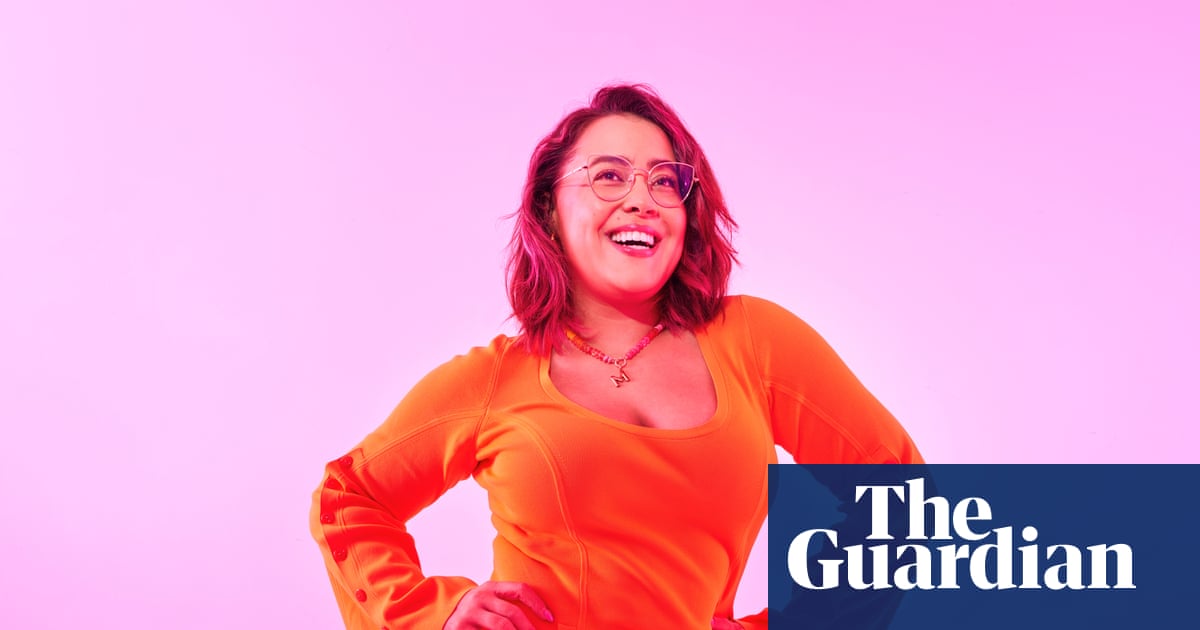
Megan Jayne Crabbe’s conversion goes beyond the physical. “My ‘before’ was trying to make myself as small as possible in every conceivable way: my body, voice, emotions, opinions,” she says. “My ‘after’ is allowing myself to be my biggest self, though that looks.”
Crabbe, 31, became aware of diets before she turned 10. As she entered puberty, this intensified, and she became fixated on magazine articles about how to change her body, eating as little as possible as a way to manage anxiety about school and growing up.
At 14,Crabbe was diagnosed with anorexia nervosa and body dysmorphia: “I was convinced I was fat and repulsive and needed to lose more weight.” For years she concealed how unwell she was, untill the physical symptoms became impossible to ignore.Her body began shutting down – severe fatigue,low blood pressure,hearing loss and dizziness: “There’s hair that grows all over your body,because it’s trying to keep itself warm.”
She spent several months between mental health facilities and hospitals. At her lowest point, after her parents were warned her body could fail at any moment, she was hospitalized and fed through a tube. “In that time, when your eating disorder is telling you, ‘You have to stay in control,’ having that taken away is torturous.”
The frist shift towards recovery came when her father, usually stoic, broke down in tears. “Seeing the pain my eating disorder had caused him was a massive jolt for me,” she says. She committed to recovery with the same “all or nothing” mindset that had once fueled her anorexia. “I covered up all the mirrors in the house as I didn’t want to see my body changing, and I couldn’t eat in front of other people yet, but I ate meals by myself.”
By 17, she was declared recovered. “Not the case,” she says. “I was sent back into the world in this newly soft, larger body, and I didn’t know what to do with that. I fell straight back into the diet culture trap.”
The turning point came at 21.“I had been crash dieting all summer, had reached my elusive ‘goal weight’ and I still hated everything about how I looked.Something started to click in my brain of, ‘Wait, this isn’t working.’”
She discovered the online body positive community – “people of all shapes and sizes saying, I’m not dieting, not hating my body, I’m wearing what I want, living my life” – and a decade on is one of its leading voices. She’s been featured grinning in a swimming costume in Little Mix’s Strip video, celebrating her body’s softness on Instagram, and has written books on self‑empowerment. Getting here took reshaping her cultural environment: setting boundaries with friends who talked about weight loss, disengaging from influencers who triggered shame, and reading books such as The Beauty Myth and Health at Every Size.
“I started realizing the problem was not me. The problem was how we are taught to see ourselves.” Reconnecting with her body became central to healing: relearning hunger and fullness cues and moving for enjoyment. “My eating disorder years were trying to detach from my body and feel nothing.And now the goal is to be with my body and listen to her.”
“If I look back at my ancestors, this is the body they had. I’m strong. I’m fit. I can do everything I want to, and I can also enjoy food as a nice part of my life that I don’t obsess over.”
