
A Look at the Potential Impact of the High Unemployment Hardship Exception to Medicaid Work Requirements
The implementation of work requirements for Medicaid expansion enrollees has included a hardship exception for individuals residing in areas with high unemployment. Analysis reveals a nuanced picture of who might benefit from this exception, with a notable disparity between where qualifying counties are located and where the potentially exempt enrollees actually live.
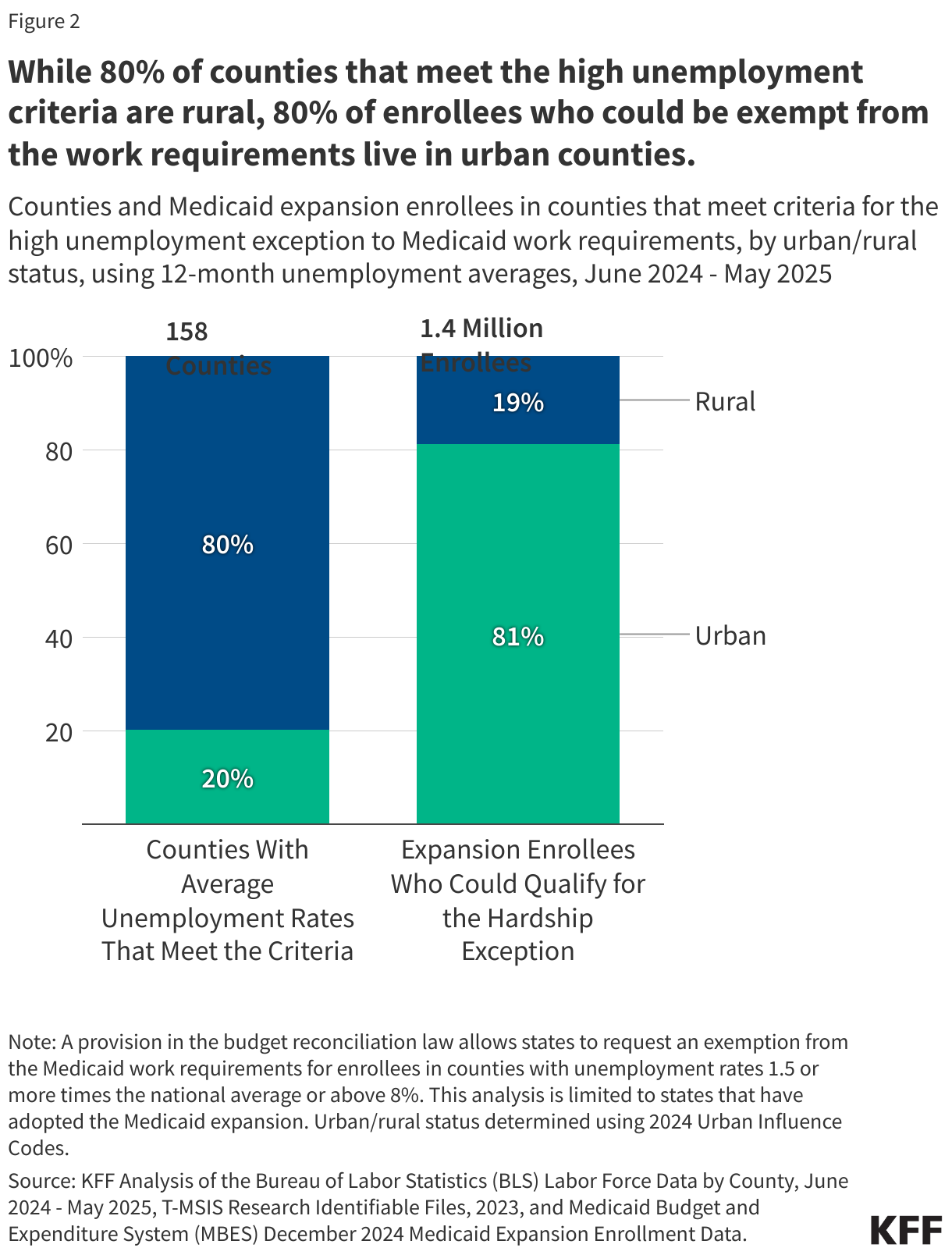
While a substantial majority – 80% - of counties meeting the statutory criteria for high unemployment are rural, the impact of this exception is largely concentrated among those in urban areas. Over 80% of the 1.4 million expansion enrollees who could qualify for exemption due to high unemployment live in urban counties. this is due to the smaller population sizes in rural areas; even though a slightly higher percentage of rural counties in expansion states meet the unemployment threshold (8.5% versus 7% of all counties), the sheer number of potential beneficiaries is far greater in urban centers. Specifically,only 273,350 (19%) of those potentially eligible reside in rural counties,representing just 10% of all expansion enrollees living in rural areas.
The concentration of these potentially exempt enrollees is also geographically limited. Nine in ten expansion enrollees living in high-unemployment counties and eligible for the exception are located in just five states: California, New York, Michigan, Kentucky, and Ohio. California alone accounts for over half of this population. A particularly striking example is New York’s Bronx County, which is the only county in the state to meet the high unemployment criteria and is home to over 260,000 expansion enrollees - 18% of all those nationally who could be exempt.
moreover, the political landscape appears to play a role.93% of enrollees who could be exempt reside in states with Democratic governors, who are more likely to request the exception on behalf of their residents.
The impact of the hardship exception is limited across the majority of expansion states. In nine states,fewer than 2,000 expansion enrollees live in qualifying counties,and in seventeen states,no counties meet the criteria at all.
This pattern holds true for rural expansion enrollees as well. Half of the 273,350 rural expansion enrollees potentially eligible for the exception live in kentucky and michigan. additional concentrations are found in California (14%), Oregon (6%), and Arizona, Louisiana, and Ohio (5% each). only 10% of rural expansion enrollees live in counties that meet the high unemployment criteria, and no rural counties qualify in 20 expansion states.
These findings suggest that while the high unemployment hardship exception is intended to provide adaptability for individuals in economically distressed areas,its practical effect will be most pronounced in specific urban counties and a handful of states.
