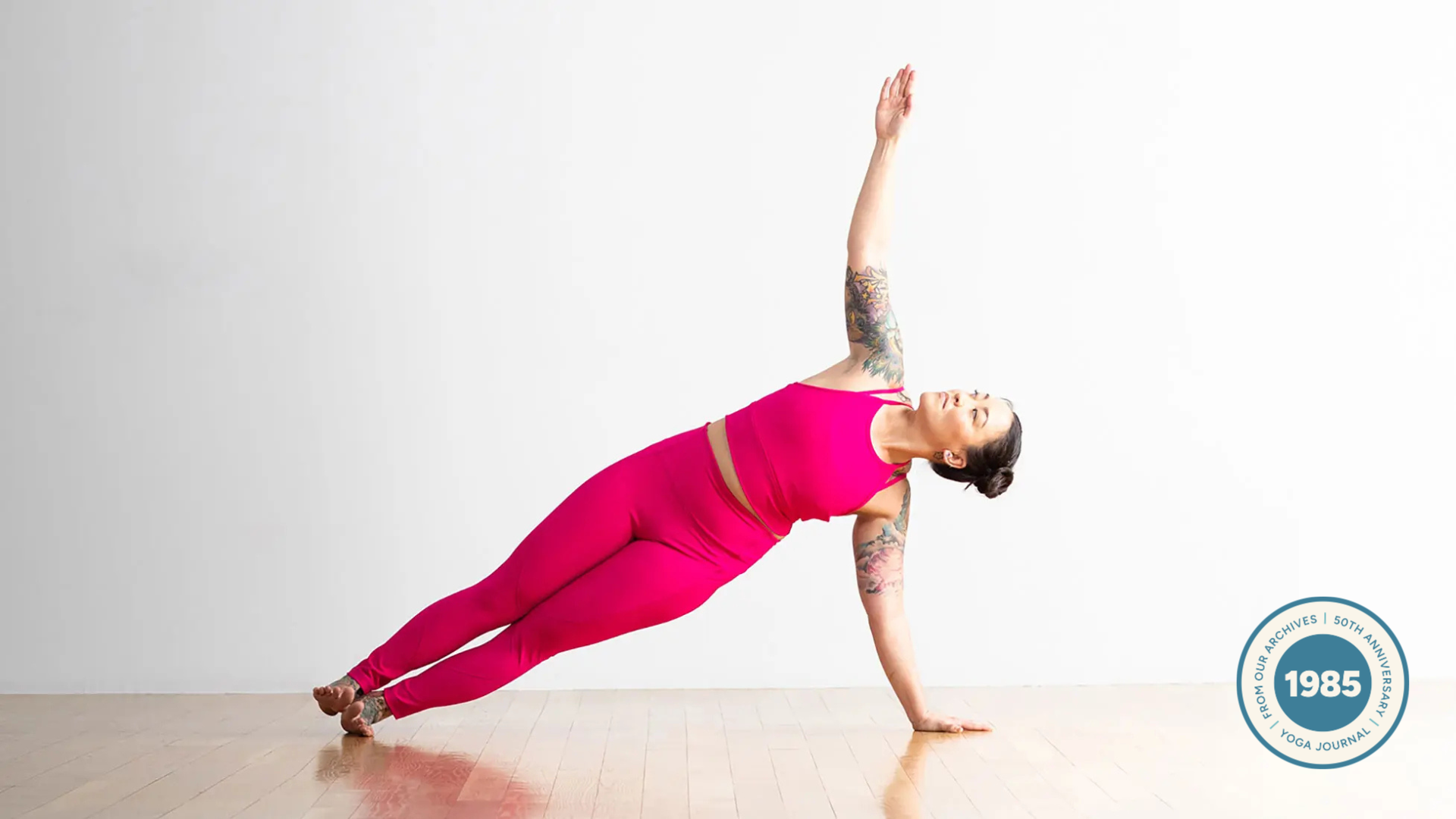
Master Class in Strengthening Your Arms and Core with Vasisthasana Side Plank
Vasisthasana, commonly known as side plank, represents a sophisticated biomechanical challenge that moves beyond simple isometric contraction to demand significant stabilization of the scapulothoracic joint and oblique musculature. By requiring the practitioner to support their total body mass on a single limb, this pose forces the musculoskeletal system to engage in complex kinetic chain activation, providing a practical method for increasing functional upper-body strength and core resilience.
Key Clinical Takeaways:
- Vasisthasana functions as a closed-kinetic chain exercise, promoting neuromuscular stabilization of the shoulder girdle.
- The pose effectively targets the rectus abdominis and obliques, functioning as an anti-lateral flexion stabilizer.
- Proper execution requires significant proprioceptive awareness to prevent glenohumeral joint impingement.
Biomechanical Demands of Isometric Stabilization
From a physiological perspective, Vasisthasana is not merely a test of endurance but a study in force distribution. When an individual transitions into a lateral plank, the primary weight-bearing extremity—typically the humerus and the associated rotator cuff muscles—must counteract the gravitational force pulling the torso toward the floor. Research into kinetic chain development indicates that isometric holds of this nature increase intramuscular tension, which is essential for hypertrophy and the maintenance of bone density in the distal radius and ulna.
The clinical utility of this pose is most evident in its ability to engage the serratus anterior and the external obliques. These muscles are often neglected in traditional sagittal-plane movements like standard sit-ups or crunches. By stabilizing the spine against lateral collapse, the practitioner develops a more robust core, which is essential for preventing lower back morbidity in sedentary populations. Patients looking to integrate such movements into a recovery or maintenance plan should seek guidance from licensed physical therapists to ensure proper alignment and avoid exacerbating existing joint pathologies.
Contraindications and the Risk of Overuse Injury
Despite its efficacy, Vasisthasana carries risks for those with underlying connective tissue disorders or acute joint inflammation. The high-load stress placed on the wrist and elbow joints requires a baseline of ligamentous integrity. According to clinical guidelines for musculoskeletal wellness, individuals with a history of carpal tunnel syndrome or chronic epicondylitis should approach such weight-bearing poses with caution. If you experience persistent discomfort during or after exercise, it is imperative to consult with board-certified orthopedic specialists to rule out structural damage or tendonitis.
“The efficacy of isometric core training is highly dependent on the quality of the engagement. Without proper scapular retraction, the strain is shifted from the intended musculature to the joint capsule, which can lead to chronic inflammation rather than strength gains.” — Dr. Aris Thorne, PhD, Specialist in Biomechanics and Human Performance.
Integrating Functional Movement into Clinical Practice
The transition from sedentary behavior to active stabilization requires a structured approach. For many, the hurdle is not the strength itself but the proprioceptive deficit that prevents the body from finding its center of gravity. This is where diagnostic clarity becomes vital. Before commencing a high-intensity yoga or strength-training regimen, patients with systemic health concerns should establish a baseline with primary care physicians to discuss the role of exercise in their overall metabolic health. This ensures that the physical strain of the exercise aligns with the patient’s cardiovascular and musculoskeletal capacity.
Future Trajectories in Kinetic Health
Current trends in sports medicine suggest a shift toward integrating yoga-based isometric protocols into standard rehabilitation pathways. While traditional physical therapy has long relied on resistance bands and free weights, the inclusion of body-weight poses like Vasisthasana offers a portable, equipment-free solution for improving functional longevity. The ongoing challenge for clinicians is to quantify these benefits through longitudinal studies that track patient outcomes over decades, rather than just weeks.
As research continues to validate the role of isometric stabilization in maintaining musculoskeletal health, the importance of individualized instruction remains the gold standard. Whether addressing a specific injury or aiming to optimize physical performance, the integration of professional medical oversight ensures that movement remains a tool for healing rather than a source of injury.
Disclaimer: The information provided in this article is for educational and scientific communication purposes only and does not constitute medical advice. Always consult with a qualified healthcare provider regarding any medical condition, diagnosis, or treatment plan.