
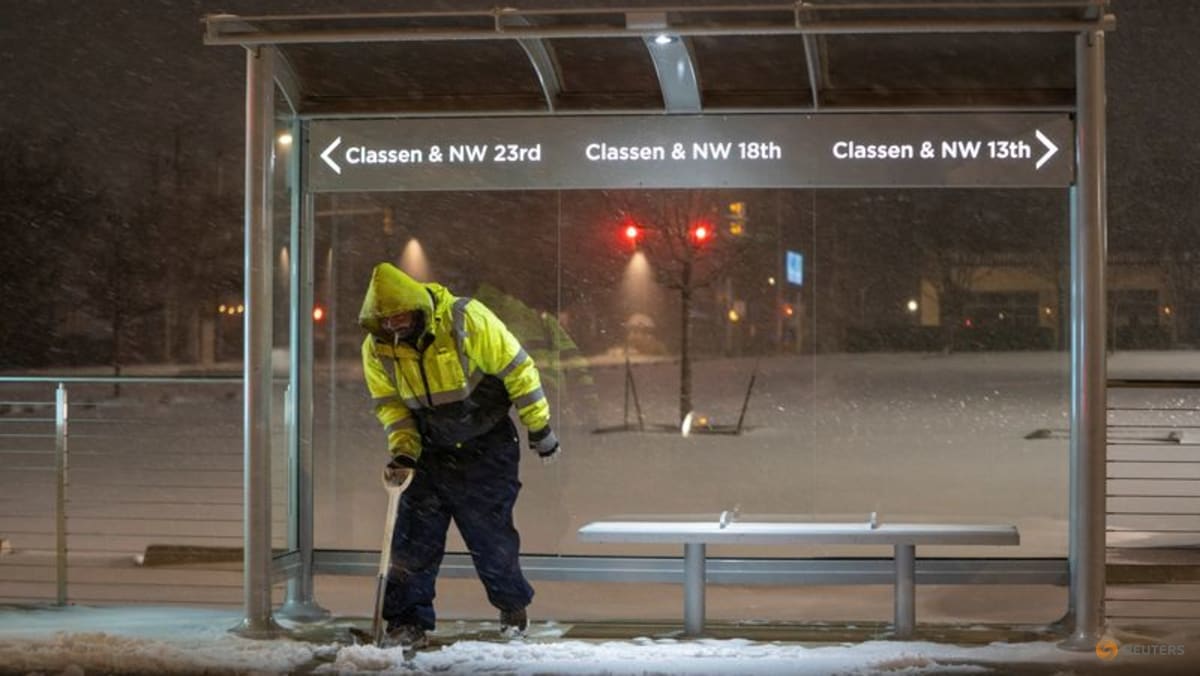
Massive Winter Storm threatens Over 240 Million Americans with Travel Chaos and Extreme Cold
HOUSTON – A sprawling and potent winter storm is unleashing snow, freezing rain, and dangerously low temperatures across the United States, impacting a vast region from New Mexico to Maine. The storm, which began impacting the Southwest on Saturday, is now threatening over 240 million Americans with potential power outages, widespread travel disruptions, and life-threatening cold, prompting states of emergency declarations across at least 16 states and the nation’s capital, Washington D.C. https://www.nbcnews.com/weather/extreme-weather/winter-storm-impacts-millions-us-travel-disruptions-power-outages-rcna134198
The National Weather Service (NWS) is urging residents to take the storm seriously, warning of an “astonishingly long swath” of snowfall and the potential for “catastrophic” ice accumulations from freezing rain.https://twitter.com/NWS The severity of the forecast has triggered widespread panic buying, with shoppers clearing shelves of essential supplies in anticipation of prolonged isolation.
Widespread travel Disruption
The storm’s impact on travel has already been significant. As of Saturday,flightaware reported over 3,400 flights within,into,and out of the United States had been cancelled,with more than 1,100 additional flights experiencing delays. https://flightaware.com/ Major airports across the affected regions are bracing for continued disruptions throughout the weekend and into the coming week. The Federal Aviation Administration (FAA) is advising travelers to check the status of their flights before heading to the airport and to anticipate potential delays or cancellations. https://www.faa.gov/
Beyond air travel, the storm is also causing significant disruptions to ground transportation. Icy roads and heavy snowfall are making driving hazardous, leading to road closures and accidents. Several states have activated their emergency management agencies to coordinate snow removal efforts and provide assistance to stranded motorists.
Regional Impacts and Warnings
The storm’s effects are being felt acutely across several states:
* Texas: Freezing rain has already coated cities like Dallas, where temperatures plummeted to -6 Celsius (21 Fahrenheit). Houston Mayor John Whitmire has urged the city’s 2.3 million residents to “hunker down” for the next 72 hours, emphasizing the need to prepare for potential power outages and limited access to essential services. https://www.houstontx.gov/mayor/ Texas is particularly vulnerable due to the state’s power grid vulnerabilities exposed during a devastating winter storm in February 2021, which left millions without electricity for days. The Electric Reliability Council of Texas (ERCOT) is monitoring conditions closely and has stated it is indeed prepared to respond to increased demand. https://www.ercot.com/
* New Mexico: The storm initially brought heavy snowfall to New Mexico, impacting travel and causing school closures. The state is under a state of emergency,and officials are urging residents to avoid unnecessary travel.
* Northeast: As the storm moves eastward, the Northeast is bracing for significant snowfall. The NWS predicts heavy accumulations across the region, perhaps leading to widespread power outages and hazardous travel conditions. coastal areas are also at risk of strong winds and blizzard conditions.
* Midwest: The Midwest is experiencing a mix of snow, ice, and strong winds, creating hazardous conditions for travelers. Several states have issued winter storm warnings and advisories.
Understanding the risks: Freezing Rain and Ice Accumulation
The threat of freezing rain is particularly concerning. Freezing rain occurs when rain falls thru a layer of sub-freezing air, coating surfaces with a glaze of ice. Even a small amount of ice accumulation can create extremely hazardous conditions,making roads and sidewalks treacherous and downing power lines. The weight of the ice can also cause tree branches to break, leading to further power outages and potential injuries. The NWS defines “catastrophic” ice accumulation as exceeding half an inch, which can cause widespread damage and prolonged disruptions.
Preparing for the Storm
authorities are urging residents in affected areas to take the following precautions:
* Stay Informed: Monitor local weather forecasts and heed warnings from emergency officials.
* Prepare an Emergency Kit: Include essentials such as food, water, medications, a flashlight, a battery-powered radio, and warm clothing.
* Conserve Energy: Reduce
