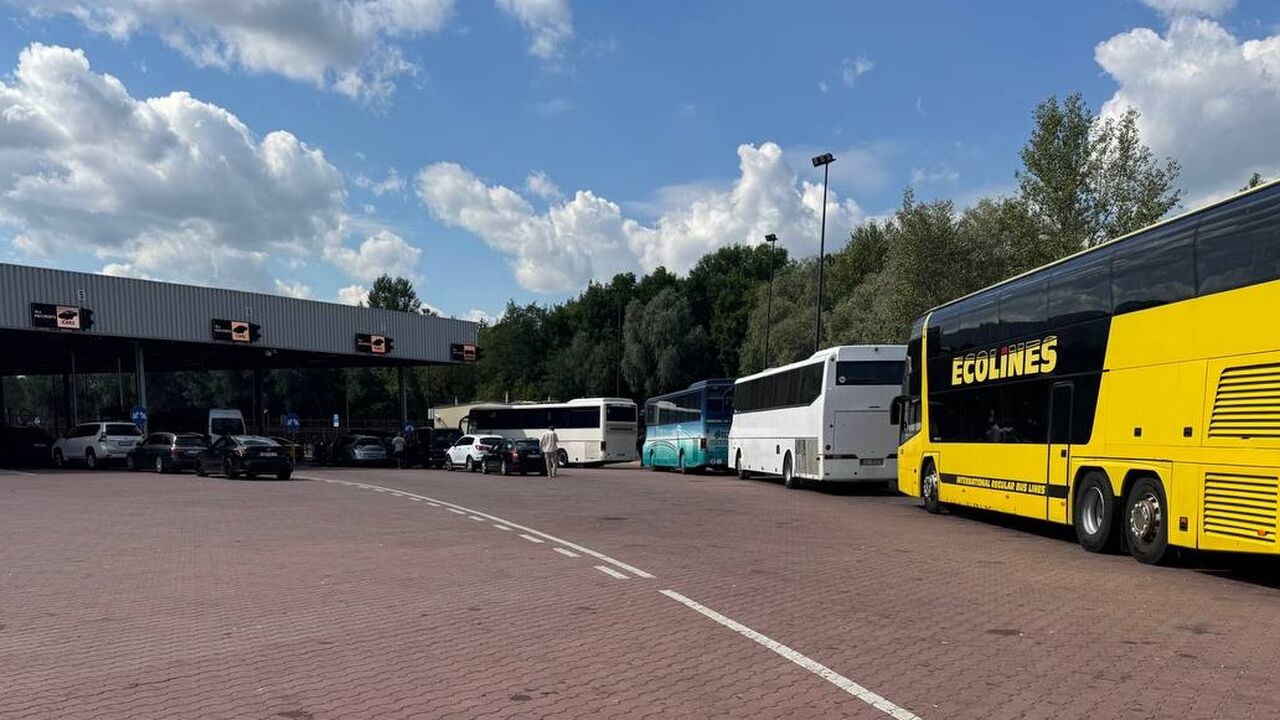
Massive Queues and Multi-Day Waits Persist at Belarus-Poland Border
According to Belsat, massive queues involving roughly 1,800 passenger cars and 51 buses remain stranded on the Belarusian side waiting to enter Poland. The congestion compounds ongoing regional transit strains, forcing commercial operators and private travelers to reevaluate cross-border logistics.
Infrastructure Strain and Border Wait Times
The protracted delays reflect intense processing bottlenecks along the European Union frontier. According to reporting from BelTA News Agency and Belsat, vehicle queues have remained stubbornly high, with transit times routinely extending beyond 48 to 72 hours. These prolonged wait periods disrupt supply chains, public transit schedules, and individual travel plans across the region.
For businesses dependent on predictable freight corridors, unpredictable border halts introduce severe financial liabilities.
Security Measures and Declining Irregular Crossings
While legitimate commercial and passenger traffic experiences extreme congestion, Poland’s eastern border infrastructure has simultaneously registered a dramatic drop in irregular crossings. According to the Polish Interior Ministry, authorities recorded 235 attempted illegal crossings from Belarus during the first half of 2026. That figure marks a steep decline from more than 15,500 attempts during the same period in 2025.
The Polish Interior Ministry stated that border officers stopped every recorded attempt this year, describing the current border protection system as 100 percent effective. Government data shows that an estimated 1,700 people crossed the border without apprehension in 2025, down from roughly 5,000 in 2024 and 12,000 in 2023. These numbers illustrate a steady downward trajectory in successful unauthorized entries over a three-year span.
Financial Investment and Physical Barriers
Warsaw has invested heavily to secure the frontier. According to Ministry data, Poland has spent 3 billion złoty, equivalent to approximately $790 million, to fortify its border with Belarus. Recent structural upgrades include a 5.5-meter-high steel fence stretching 186 kilometers through the northeastern Podlaskie region.

In addition to the physical barrier, an advanced electronic surveillance system now covers 206 kilometers of the frontier, including complex river sections. Farther south in the Lubelskie region, authorities have installed a 172-kilometer electronic monitoring barrier along the Bug River. Polish officials maintain that these installations counter a hybrid campaign initiated by Belarus in 2021, with support from Russia, which Warsaw accuses of channeling migrants from the Middle East and Africa toward European Union borders to destabilize the region.
Navigating heightened security protocols, compliance requirements, and sudden transit restrictions requires specialized regional expertise.