
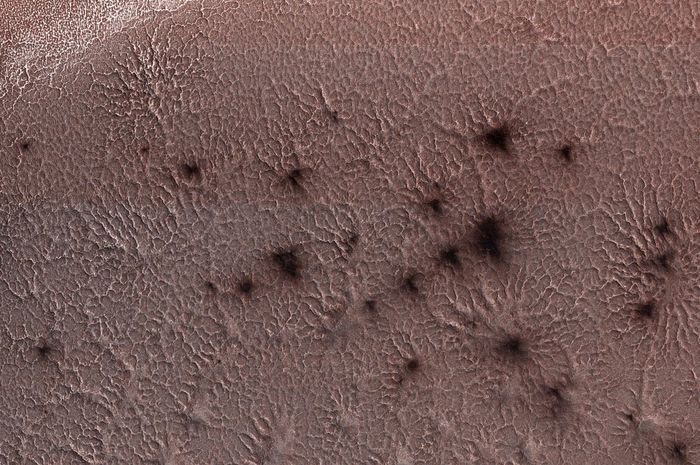
NASA Scientists Recreate Martian “Spiders” in Lab, Unraveling Seasonal mystery
Researchers at NASA have successfully recreated the enigmatic “spider” formations found on Mars in a laboratory setting, shedding light on their formation process.The findings,published in *The Planetary science Journal* under the title “A Lab-scale Examination of the Mars Kieffer Model,” confirm long-held suspicions that these geological features are linked to carbon dioxide ice.
Mars, despite its frigid and arid reputation, experiences dynamic seasonal changes. During the Martian winter, the planet’s atmosphere freezes, depositing a layer of frozen carbon dioxide, or “dry ice,” onto its surface.As spring arrives, this ice undergoes sublimation – transitioning directly from solid to gas. This process is responsible for a variety of unique surface features, collectively known as “Kieffer Zoo,” which include dark, fan-shaped patterns and the distinctive spider-like structures. These formations, some stretching over a kilometer in length, have intrigued scientists for decades due to the lack of direct, close-up observational data from Mars itself.
To address this knowledge gap, NASA scientists conducted experiments on Earth, meticulously replicating the conditions believed to be present on Mars during the seasonal transition. By recreating these conditions in the lab, they where able to observe and document the formation of these intriguing martian geological phenomena.
