
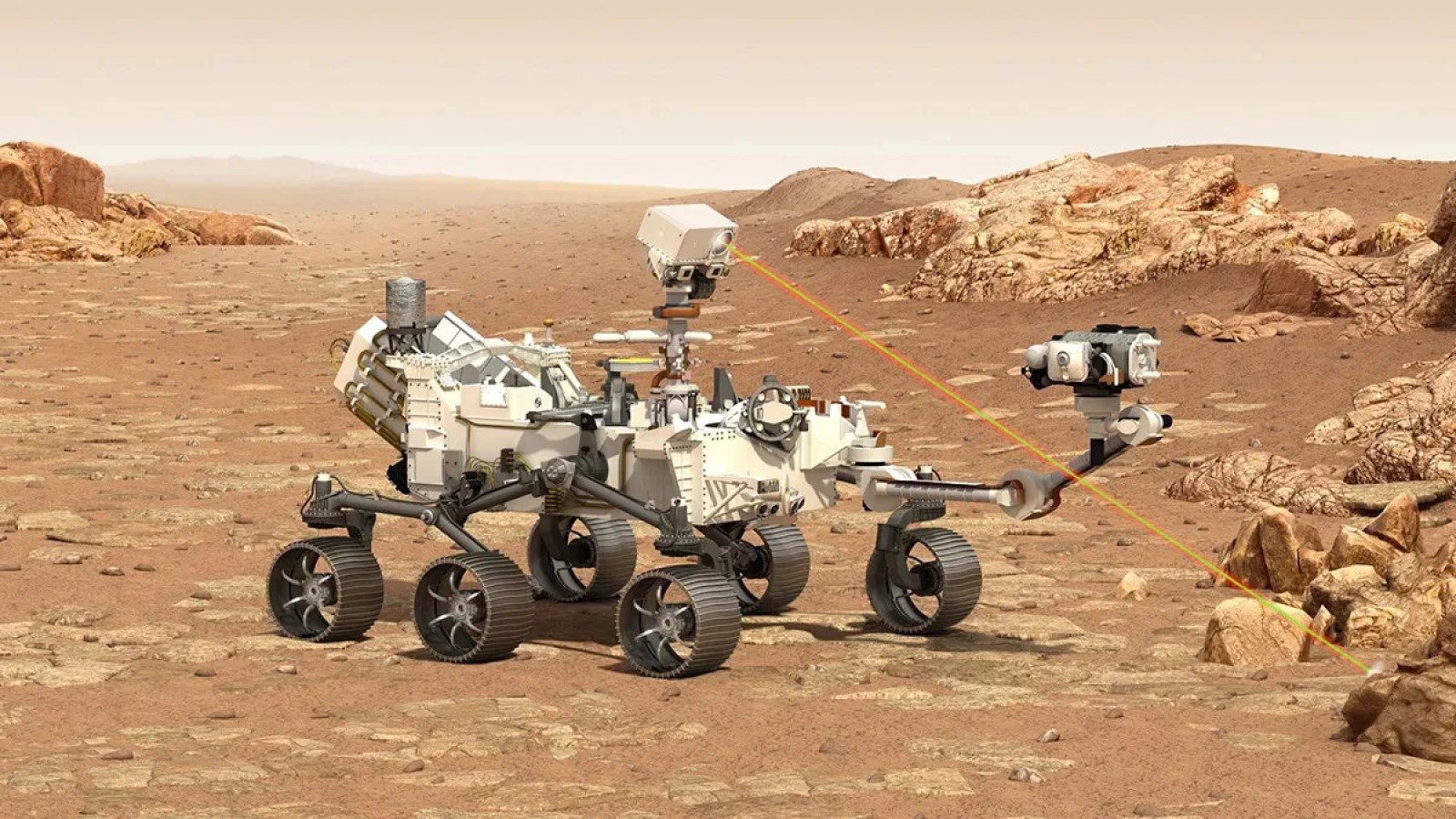
NASA’s Perseverance rover is now autonomously pinpointing its location on Mars, a capability dramatically enhanced by repurposing hardware from the Ingenuity helicopter, according to the Jet Propulsion Laboratory (JPL). The upgrade allows Perseverance to navigate the Martian surface with significantly improved accuracy and efficiency, resolving a longstanding challenge of “dead reckoning” in the treacherous terrain of Jezero Crater.
Previously, Perseverance relied on odometry – counting wheel rotations – to estimate its position. Still, wheel slippage on the crater floor introduced accumulating errors. The rover would often miscalculate its distance traveled, sometimes by as much as two meters over ten meters, forcing it to halt and await positional verification from Earth. This process could result in a full day of lost mission time due to communication delays.
The new Mars Global Localization (MGL) system allows Perseverance to determine its location in as little as two minutes. It functions by capturing images of the surrounding landscape and comparing them to high-resolution maps created by the Mars Reconnaissance Orbiter (MRO), which orbits the planet. This provides a level of precision comparable to a GPS, locating the rover to within 25 centimeters.
Remarkably, the processing power for this advanced capability wasn’t added to Perseverance; it was salvaged from Ingenuity. The communication base station for the helicopter, which concluded its mission after 72 successful flights, contains a Qualcomm Snapdragon 801 processor. This chip, originally found in smartphones like the Samsung Galaxy S5 and Sony Xperia Z3 in 2014, is approximately 100 times faster than Perseverance’s primary computer, the RAD750, at processing the complex image analysis required for localization. The RAD750 was specifically designed for radiation resistance, not speed.
Engineers discovered that approximately 25 bits of the base station’s random-access memory (RAM) had been damaged by radiation exposure on Mars. Instead of abandoning the project, they modified the software code to isolate and circumvent these faulty memory areas. The system now operates effectively under the Linux operating system, allowing the algorithm to function despite the hardware degradation.
The discovery of the wrecked Ingenuity helicopter by Perseverance was recently reported, marking the complete of the helicopter’s historic mission. The rover’s ability to now utilize Ingenuity’s former hardware represents a resourceful solution to a critical navigational challenge, enabling more efficient exploration of Jezero Crater.
