
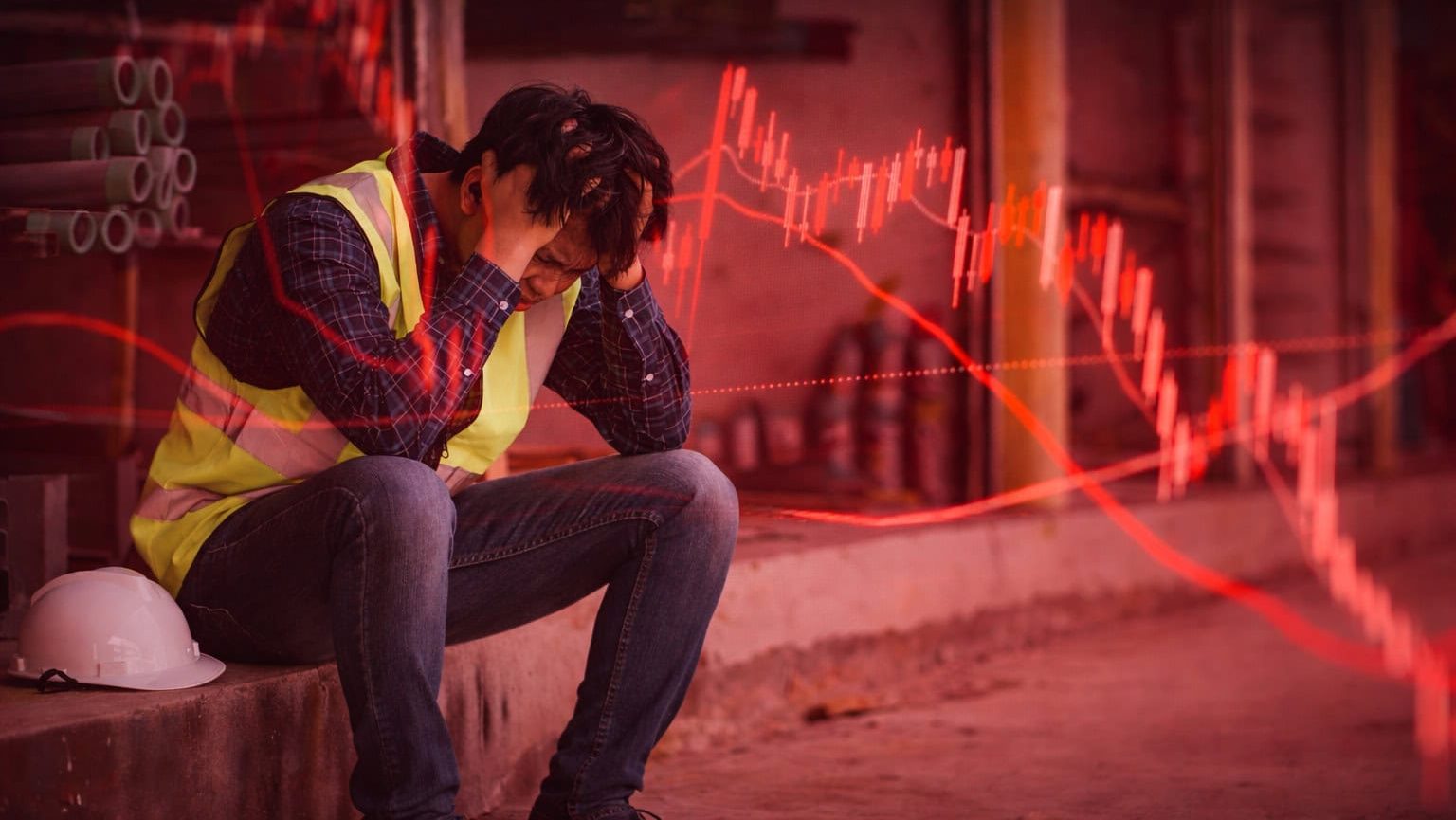
MARA Sells $1B in Bitcoin and Cuts Staff: Is AI Threatening Mining?
MARA Holdings is pivoting from Bitcoin mining to AI and energy infrastructure, cutting 15% of its workforce and selling 15,133 BTC for $1.1 billion. The move funds a strategic debt buyback of $1 billion in convertible notes to reduce shareholder dilution and stabilize its balance sheet.
The volatility of the crypto-mining sector has finally hit a breaking point, forcing industry giants to choose between insolvency and total reinvention. MARA Holdings is choosing the latter, but the transition is messy. The company is currently grappling with a fundamental disconnect between the cost of production and the market spot price of Bitcoin, a gap that has turned once-profitable operations into liabilities. For firms navigating this level of volatility, the need for corporate restructuring specialists is no longer optional. it is a survival mechanism.
The $1.1 Billion Balance Sheet Gambit
Between March 4 and March 25, 2026, MARA executed a massive liquidation of 15,133 bitcoin, generating approximately $1.1 billion in liquidity. This was not a panic sell in the traditional sense, but a calculated capital allocation move to scrub the balance sheet of expensive debt. According to company disclosures, the proceeds were used to repurchase roughly $1.0 billion of its 0.00% convertible senior notes due in 2030 and 2031.
The math here is pure Wall Street. MARA repurchased $367.5 million of its 2030 notes for $322.9 million and $633.4 million of its 2031 notes for $589.9 million. By securing these notes at a 9% discount to par, the company captured roughly $88.1 million in immediate value. The strategic result is a material reshaping of the capital structure, slashing total outstanding convertible notes from $3.3 billion down to $2.3 billion.
This 30% reduction in convertible debt does more than just lower interest risk; it aggressively mitigates the risk of future shareholder dilution. When convertible notes are converted into equity, existing shareholders see their ownership percentage shrink. By retiring these notes now, MARA is protecting its equity holders while freeing up the operational flexibility required to pivot into new verticals. Such complex debt maneuvers typically require the oversight of seasoned debt management advisors to ensure the timing of the buyback maximizes value capture.
The Mining Profitability Death Spiral
The catalyst for this liquidation is a brutal reality check on mining economics. The industry is facing a crisis where the cost to produce a single Bitcoin has decoupled from its trading price. A CoinShares report highlighted a devastating trend: by the end of 2025, the average production cost of a Bitcoin had climbed to $80,000.
Compare that to the current market reality. Bitcoin recently closed below $70,000, sliding further to approximately $66,200. When it costs $80,000 to mine an asset that sells for $66,000, the business model is fundamentally broken. MARA is not alone in this struggle. Competitors like Riot Platforms and Cango have also offloaded significant portions of their BTC holdings, and Bitfarms has signaled an intent to liquidate its entire reserve.
“MARA is now a ‘distressed seller’ and [this is] just the beginning of a major unwind across the sector.” — Quinn Thompson, CIO of Lekker Capital
Thompson’s assessment points to a broader systemic shift. The “major unwind” suggests that public miners, who collectively hold nearly 80,000 BTC, are realizing that holding the asset is no longer the primary goal. The goal is now capital preservation and the funding of a transition into High Performance Computing (HPC) and AI.
Strategic Pivot and the Human Cost
The financial engineering of debt buybacks is the “clean” side of the story. The “dirty” side is the 15% reduction in workforce. CEO Fred Thiel has framed these layoffs not as a desperate cost-cutting measure, but as a strategic realignment. MARA is no longer positioning itself as a mere Bitcoin miner; it is rebranding as an energy and infrastructure powerhouse.
The shift toward AI and data center operations requires a completely different talent stack than Bitcoin mining. The company is prioritizing investments in compute power and energy management to serve the insatiable demand of AI models. This pivot allows MARA to leverage its existing energy contracts and power infrastructure—assets that remain valuable even if the mining of BTC becomes unprofitable.
This transition creates a massive opportunity for enterprise AI infrastructure providers who can help legacy miners convert their power-heavy sites into tier-3 or tier-4 data centers. The transition is a gamble on the belief that the “AI gold rush” will offer more stable margins than the volatile rewards of the Bitcoin network.
The Macro Shift: Three Industry Realities
The actions taken by MARA serve as a blueprint for the current state of the digital asset infrastructure sector. The industry is moving through three distinct phases of evolution:
- Asset Diversification: The era of “HODLing” at all costs is over for public miners. Balance sheets are being diversified away from pure BTC exposure to fund operational pivots, moving from volatile digital assets to tangible infrastructure revenue.
- Hashrate Correction: As companies like Core Scientific, TeraWulf, Cipher Mining, and IREN pivot away from mining toward AI, the total network hashrate is expected to decline. While this is healthy for the network’s long-term stability, it signals the end of the mining-first growth era.
- Capital Reallocation: Capital is flowing out of the “proof-of-perform” economy and into the “compute” economy. The ability to secure massive amounts of power is now more valuable than the ability to solve cryptographic puzzles.
MARA now holds 38,689 BTC, a significant reduction from its previous peak, but a necessary sacrifice to ensure the company survives the current mining winter. The market’s reaction—a 10% jump in share price following the debt buyback—suggests that investors value a lean, AI-ready balance sheet more than a bloated treasury of depreciating Bitcoin.
The trajectory is clear: the mining giants that survive will be those that can successfully decouple their identity from the Bitcoin price ticker. As the sector undergoes this violent transformation, the winners will be those who can execute rapid pivots with surgical precision. To find the vetted partners capable of managing such transitions, the World Today News Directory remains the primary resource for connecting distressed assets with world-class B2B recovery and growth services.