Malaysia Reviews Leaked Deutsche Bank Files Linked to Jho Low
Malaysia is reviewing leaked Deutsche Bank files that allegedly show 24 transactions worth €172.98 million moved through the bank for fugitive financier Low Taek Jho, a senior official said on November 18.
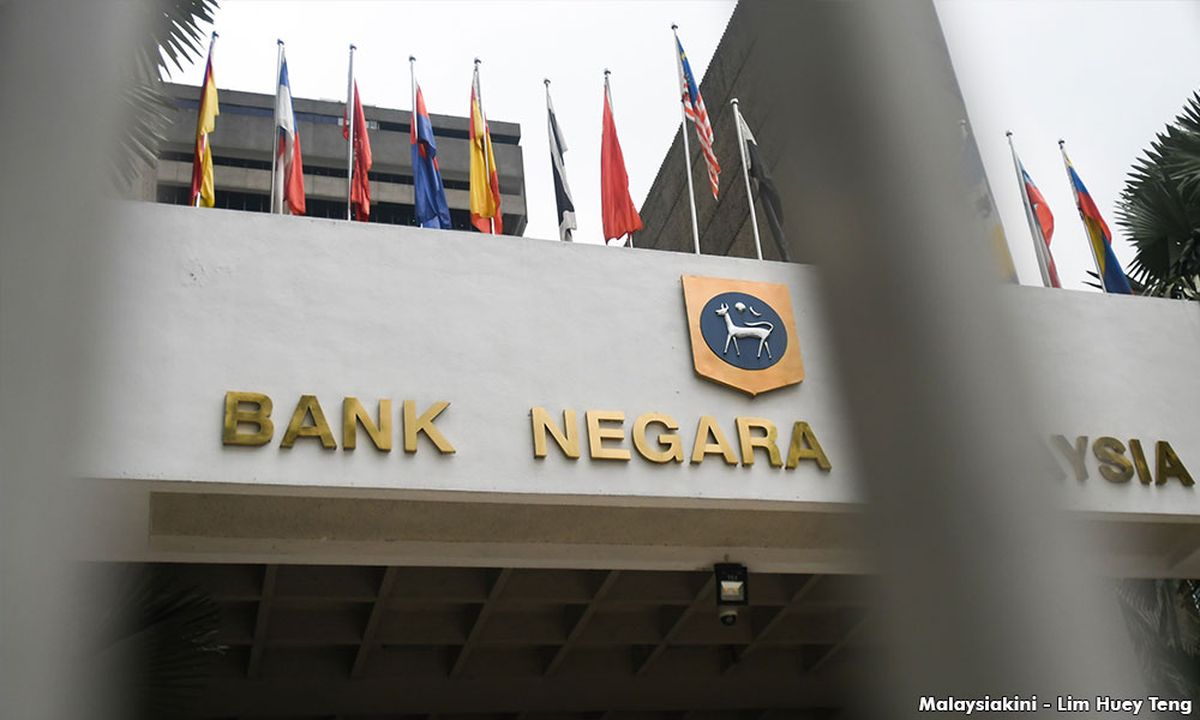
At the same time, Malaysiakini readers are demanding answers from Bank Negara about what the central bank saw while the money was moving.
The leaked internal files, published by Malaysiakini under the “Inside Deutsche Bank” investigation, cover more than 15 million documents dating from the early 2010s. According to Malaysiakini’s report, the bank’s correspondent banking service facilitated at least 24 transactions linked to Low, the key figure in the multibillion-dollar 1Malaysia Development Berhad (1MDB) scandal.
The report also said that Deutsche Bank continued processing millions of euros in transfers tied to Low in 2015, even after filing its own suspicious activity reports.
Johari Abdul Ghani, chairman of the task force recovering 1MDB assets, told Reuters that the task force and 1MDB’s legal team are studying the information, though it is “premature” to comment on Malaysia’s position while the court case against Deutsche Bank is ongoing.
The stakes are high. 1MDB sued Deutsche Bank and other financial firms in 2021 to recover billions in assets it says were tied to misconduct, and the two sides are now in settlement talks. Readers of Malaysiakini’s Yoursay section, reacting to the leaks, questioned whether Malaysia’s own regulators — the central bank foremost among them — did enough when the transactions were happening.
Bank Negara under the microscope
The sharpest question in the reader commentary targeted Bank Negara Malaysia. The central bank has said it will not hesitate to act if it finds breaches in the Deutsche Bank case.
One subscriber, writing under the name Iv4n, said that Deutsche Bank’s own reviews reportedly flagged gaps in how it reported cross-border transactions linked to 1MDB — and asked what Bank Negara actually saw at the time, and what was missing from the reports it received.
“Where were the checks and balances in Malaysia?” a subscriber posting as Anonymous_1591623048548 asked, pointing to the Finance Ministry and 1MDB’s senior staff as well.
Another reader, Knucklehead2, argued the deeper embarrassment is that such matters tend to surface through leaked documents, foreign investigations, whistleblowers and journalists rather than announcements from Malaysia’s own regulators. GreenHare9358 put it more bluntly: billions of ringgit might have been saved had the authorities acted while the crime was being committed.
What the leaked files allege
The figures at the center of the review are specific, though Reuters, which corroborated the government’s response, was unable to independently verify the documents.
| Detail | Figure |
|---|---|
| Transactions linked to Low via Deutsche Bank’s correspondent banking service | At least 24 |
| Value of those transactions | €172.98 million |
| Equivalent values cited | US$190 million / S$244.8 million |
| Files in the “Inside Deutsche Bank” leak | More than 15 million |
Deutsche Bank’s defense
The bank has pushed back on the allegations. In an email response, a Deutsche Bank spokesperson said the bank has cooperated fully with regulatory and law enforcement authorities on 1MDB inquiries and “has not been subject to any regulatory penalty or sanction arising from 1MDB.”
“As stated in asset forfeiture complaints filed by the US Department of Justice, 1MDB made material misrepresentations and omissions to Deutsche Bank officials in connection with 1MDB’s transactions with the bank,” the spokesperson said.
The bank has also said it still feels strongly about its position in the case, which it says differs from that of other defendants, and that any settlement would need to reflect that — a stance readers of Malaysiakini read as lowballing.

Readers urge government to pursue full 1MDB asset recovery
1MDB’s 2021 lawsuit against Deutsche Bank and other financial institutions sought to recover billions in assets linked to the scandal. In the settlement talks now underway, some Malaysiakini readers urged the government not to accept a paltry offer. “Do not negotiate if Deutsche Bank’s offer is insincere or paltry,” a subscriber called Headhunter wrote, saying the state should pursue every sen in court, including punitive damages and accrued interest.
Others credited the Asset Recovery Taskforce, headed by the attorney-general and the MACC, with recovering roughly 70 percent of the stolen assets — about RM31 billion, according to figures cited in the commentary. Taxpayers are still servicing 1MDB debts, even after former prime minister Najib Abdul Razak received a partial pardon.
“Malaysia has pursued, and will continue to pursue, action against international banks which we believe failed to carry out proper customer due diligence checks in relation to the movement of 1MDB funds by Low, his associates and/or proxies,” said Johari Abdul Ghani, the task force chairman.
Several readers warned the accountability question cannot stop at foreign banks. DonGetMeWrong pointed to earlier scandals involving Tabung Haji, Felda, the Armed Forces Fund Board and several government-linked companies, arguing regulatory accountability must apply across the board.
What remains unknown
Reuters could not verify the leaked documents. And Low himself — the fugitive financier at the center of it all — has previously denied wrongdoing, and his whereabouts remain unknown.
For Malaysians following the case, the practical next step is the government’s position: once the task force finishes reviewing the files and the court process allows it, Johari has signaled Malaysia will press ahead against banks it believes failed their due diligence.
Deutsche Bank, the institution at the center of the leak, was founded in 1870 in Berlin as a specialist bank for financing foreign trade, at a time when German exporters depended on British and French banking houses to transact abroad. Headquartered today in Frankfurt, it has grown into what is often called the largest German banking institution, with a network spanning 58 countries as of 2018.
Since 2011 it has been designated a global systemically important bank by the Financial Stability Board, and it is directly supervised by the European Central Bank. The bank has also long carried an “abject” reputation among major banks, according to a 2020 New Yorker account, having been involved in major scandals including money laundering and sanctions evasion.
Whether Bank Negara will ultimately say what it saw, and when, is the question its critics have now put on the record. The central bank has promised it will not hesitate to act on breaches. Malaysians are waiting to learn what it did while the transfers were still moving.