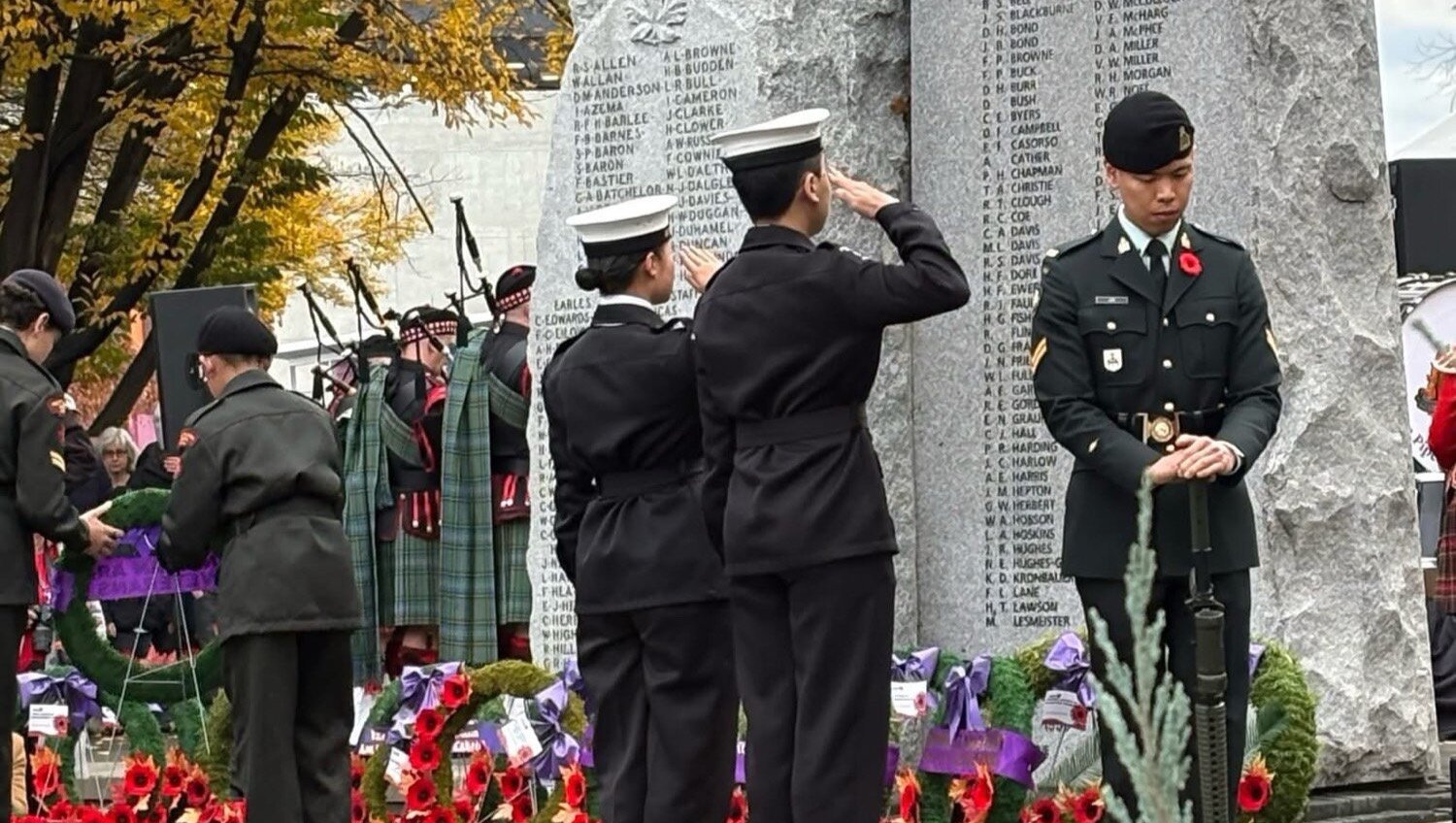
Federal Budget Cuts Pause Cadet Activities Beyond Weekly Training, Affecting 72,000 Youth
Thousands of Canadian cadets have lost most program activities this month after federal budget cuts paused everything beyond weekly training nights — hitting 72,000 enrolled youth while more than 16,000 others wait to join, Castanet reported on Wednesday.
The cuts reached Kelowna this week. Parents of cadets in the 93 RCSCC Grenville Sea Cadets were told that all activities beyond regular weekly training are paused until March 2027, Castanet reported. Rock climbing, band and holiday concerts, drill practice and marksmanship are all cancelled until further notice.
The message to parents said the direction applies nationally across the Cadet and Junior Canadian Rangers Program.
“For these kids, the mess dinner is their Christmas party, the one event they look forward to all year to celebrate their hard work together.”
That sentence comes from Dustin Siewert, a parent of a Kelowna cadet, who described the year-end mess dinner as one of the casualties. He told Castanet that essential training — first aid courses, drill practice, team-building exercises — is being stripped away, along with the dinner itself.
Who feels the freeze
The numbers frame the scale. Siewert said 72,000 youth participate in the Cadet and Junior Canadian Rangers programs, with more than 16,000 children on wait-lists trying to join. New recruits cannot even get a uniform when they sign up, he told Castanet.
A petition adds detail on the scope as of November 21, 2026. Competitions, expeditions, marksmanship, biathlon, sailing and familiarization flights are on hold for the remainder of the fiscal year, according to the petition, which cites funding constraints affecting the Royal Canadian Sea, Army and Air Cadet programs. Zone, regional and national training activities are cancelled or paused.
Where the two accounts differ in emphasis, Castanet’s reporting centres on the local impact in one Okanagan corps and the reaction of parents; the petition frames the same cuts as a national erosion of a program it describes as part of Canada’s cultural and educational framework. The underlying facts — a national pause on activities, a fiscal-year horizon — match.
Defence billions, cadet cuts
The timing is what stings for parents. “It is deeply disappointing to see our youth being left behind like this, especially when the government is announcing billions in new defence spending,” Siewert told Castanet. The contrast between new defence investment and cadet program reductions is the complaint families across the country are now raising in petition signatures and local coverage.
The email to Kelowna parents acknowledged the disappointment directly. “We recognize how disappointing and frustrating this news will be for many of our cadets, volunteers and families,” the message said, adding that cadets had “invested a great deal of time and energy into the program” over the past several months. It also said that volunteers and staff “dedicated countless hours to planning and delivering those activities.”
What the pause costs
The petition describes what is suspended as more than recreation: foundational experiences in leadership, discipline, teamwork and respect that it says have shaped generations of Canadians, including many veterans and community leaders.
It argues the cuts threaten to dismantle a longstanding tradition of excellence and growth and calls on policymakers to restore funding urgently, reassess budget allocations and create a dedicated task force to explore sustainable funding — including private-sector partnerships and public engagement.
No such task force, funding restoration or reversal has been announced as of this reporting. The fiscal year end — the horizon the petition gives for the freeze — runs through March, which is also the date the Kelowna corps gave parents: activities may resume in March 2027, though the email to families says events are cancelled “until further notice,” leaving the restart uncertain.
Until then, the Kelowna corps keeps its weekly training nights, the one activity the national direction preserved. For cadets who joined for the expeditions, the band, the marksmanship range and the mess dinner, that is the remnant of the program while families wait for Ottawa to decide whether this pause is a freeze or a thaw.
The pause reaches one of the country’s largest youth organizations. The Cadet and Junior Canadian Rangers Program is a national, community-based program for Canadians aged 12 to 18, run under National Defence, in which young people choose between Army, Sea and Air Cadets. The year 2025 marks the 50th anniversary of female participation in the Canadian Cadet Organizations.
Its other branch, the Junior Canadian Rangers, serves youth in remote communities across Canada — as of April 2022, 3,340 youths took part in 150 patrols — though those members are not members of the Canadian Armed Forces and are not expected to join the military.
Seeing how hard this is hitting the cadets I know is heartbreaking — they literally lost the wind in their sails when they heard this news.”