
Malaria Vaccine Brings Hope to Cameroonian Families
The RTS,S malaria vaccine is revolutionizing healthcare in Cameroon, offering a vital shield against a disease that has long plagued families. The vaccine’s rollout represents a significant leap forward in the battle to protect children and ease the burden on the healthcare system.
A Mother’s Story of Relief
Before the malaria vaccine arrived in Cameroon in November 2023, Josiane Busare, a mother of two from Soa, Yaoundé, regularly visited the hospital for her children’s malaria treatments. The frequent hospital visits, especially with her five-year-old son Bradon, were a financial strain.
“I constantly visited the hospital for consultation every month,” she said. “And was often hospitalised from malaria with my five-year-old son, Bradon.”
—Josiane Busare, Mother
Cameroon is among the countries with the highest malaria burden globally, accounting for 2.6% of worldwide cases recorded in 2022. The World Health Organization (WHO) recommends that children receive four doses of the RTS,S vaccine, which has been shown to reduce malaria cases significantly. The vaccine rollout is a crucial step in reducing malaria deaths in children under five, a leading cause of fatality in Cameroon.
Malaria’s Impact and the Vaccine’s Promise
Malaria is the leading cause of death for Cameroonian children under five, contributing to 30% of health facility visits. The introduction of the RTS,S vaccine has been a game-changer, reducing the number of malaria cases in children. The vaccine has been rolled out across 42 health districts in Cameroon’s ten regions, covering roughly 20% of the country’s total health districts.
“Consultations have [also] decreased by 17%, especially in health districts that are vaccinating against malaria. Similarly, a decrease of at least 13% in malaria-related mortality was observed in 2024 as opposed to 2023,” he noted.
—Dr Andreas Njoh Ateke, Expanded Programme of Immunisation (EPI) Deputy Permanent Secretary
The roll-out of the malaria vaccine also lessens the pressure on the healthcare system, allowing clinics to concentrate on other health conditions and improve the general health results. The first dose reached 70% coverage by the end of the year, with the third dose achieving 50% coverage. The WHO reports that malaria cases globally decreased by 11% in 2023 compared to 2017.
Community Engagement and Future Goals
The EPI is using the “model parent” approach to promote dose uptake. Parents whose children complete their doses are given a certificate and an award as a reward. Josiane, a model mother, encourages other mothers to protect their children through vaccination. She explained that there is a marked difference for her vaccinated daughter.
“Unlike my daughter, my son was constantly ill, hospitalised because of malaria, almost monthly. With my [vaccinated] daughter, there is a difference. Since her vaccination, we have not been to the hospital for malaria,” she adds.
—Josiane Busare, Mother
To improve follow-up doses, quarterly catch-up campaigns have been set up. Authorities seek out children who missed their vaccines. The Ministry of Public Health aims for 100% vaccination coverage. The new vaccine is not yet available in all health districts. However, other preventive measures are still in place, including education, mosquito net distribution, and intermittent preventative therapy for unborn children.
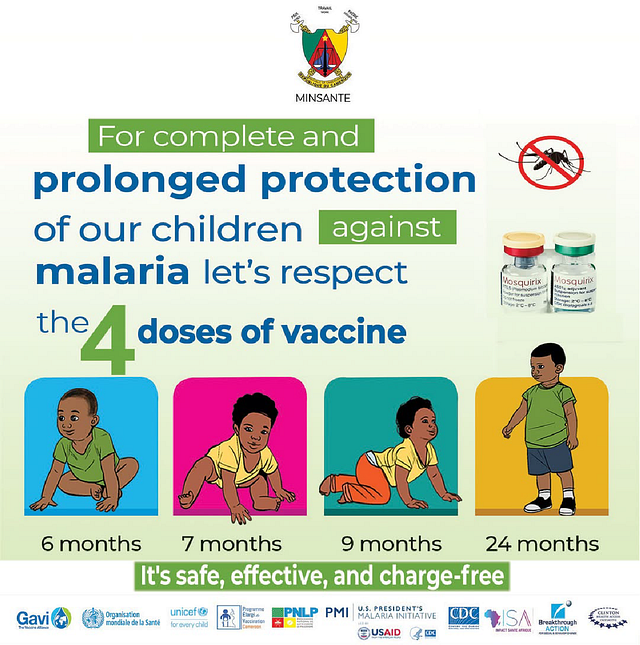
The Yaoundé Declaration on Health, signed in 2024, reflects a dedication to stop malaria-related deaths. The WHO and the Accelerated Malaria Vaccine Introduction and Rollout in Africa (AMVIRA) are supporting countries during the rollout phases, mobilizing resources and fortifying health systems.
