Madagascar Saririaky Massif Reveals Moon-Like Rocks
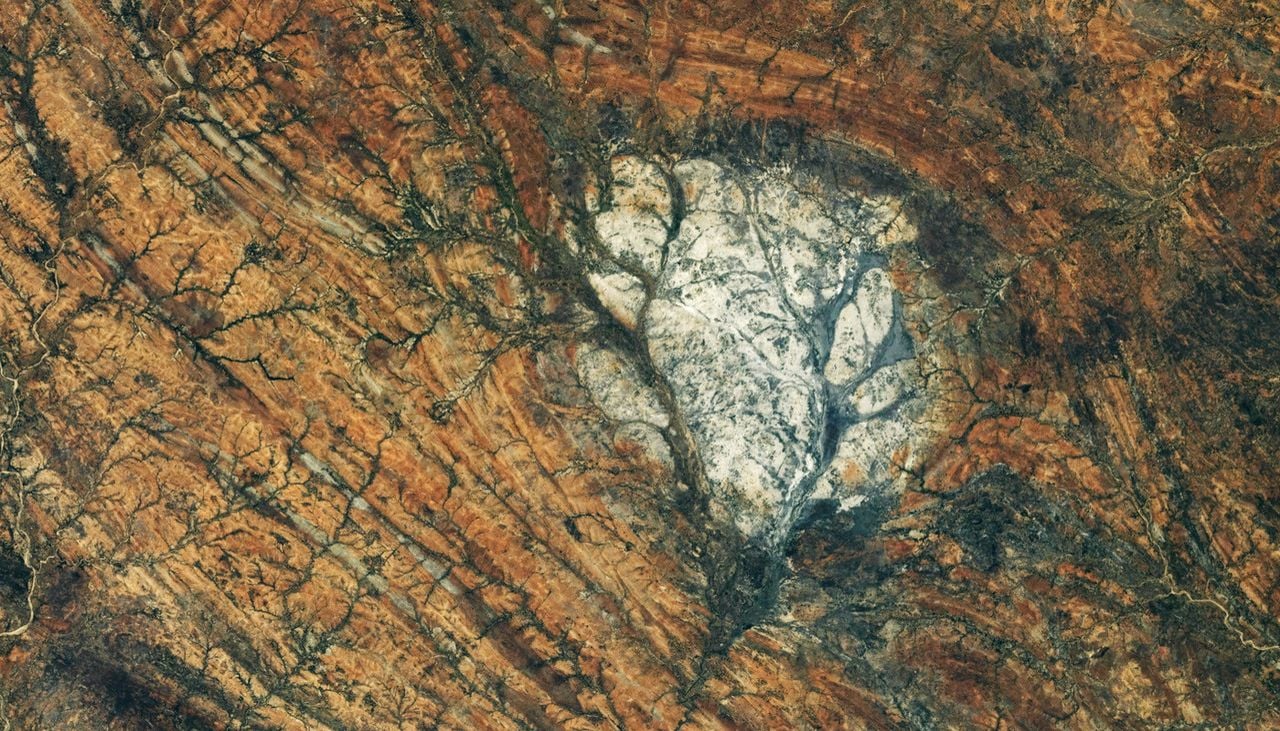
An astronaut aboard the International Space Station photographed a white rock formation in southern Madagascar on August 28, 2026, capturing a geological anomaly that mirrors the lunar surface, Meteored reported.
The Saririaky Massif Stands Out
Published by NASA’s Earth Observatory under the title Moon-Like Madagascar, the image reveals the Saririaky massif standing out as a bright patch against rusty brown arid terrain. The stark coloration stems from anorthosite, a plutonic igneous rock identical to the material found in the bright highlands of the Moon.
Tectonic Forces Shaped the Saririaky Massif
Geological studies place the formation of the Saririaky massif at least 600 million years ago. Anorthosite develops when molten rock cools and solidifies beneath the Earth’s crust over slow periods, allowing large mineral crystals to form.
At Saririaky, this rock sits exposed at the surface inside a ductile shear zone. Extreme pressures and temperatures within this geological zone deform rock without fracturing it, causing strata to stretch and bend rather than break. Long, nearly parallel depressions across the site trace the intense tectonic forces associated with the assembly of Gondwana, the ancient supercontinent that once unified parts of Africa, India, Madagascar, Australia, and Antarctica.

Roughly 60 kilometers north of Saririaky lies a secondary anorthosite deposit. Scientists indicate that tectonic stretching likely fragmented a single original rock body into separate segments through a process known as boudinage.
Terrestrial Research Links to Lunar Evolution
Earth-bound deposits of anorthosite serve as practical analogues for studying lunar geology. Lunar highlands composed of the same rock date back more than four billion years, originating from a primordial magma ocean that once covered the young Moon and floated specific minerals to the surface during cooling.
While Apollo mission samples provided direct lunar material for laboratory analysis, researchers rely on terrestrial deposits such as Saririaky and the Beartooth Mountains in Montana to expand their geological datasets.