
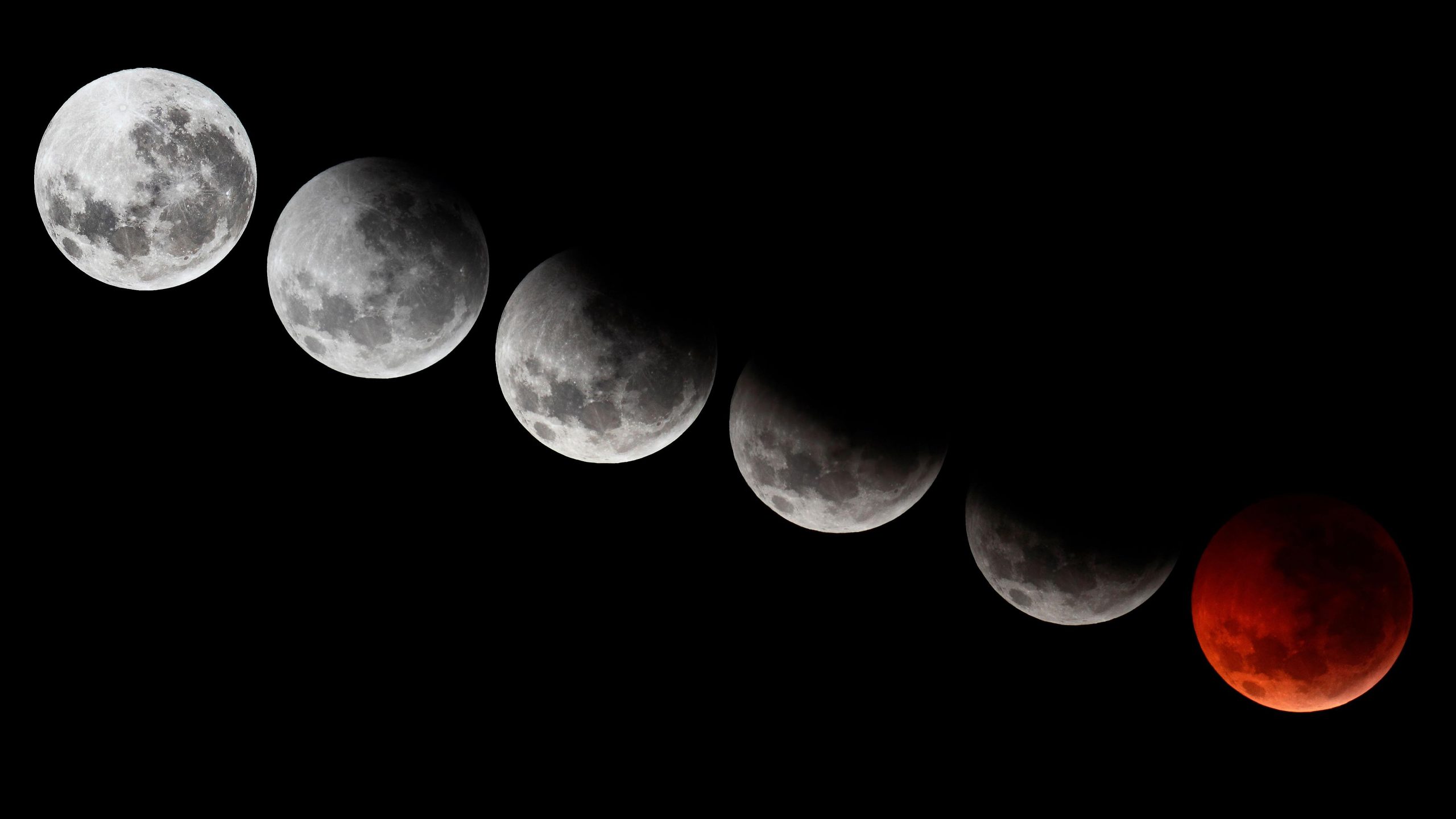
India will experience a total lunar eclipse on March 3, 2026, offering a celestial spectacle after the country largely missed observing the recent “ring of fire” solar eclipse. While parts of India witnessed a partial solar eclipse on February 17, 2026, the full annular phase was not visible from the country.
The lunar eclipse on March 3rd will be a total eclipse, meaning the Moon will pass completely into the Earth’s umbral shadow. According to timeanddate.com, the penumbral phase – the beginning of the eclipse where the Moon enters the Earth’s outer shadow – will begin at 5:58 PM Indian Standard Time (IST). Totality, the period when the Moon is fully immersed in the Earth’s umbra, will commence at 5:58 PM IST and complete at 5:32 PM IST. The entire penumbral phase will conclude at 7:53 PM IST.
Visibility of the eclipse will vary across India. The Andaman and Nicobar Islands and Arunachal Pradesh are expected to have the best viewing conditions, experiencing the total phase of the eclipse. States including Assam and Bihar will see a partial eclipse, while Delhi, Goa, Gujarat, and Haryana, among others, will only observe the penumbral phase. A detailed state-by-state breakdown of eclipse timings is available from timeanddate.com.
Lunar eclipses occur when the Earth passes between the Sun and Moon, casting a shadow on the lunar surface. Unlike solar eclipses, which require special eye protection, lunar eclipses are safe to view with the naked eye. The March 3rd eclipse is anticipated to be a “blood moon,” as the Moon often takes on a reddish hue during totality due to the scattering of sunlight through the Earth’s atmosphere.
The upcoming lunar eclipse follows a solar eclipse that occurred earlier in February, though visibility was limited in India. According to the Times of India, eclipses are considered inauspicious events in Hindu tradition, linked to the influence of Rahu and Ketu, shadow planets believed to obscure the Sun, and Moon. During the sutak period, a time considered unfavorable, puja rituals are typically avoided.
Astrologers note that eclipses can bring significant changes in life, impacting emotions, energy levels, and planetary influences on zodiac signs. Scientifically, a solar eclipse happens when the Moon obstructs the Sun, while a lunar eclipse occurs when the Earth obstructs the Moon. The next solar eclipse is scheduled for September 21, 2031, according to Drikpanchang.
