
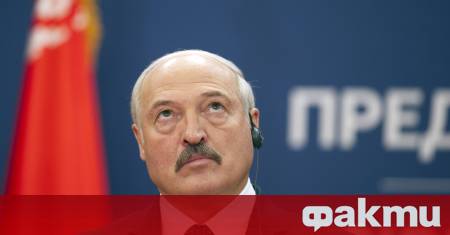
Alexander Lukashenko is now at the center of a structural shift involving leadership succession and Belarus’s security‑economic alignment with Russia. The immediate implication is a recalibration of Minsk’s domestic legitimacy calculus and a deepening of its external defense dependence.
The Strategic Context
Since the 1994 consolidation of power, Belarus has operated under a highly personalized authoritarian system. The 2020 mass protests and subsequent Western sanctions exposed the regime’s vulnerability to popular dissent and external pressure. Concurrently, Belarus’s strategic geography-bordering NATO’s eastern flank and serving as a logistical corridor for Russian forces-has entrenched its security reliance on Moscow. In a broader multipolar surroundings, Russia seeks to cement a buffer zone, while the West attempts to limit Moscow’s influence through sanctions and diplomatic isolation. These structural forces make any leadership transition a focal point for both internal stability and external power balancing.
Core Analysis: Incentives & Constraints
source Signals: Lukashenko publicly acknowledges that he cannot remain president indefinitely, critiques Belarusians who experimented with Western democratic models, highlights the recent deployment of the Russian oreshnik missile system, discusses procurement of Russian aircraft, and notes a U.S. proposal to lift sanctions on Belavia.
WTN Interpretation: The admission signals a pre‑emptive attempt to manage succession on his terms, reducing the risk of a power vacuum that could trigger unrest or a Kremlin‑driven takeover. By emphasizing the missile complex and aircraft purchases, Lukashenko reinforces the narrative that Belarus’s security and connectivity depend on Russian support, thereby deterring domestic opposition and signaling to Moscow a willingness to deepen integration. The reference to U.S.sanctions relief on Belavia serves as a diplomatic lever: showcasing openness to Western engagement while still framing Russia as the primary security guarantor. Constraints include a fragile domestic legitimacy after 2020 protests, heavy reliance on Russian economic aid amid sanctions, and limited institutional mechanisms for orderly succession.
WTN strategic Insight
“When an autocrat signals an unavoidable exit, the regime’s default safety net is a tighter security pact with its dominant patron, turning succession risk into a catalyst for deeper geopolitical entanglement.”
Future Outlook: Scenario Paths & Key Indicators
Baseline Path: Lukashenko orchestrates a managed transition-potentially installing a loyal successor or a collective leadership-while continuing to expand Russian military assets (e.g., additional missile systems, air transport). Economic ties with Russia deepen, and limited diplomatic overtures to the West (such as the belavia sanction relief) are used to extract concessions without altering the core alignment.
Risk Path: Domestic dissent resurfaces around the succession question, leading to protests or elite factionalism. A contested transition could prompt Moscow to intervene more directly, either by installing a pro‑Moscow caretaker or by increasing military presence, thereby reducing Belarusian agency and raising regional security tensions.
- Indicator 1: Schedule and outcomes of the next All‑Belarusian National Assembly session or any constitutional amendment discussions related to presidential succession (within 3‑6 months).
- Indicator 2: Official Russian defense procurement announcements concerning additional systems for Belarus (e.g., further missile deployments or aircraft deliveries) in the same timeframe.
- Indicator 3: Updates from the United States or European Union on sanctions policy toward Belavia or other Belarusian entities, indicating the level of Western engagement.
- Indicator 4: Reports of organized public demonstrations or opposition activity linked to succession narratives, tracked by security services or independent monitors.
