Loving Sports in an Age of Authoritarians: The 2026 World Cup and Political Reality
The 2026 World Cup concluded with Spain defeating Argentina in the final match, leaving millions worldwide grappling with the tension between a profound love for athletic competition and the stark political and environmental realities of modern mega-events, according to Real News Network Editor-in-Chief Maximillian Alvarez. Speaking alongside sportswriters Dave Zirin and Jules Boykoff at a live event hosted at Chilo’s Bar in Brooklyn, New York, on July 16, 2026, journalists and critics examined what it means to remain passionate about sports during an era defined by authoritarian politics, climate catastrophes, and unchecked corporate greed within organizations like FIFA.
The Environmental Cost and Elite Access in Modern Sports
The 2026 tournament stands out as the most polluting men’s or women’s World Cup in history, driven by an expansion to 48 teams hosted across three nations—the United States, Canada, and Mexico—according to data analyzed by Jules Boykoff in his book Red Card: The 2026 World Cup, Sportswashing, and the FIFA Greed Machine. Because the United States lacks a robust high-speed passenger rail grid connecting major metropolitan hubs, travelers and teams must rely heavily on aviation. Low-end carbon emission estimates project roughly nine million tons of carbon dioxide equivalent generated by the tournament.
“This is the most polluting World Cup in the history of men’s or women’s World Cups,” Boykoff stated during the Brooklyn panel, criticizing FIFA leadership’s heavy reliance on private air travel. Dave Zirin expanded on the ecological disconnect, noting that sports organizations project an illusion of pristine outdoor vitality while real-world climate impacts—such as toxic wildfire smoke from Ontario that forced public events indoors—threaten the very viability of outdoor athletics.
This commercialized expansion directly fuels an elitist model where athletic participation is increasingly restricted. According to Zirin, 60 percent of children who play youth sports quit by age 12 due to systemic pressures declaring them insufficiently skilled, turning most youth into passive consumers rather than active participants.
Political Appropriation and the Reality of Sportswashing
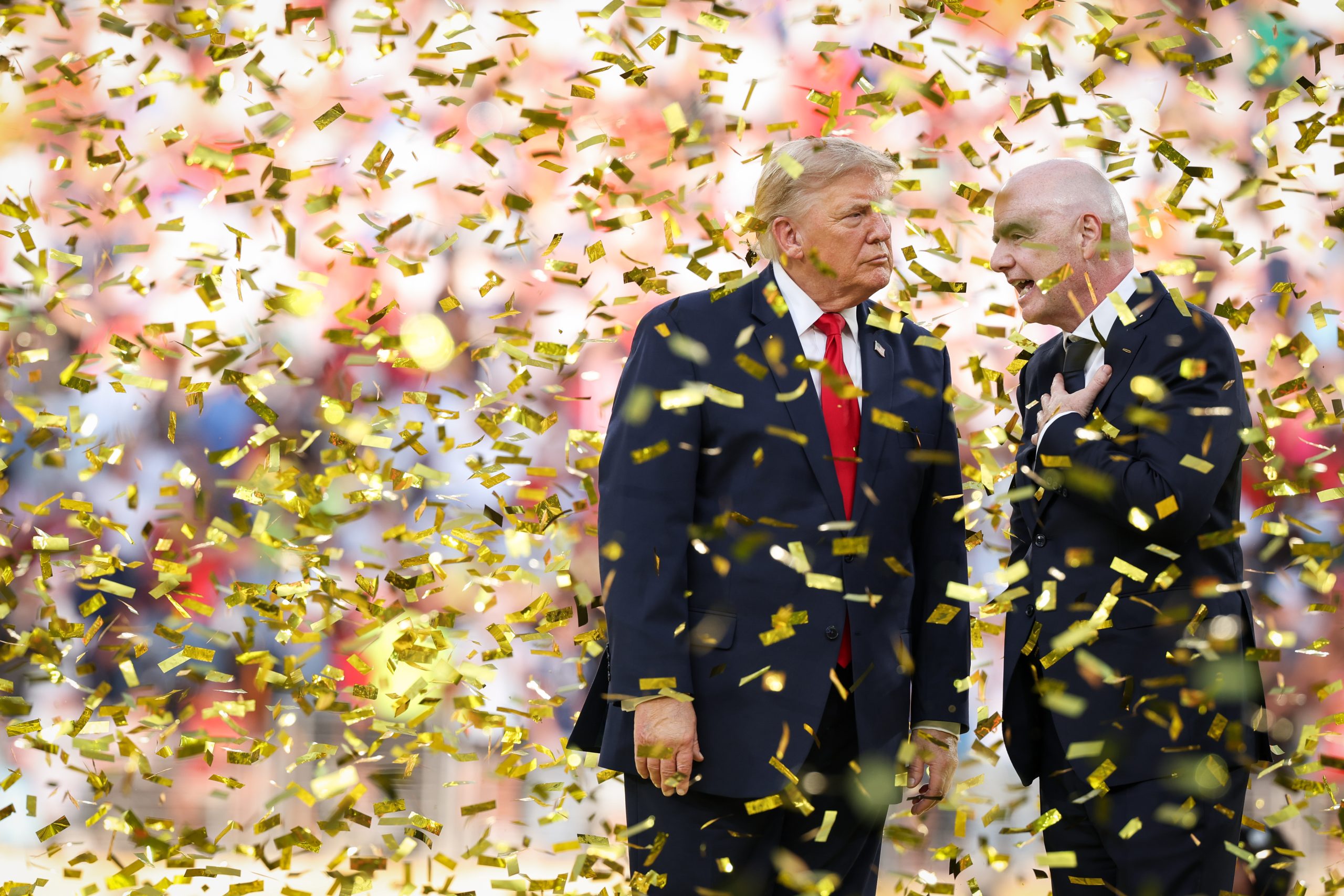
Authoritarian figures and nationalist administrations frequently exploit high-profile athletic spectacles to deflect from domestic crises and consolidate political legitimacy, a practice defined as sportswashing. Boykoff noted that Donald Trump stands out as a U.S. president who has leveraged sports for political advantage more aggressively than any modern predecessor. From executive interventions in tournament discipline to high-visibility appearances alongside national teams, political actors utilize the cultural equity of sports to manufacture popular support.
For communities seeking to reclaim civic spaces from corporate and political co-optation, engaging with local advocacy groups and transparent civic organizations remains essential.
International state actors engage in identical deflection tactics. Boykoff highlighted that sportswashing operates effectively on domestic political bases even when international audiences reject the maneuvers, citing targeted immigration restrictions on sports officials and nationalist rhetoric surrounding national squads. When government agencies utilize athletic victories for nationalist messaging, communities and independent journalists must interrogate the underlying power structures.
Grassroots Alternatives and Public Goods
Despite corporate commodification, sports retain profound human value at the community level, providing spaces for connection, shared vulnerability, and social cohesion. Reflecting on his own athletic history and community organizing, Alvarez emphasized that sports often facilitate deep human connections across ideological divides when stripped of hyper-commercialized posturing.
As cities evaluate stadium renovation subsidies and public financing requests, taxpayers can demand structural equity.
Ultimately, loving sports in a disenchanted political landscape requires holding onto the communal joy of play while actively resisting the authoritarian and corporate forces seeking to monetize it. As Zirin observed regarding the resilience of fandom and community spirit, the cultural spaces we cherish belong to the public long before they are rented by billionaires—and defending those spaces remains an essential part of a just society.