LOGIX Automation Revolutionizes Drilling & Geosteering with Closed-Loop Rig Control and AI-Powered Cementing
Halliburton’s LOGIX Expansion: Operationalizing Closed-Loop Rig Control
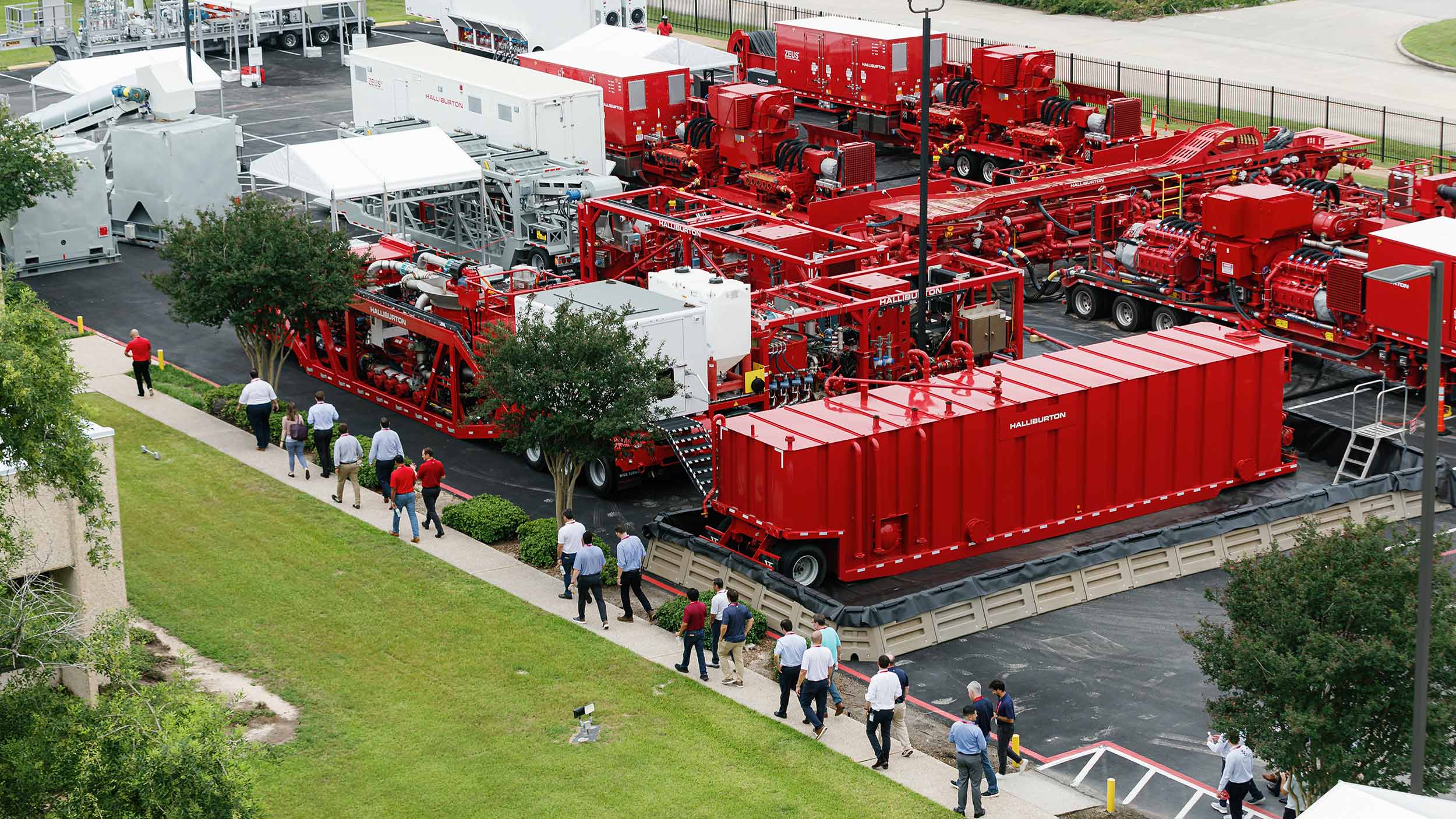
The energy sector’s pivot toward autonomous infrastructure is no longer theoretical. At the 2026 Technology Showcase, Halliburton demonstrated the latest iteration of its LOGIX platform, shifting the focus from mere telemetry to full-stack, closed-loop rig control. By integrating drilling and geosteering automation with automated cementing workflows, the system attempts to solve the perennial industry challenge of high-latency decision-making in deep-well operations. For the infrastructure architect, the shift here is clear: moving from human-in-the-loop monitoring to algorithmic execution requires a robust, low-latency stack that can handle massive throughput without triggering a cascading failure in the field.

The Tech TL. DR:
- Closed-Loop Autonomy: Halliburton’s LOGIX now handles real-time geosteering and drilling adjustments, reducing the dependency on surface-level manual input.
- Workflow Integration: The platform synchronizes drilling parameters with automated cementing, aiming to tighten the gap between well construction phases.
- Enterprise Deployment: The platform is designed for high-concurrency environments, necessitating strict adherence to edge-computing protocols and low-latency network telemetry.
The Architectural Shift: From Telemetry to Execution
In traditional oilfield operations, the bottleneck has always been the “human latency” inherent in interpreting downhole data. Halliburton’s approach with LOGIX seeks to minimize this by pushing the control logic closer to the edge. By automating the feedback loop for geosteering, the system reduces the time-to-action for trajectory corrections, effectively treating the drill bit as a node in a high-speed control network. This requires a level of containerization and orchestration that mirrors modern data center management rather than traditional industrial control systems (ICS).

However, the transition to automated cementing and drilling control introduces significant cybersecurity risks. In an environment where every millisecond of telemetry is critical, the integrity of the data stream is paramount. For firms managing these deployments, the mandate is clear: ensure that the cybersecurity auditors and penetration testers are not just checking for standard network vulnerabilities, but are specifically auditing the integrity of the PLC (Programmable Logic Controller) communications and the API endpoints that facilitate the LOGIX automation.
Implementation: The API-First Control Paradigm
To understand the control flow, one must look at how the LOGIX platform interacts with rig-side sensors. Developers working with such systems must ensure that API calls are throttled and that payloads are validated against a strict schema to prevent buffer overflows or logic errors that could lead to mechanical failure. Below is a conceptual representation of how an automated command structure might interact with a rig control API:
# Conceptual API request for drilling parameter adjustment curl -X POST https://api.logix-platform.internal/v1/rig/control/adjust -H "Content-Type: application/json" -H "Authorization: Bearer [SECURE_TOKEN]" -d '{ "node_id": "rig_42_alpha", "parameter": "weight_on_bit", "value": 25.5, "timestamp": "2026-06-03T02:45:00Z" }' Framework C: The Competitive Landscape
When evaluating the LOGIX stack against alternatives, we look at how the platform handles the abstraction of hardware-level controls. Unlike legacy proprietary systems that rely on monolithic codebases, the industry is trending toward modular, interoperable stacks.

| Feature | LOGIX Platform | Legacy Proprietary Systems | Open-Source Industrial Middleware |
|---|---|---|---|
| Control Loop Latency | Low (Edge-Optimized) | High (Manual-Dependent) | Variable (Depends on Dev) |
| Integration Depth | End-to-End (Cementing/Drilling) | Siloed | Modular |
| Security Compliance | Enterprise-Grade (SOC 2) | Obscurity-Based | Community-Audited |
The integration of automated cementing into the drilling lifecycle is a non-trivial engineering feat. It implies a shared database of well-bore conditions that must be updated in real-time. Organizations seeking to implement similar high-availability industrial architectures should consult with managed service providers who specialize in low-latency industrial IoT (IIoT) to ensure that their underlying network topology can support the burst traffic generated by these automated systems.
The Editorial Kicker
The move toward full-stack automation in energy extraction is inevitable, yet it remains a high-stakes environment where the cost of a software bug is measured in millions of dollars of downtime or, worse, safety incidents. As Halliburton continues to scale the LOGIX platform, the industry must resist the urge to treat these tools as “black boxes.” The future of energy is software-defined, but it must be built with the rigor of a mission-critical aerospace project. For CTOs and systems engineers, the focus for the remainder of 2026 should be on the hardening of these automated pipelines. If your current infrastructure cannot survive a network partition during an automated cementing process, it is not ready for production.
Disclaimer: The technical analyses and security protocols detailed in this article are for informational purposes only. Always consult with certified IT and cybersecurity professionals before altering enterprise networks or handling sensitive data.