
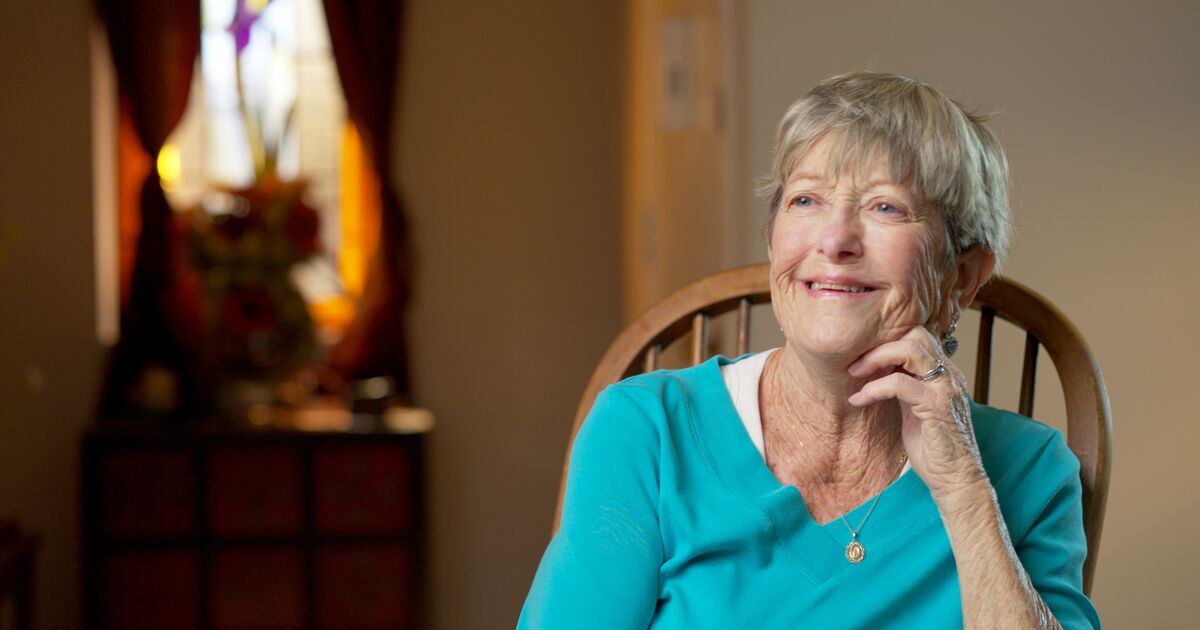
Mary Snooks, 81, is among the first patients at Loma Linda University Medical Center (LLUMC)-Murrieta to receive the newly approved EVOQUE tricuspid valve replacement, a procedure she credits with restoring her vitality.
Snooks’s journey began 13 years ago when she experienced her first heart episode during a morning walk, describing a pressure in her neck and shoulder that prompted an immediate trip to the emergency department. She was diagnosed with coronary artery disease and received stents in 2013. Despite maintaining an active lifestyle that included walking, water aerobics, and cardio workouts, Snooks’s family history of heart disease – seven of her eight siblings have faced cardiac issues – made her particularly vulnerable.
In the years following the stent procedure, Snooks managed arrhythmias and atrial fibrillation with ongoing care. However, about a year ago, her symptoms resurfaced, leading to a diagnosis of right-sided heart failure caused by a leaky tricuspid valve. According to Dr. Parkeh Niraj, medical director of the Heart Vascular Center and the Structural Heart Program at LLUMC–Murrieta, right-sided heart failure occurs when the tricuspid valve allows blood to flow backward, resulting in symptoms like abdominal bloating and leg swelling.
Dr. Niraj recommended the EVOQUE Tricuspid Valve Replacement, a novel treatment offered at LLUMC-Murrieta as one of only 20 hospitals nationwide to commercially launch the device. The EVOQUE valve is a self-expanding replacement delivered through a catheter, a less invasive alternative to open-heart surgery. During the procedure, the new valve is positioned inside the existing tricuspid valve via a catheter inserted through the femoral vein, effectively stopping the backward flow of blood.
“By treating her valve with this type of valve replacement, we would treat her heart failure and better control her arrhythmia,” Dr. Niraj explained.
Snooks expressed confidence in her care team and excitement about being among the first to benefit from the new program. She received a booklet detailing the procedure, which she found helpful in understanding the process. “The book explained it really well,” she said. “It was amazing to learn how something so small can go into your heart and maintain it pumping well.”
Snooks’s procedure took place shortly after the program’s launch, and she reported feeling “particularly good right away,” experiencing only minor shakes and chills afterward.
Since the surgery, Snooks says she feels revitalized. “I keep myself going — I’m never home,” she said, remaining active and caring for her husband of 63 years, who has dementia. Dr. Niraj has observed a noticeable change in Snooks’s demeanor. “I see a smile on her face. I see her going out with a spunk, enjoying time with her family and friends. What we have is what it is all about — being at the forefront of new technologies we can offer to patients in Murrieta and the surrounding communities, like Mary.”
Snooks urges others to take their symptoms seriously, recalling the loss of her son at age 55, who delayed seeking treatment for a heart attack. “He didn’t take the time, and now he’s not here,” she said. “If you ignore it…you’re not going to be here.” She hopes her experience will encourage others to prioritize their health and seek early evaluation for any concerning symptoms.
