
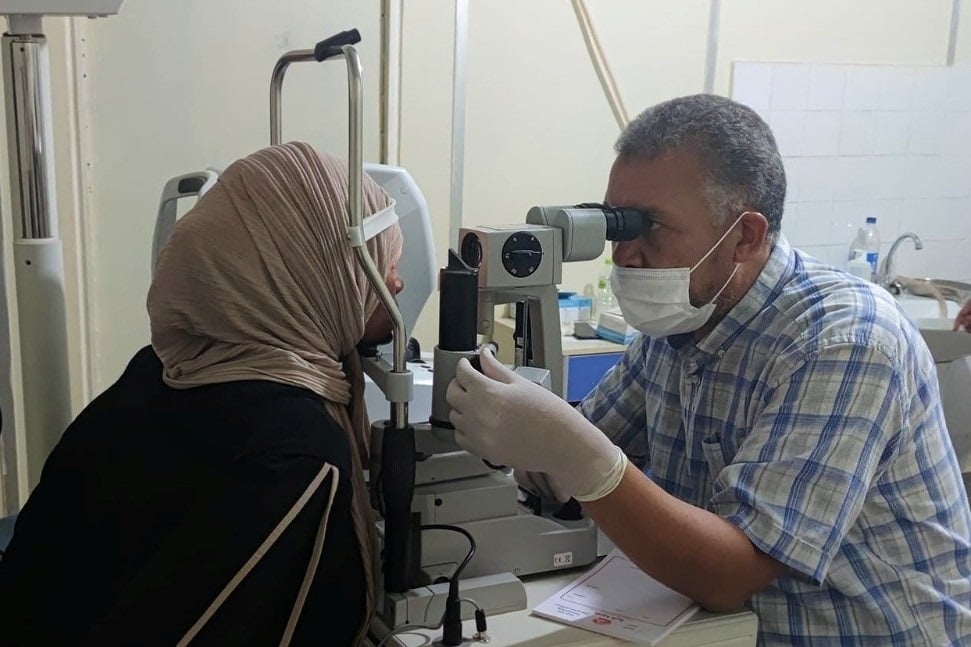
Tripoli, Libya – The World Health Organization (WHO) today validated Libya’s elimination of trachoma as a public health problem, marking a significant milestone for the Eastern Mediterranean Region and offering long-term protection against a preventable cause of blindness. The achievement, sustained through dedicated effort, demonstrates progress is possible in overcoming neglected tropical diseases even amidst persistent challenges, according to the WHO.
“This achievement highlights Libya’s determination to protect the health of its population and reinforces our conviction that progress can be made in the fight against neglected tropical diseases anywhere,” said Dr. Tedros Adhanom Ghebreyesus, WHO Director-General. “The elimination of trachoma as a public health problem is an encouraging example for the Eastern Mediterranean Region and for all areas of the country.”
With this validation, Libya becomes the twenty-eighth country globally and the eighth in its region, to eliminate the disease. The success confirms that evidence-based programs, coupled with coordinated technical support, can overcome neglected tropical diseases, even in areas affected by complex humanitarian crises and population movements.
Dr. Hanan Balkhy, WHO Regional Director for the Eastern Mediterranean, stated, “With this achievement, Libya joins the growing number of countries in our region that have eliminated trachoma. This result demonstrates not only the country’s perseverance during times of great difficulty, but similarly the strength of regional coordination.”
The presence of trachoma in Libya has been documented for over a century, with studies during the last century revealing a high prevalence of the active, inflammatory form of the disease, particularly in the south. Initial control efforts by the Ministry of Health in the 1970s and 1980s, alongside subsequent strengthening of the health system, led to a substantial reduction in transmission.
In 2017, the Ministry of Health prioritized trachoma elimination within its National Blindness Prevention Program. Supported by the WHO, Sightsavers, the International Trachoma Initiative, and Tropical Data, modern studies were conducted in six southern districts in 2022 where the disease was suspected to persist. Results showed that the prevalence of both active trachoma and trichiasis – a condition associated with trachoma – fell below WHO elimination thresholds, except for trichiasis in the Wadi Al Hayaa and Ghat districts. A targeted surgical campaign was subsequently organized in these areas, and by 2025, prevalence had fallen below the WHO’s elimination threshold.
The achievement is particularly notable given Libya’s prolonged period of political instability and humanitarian difficulties, which have impacted health services, caused population displacement, and increased demand for basic services like water, sanitation, and hygiene. Despite these obstacles, the national trachoma elimination program successfully incorporated disease surveillance, expanded access to surgical care, provided training to ophthalmology personnel, and fostered coordinated collaboration with national and international entities.
“This validation is a source of pride for my country and highlights the commitment of our health personnel and our population,” said Dr. Mohamed Al-Ghoj, the acting Minister of Health. “Even in times of difficulty, we have maintained our determination to improve ophthalmological services and to leave no one behind. We have achieved this thanks to the professionalism and dedication of our medical and nursing staff, as well as field workers who went to every district to prevent future cases of blindness.”
The WHO office in Libya has provided sustained technical and operational support for the prevention, detection, and control of diseases, and for ensuring the highest possible level of health and well-being in the country. “The elimination of trachoma in Libya demonstrates that collaboration between the teams of the ministries of health and the WHO yields results,” said Dr. Ahmed Zouiten, WHO Representative in the country. “This is a collective public health achievement, based on science, national mobilization, and international solidarity.”
Trachoma is caused by the bacterium Chlamydia trachomatis and spreads through contact with infected eye and nasal secretions, via hands, clothing, or flies. Repeated infections can cause scarring of the eyelid, leading to trichiasis, where eyelashes grow inward and rub against the eyeball, causing pain and potentially leading to corneal damage, and blindness. Globally, trachoma remains endemic in numerous vulnerable areas with limited access to water and sanitation.
The WHO launched the Global Trachoma Elimination Alliance in 1996, fostering a network of governments, non-governmental organizations, and academic institutions. The WHO continues to support countries where the disease remains endemic, aiming to achieve global elimination as a public health problem. Libya’s success brings the total number of countries worldwide that have eliminated at least one neglected tropical disease to 59, with ten from the Eastern Mediterranean Region.
