LGBTQ+ Adults Face Greater Barriers to Health Care Access and Affordability
LGBTQ+ adults face stark disparities in health care access and affordability compared to their non-LGBTQ+ peers. The findings reveal that systemic financial hurdles and insurance barriers disproportionately prevent queer and transgender individuals from securing timely medical interventions, maintaining medication regimens, and addressing routine health maintenance.
- LGBTQ+ adults skip or delay necessary medical care at a rate of 58%, compared to 38% for non-LGBTQ+ populations.
- Transgender adults experience the highest vulnerability, with 82% reporting unmet medical needs over a 12-month period.
- Insured LGBTQ+ adults report insurance delays or denials at a more widespread rate than their non-LGBTQ+ counterparts.
Amplified Financial Strain and Delayed Interventions
The financial burden of modern medicine falls heavily on sexual and gender minority groups. Three in ten LGBTQ+ adults report problems paying medical bills over a one-year span. This fiscal friction forces one in five individuals to cut back on fundamental household necessities such as food and clothing to cover health care costs. These economic barriers actively shape clinical outcomes, driving higher rates of untreated chronic illness and worsening health parameters.
The data demonstrates that younger demographics, low-income earners, and uninsured individuals face the steepest obstacles. Three-quarters of uninsured LGBTQ+ adults and two-thirds of those under the age of 30 report failing to obtain needed health care due to prohibitive expenses, provider shortages, or appointment unavailability. When patients postpone essential diagnostic evaluations, conditions that warrant early intervention can progress toward advanced morbidity.
Demographic Disparities Among Transgender and LGBQ+ Populations
While transgender adults constitute a minor fraction of the broader LGBTQ+ population, they encounter the most pronounced systemic barriers. The data indicates that 82% of trans adults experienced unmet health care needs in the past 12 months. When evaluating specific clinical markers, trans adults report higher rates of provider scarcity (53%), cost-driven prescription non-compliance (39%), and negative health consequences stemming from postponed care (45%).
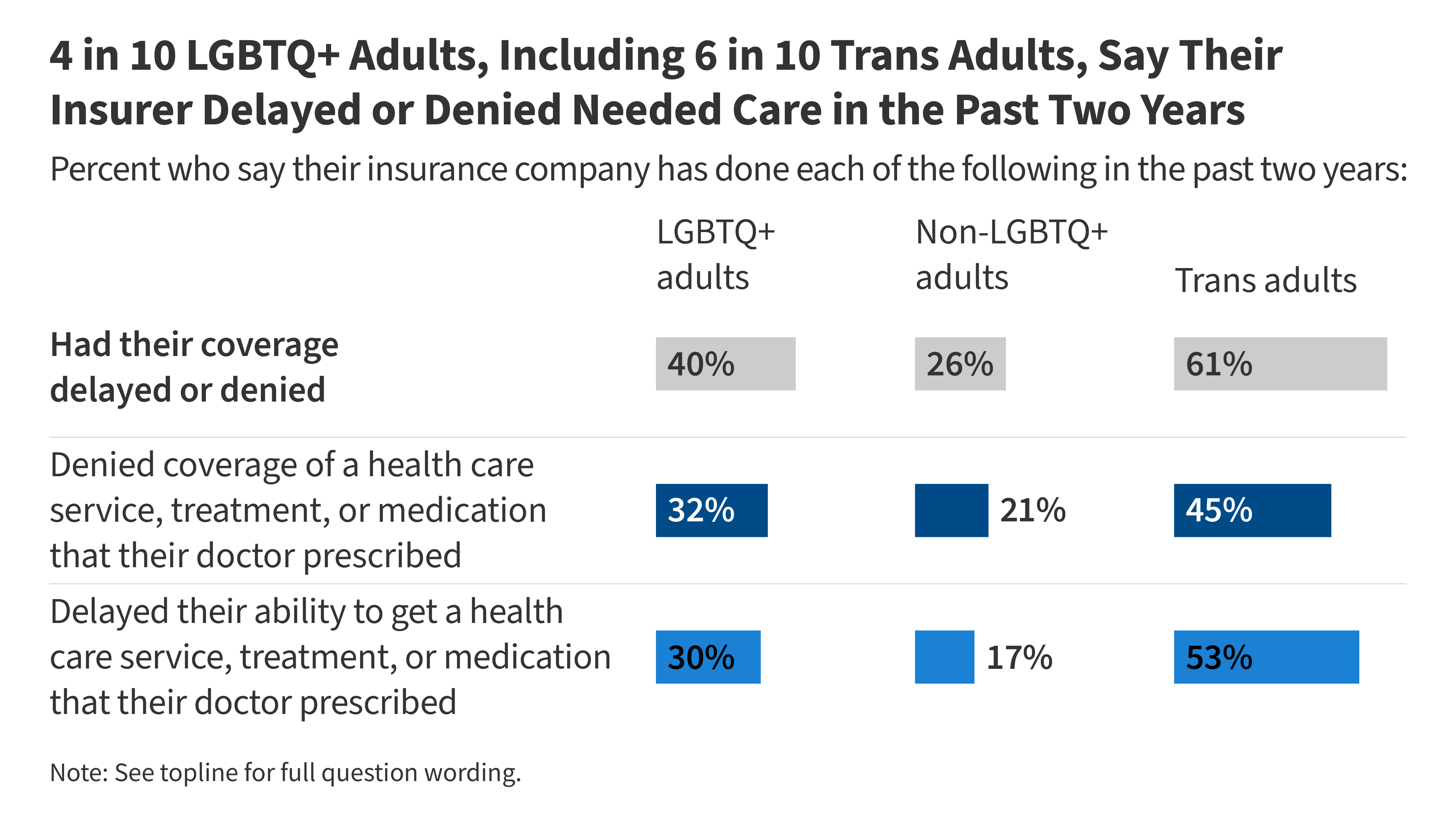
Insurance friction compounds these vulnerabilities. Approximately 61% of trans adults report facing insurance delays or coverage denials for recommended treatments. These obstacles persist even when researchers control for confounding demographic variables such as age, income, and baseline insurance status. Meanwhile, comparative analysis between LGBQ+ subgroups shows that women report skipping or delaying care at higher rates than men (63% versus 46%).
For patients navigating complex care pathways or managing chronic conditions amid administrative friction, securing specialized clinical guidance is paramount.
The Limits of Insurance Coverage
Holding health insurance does not guarantee timely access to medical services for this patient population. Approximately three in ten insured LGBTQ+ adults report that their insurance provider delayed or denied coverage for recommended clinical care over a two-year period. These administrative bottlenecks are particularly pronounced among individuals enrolled in Medicaid or Affordable Care Act marketplace coverage.
Administrative barriers restrict patients from adhering to established standards of care, interrupting the continuous pathogenesis management required for optimal wellness. Ensuring that patients can successfully navigate payer protocols requires coordinated advocacy and administrative support.
Addressing these systemic gaps requires health systems to evaluate their intake processes, affordability structures, and provider cultural competency. Public health initiatives must prioritize targeted interventions for high-risk demographics, including young adults and transgender patients, to close the widening gap in health care equity.
*Disclaimer: The information provided in this article is for educational and scientific communication purposes only and does not constitute medical advice. Always consult with a qualified healthcare provider regarding any medical condition, diagnosis, or treatment plan.*