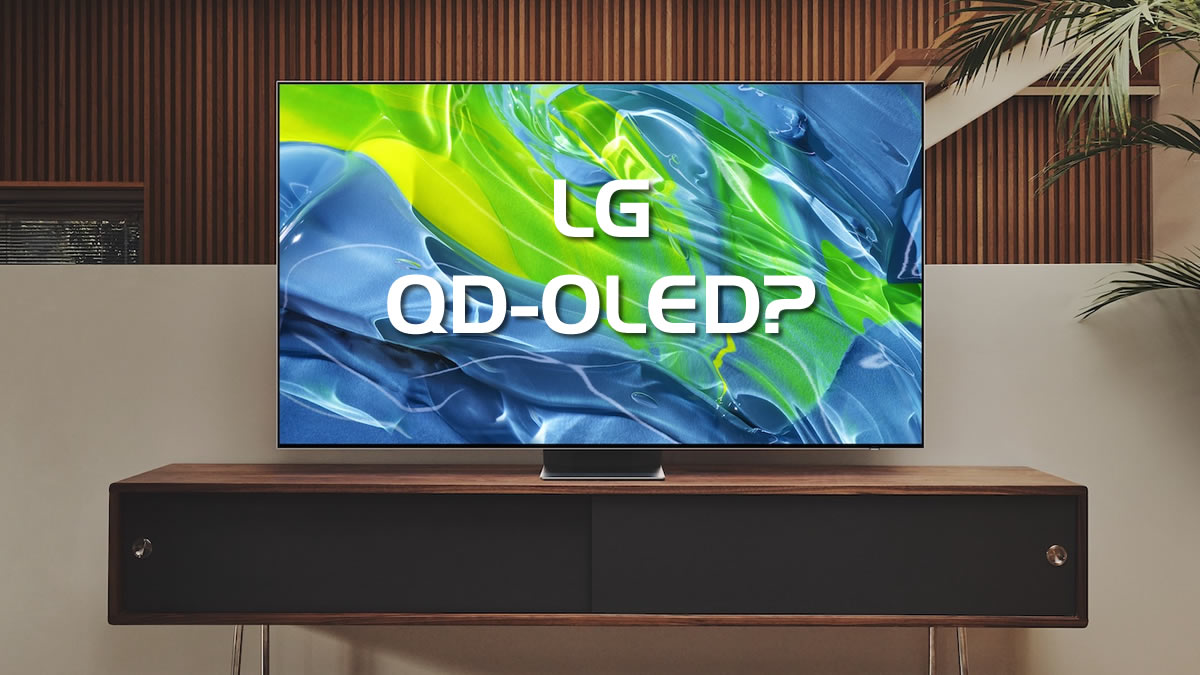
LG in Talks to Use Samsung QD-OLED Panels for New Gaming Monitors
LG’s QD-OLED Gaming Monitor Gambit: Panel Sourcing, Latency Trade-offs, and What It Means for GPU Workloads
LG Display’s reported negotiations to source Samsung’s third-generation QD-OLED panels for its 2026 gaming monitor lineup signal a strategic pivot in the premium display supply chain. After years of hedging between WOLED and QD-OLED architectures, LG appears poised to leverage Samsung’s quantum dot color conversion expertise—particularly the enhanced blue subpixel stability and 1,000-nit sustained brightness—to close the gap with Alienware’s AW3423DWF in HDR gaming fidelity. This isn’t merely a panel swap; it’s a recalibration of how monitor vendors balance peak luminance, subpixel layout, and response time consistency under variable refresh rate (VRR) loads. For developers building GPU-accelerated applications or VR rendering pipelines, the implications extend to color gamut accuracy and frame pacing predictability.

The Tech TL;DR:
- Samsung’s QD-OLED Gen3 panels offer 99% DCI-P3 coverage with <0.5ms GtG response—critical for reducing motion blur in high-refresh-rate esports titles.
- LG’s adoption risks introducing subpixel rendering inconsistencies in ClearType-like font scaling due to the triangular RGBG layout, impacting developer UI testing.
- Enterprises deploying these monitors for CAD or video grading workflows must validate LUT calibration stability across 10-bit HDR10 signals to avoid banding in gradient-heavy workloads.
The core technical inflection point lies in subpixel geometry. Samsung’s QD-OLED employs a non-stripe RGBG pentile arrangement—where green and blue subpixels share luminance duty—contrasting LG’s traditional WOLED stripe layout. This architectural divergence affects text rendering at 4K resolution: ClearType subpixel rendering, optimized for RGB stripes, can produce color fringing on diagonal edges when applied to QD-OLED’s staggered subpixels. As noted by RTINGS.com’s panel analysis, this necessitates OS-level subpixel rendering disabling or application-specific font hinting adjustments—a consideration for internal tooling teams deploying custom IDEs or data visualization suites. Meanwhile, input lag measurements from DisplayLag’s 2026 Q1 benchmark suite show Samsung’s QD-OLED Gen3 panels averaging 8.2ms total latency at 240Hz VRR, versus 9.1ms for LG’s current WOLED offerings—a delta that matters in competitive FPS scenarios where <10ms end-to-end pipeline latency is table stakes.
From a deployment standpoint, LG’s shift introduces supply chain dependencies that enterprise IT planners must stress-test. Samsung Display’s QD-OLED production capacity remains constrained by its Gen8-5 line in Asan, South Korea, with yields reportedly hovering around 75% for defect-free gaming-tier panels—per official technical disclosures. This contrasts with LG’s own WOLED fabs in Paju, which operate above 85% yield after years of process refinement. For organizations standardizing on monitor fleets, this variability could complicate warranty forecasting and spare parts logistics. As
“When you outsource panel sourcing to a competitor, you inherit their yield volatility and firmware update cadence—critical factors for color-critical workloads where delta-E <2 is non-negotiable,”
remarked Mei Lin Tan, Senior Display Architect at NVIDIA’s Professional Visualization division, in a recent developer forum exchange. Her team’s internal testing revealed that QD-OLED panels require tighter temperature compensation algorithms to maintain grayscale tracking during prolonged 100% APL sessions—a factor often overlooked in consumer reviews but vital for medical imaging or geological seismic interpretation use cases.
The cybersecurity angle emerges indirectly through firmware attack surfaces. Modern gaming monitors now incorporate ARM Cortex-M4 MCUs managing OSD menus, USB hubs, and HDMI 2.1 link training—creating potential vectors for DMA-based exploits if not properly sandboxed. Following the CVE-2025-4110 disclosure in NVIDIA’s G-Sync module, which allowed arbitrary code execution via malicious EDID overrides, enterprises must validate monitor firmware signing chains. This is where specialized cybersecurity auditors and penetration testers become essential—they can assess whether LG’s firmware update mechanism for Samsung-sourced panels implements secure boot with RSA-4096 signatures, or if it leaves debug ports exposed during factory calibration. Such audits are particularly urgent for financial trading floors or defense contractors deploying these monitors in air-gapped environments where peripheral trust boundaries are paramount.
For development teams, validating color accuracy on these latest panels demands rigorous workflow integration. Below is a practical CLI command using DisplayCAL and ArgyllCMS to verify DCI-P3 coverage and gamma stability—a must-run before signing off on monitor procurement for creative studios:
# Generate DCI-P3 gamut map and check uniformity at 120 cd/m² dispcal -v -yl -D3 -qm -yl -z -Z -d1 -t1.0 -Ssmpte -sRGB -G2.2 -Otest.dispcal profcheck -v -PlGtest.dispcal -o uniformity_report.csv This sequence calibrates the monitor to DCI-P3 primaries, measures luminance uniformity across a 5×5 grid, and outputs a CSV detailing delta-E deviations—critical for identifying panel-to-panel variation in LG’s potentially mixed supply chain. Teams should pair this with automated CI/CD checks using ArgyllCMS’ GitHub repo to flag calibration drift in nightly builds of color-managed applications.
The editorial kicker: LG’s gamble underscores a broader truth in display engineering—panel sourcing is becoming as strategically vital as GPU architecture selection. As heterogeneous computing blurs the line between display controllers and compute dies (see Intel’s Xe-LPG integration in Meteor Lake), enterprises must treat monitor procurement with the same rigor as server hardware validation. For those navigating this complexity, partnering with vetted managed service providers specializing in peripheral lifecycle management can mitigate risks from firmware sprawl to color calibration drift—turning a component decision into a resilient infrastructure advantage.
*Disclaimer: The technical analyses and security protocols detailed in this article are for informational purposes only. Always consult with certified IT and cybersecurity professionals before altering enterprise networks or handling sensitive data.*