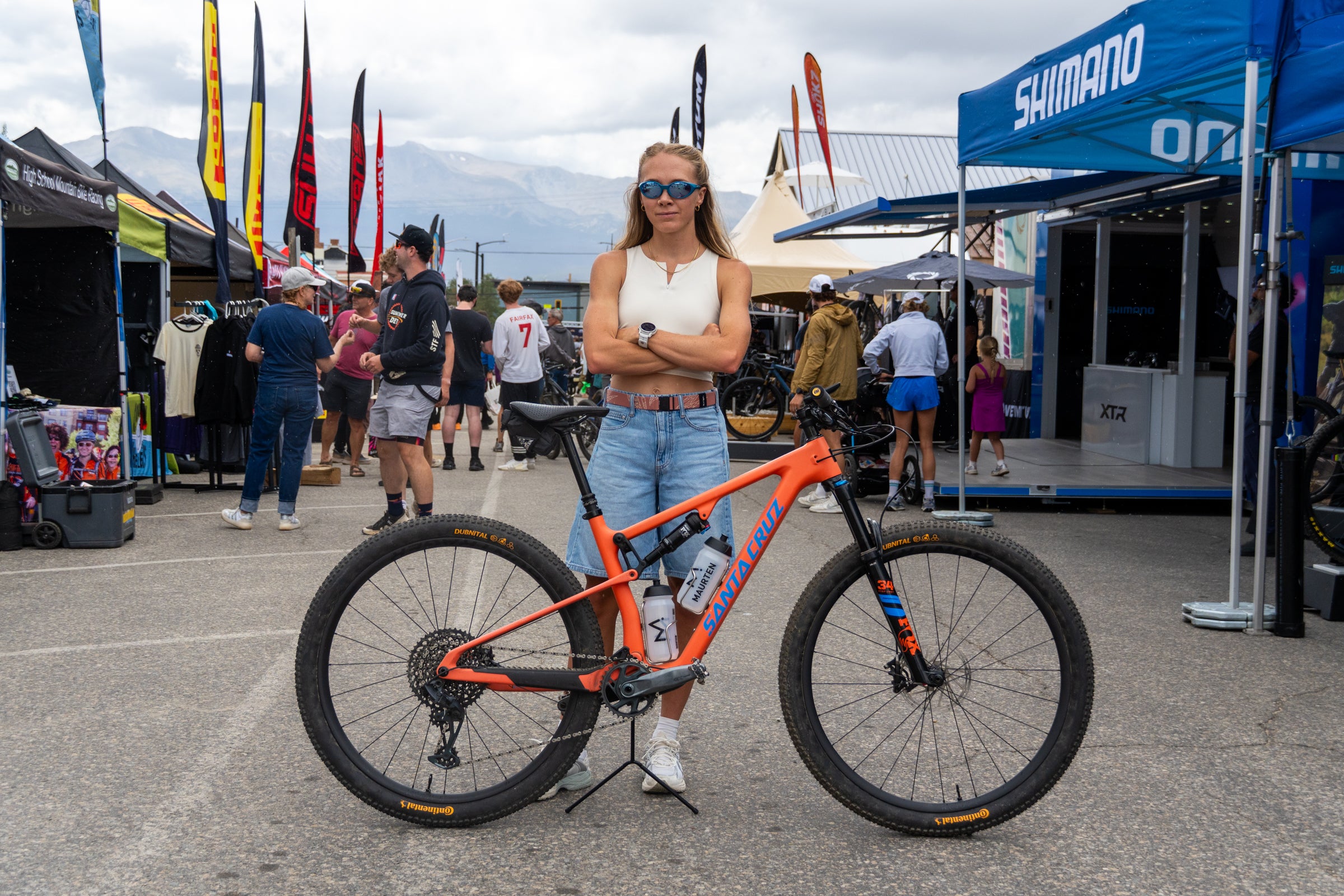
Leadville 100 Pro Bikes: 32-Inch Wheels vs. Lightweight Hardtails
Professional cyclists at the Leadville Trail 100 are splitting their equipment strategies between ultra-light 20-pound hardtails and experimental 32-inch wheel setups to optimize for the race’s extreme altitude and terrain. According to Velo, athletes are abandoning standard cross-country norms in favor of radically different gear configurations to gain a competitive edge in the “Race Across the Sky.”
The central conflict in bike selection for this event involves a trade-off between rotational mass and rollover efficiency. While traditional lightweight hardtails minimize the energy required for steep climbs, the emergence of 32-inch wheels suggests a shift toward stability and momentum.
The Engineering Logic of 32-Inch Wheels
The 32-inch wheel category is transitioning from a novelty to a competitive design frontier. According to cyclingabout.com, these oversized wheels provide increased stability, better rollover capabilities over obstacles, and improved cornering traction. This shift is being driven by both major manufacturers and custom builders who view the size as a viable option for XC, trail, and gravel applications.
Technical implementation requires complete frame redesigns rather than simple modifications. Simon Metzner of Actofive developed the I-Train 32″ MTB specifically for DT Swiss to test 32-inch wheels. As reported by cyclingabout.com, the I-Train features a CNC-machined main frame and seatstays designed to accommodate the larger diameter, utilizing a 65° head angle and 465 mm chainstays for necessary clearance. To maintain a standard rider position, the bike requires a custom-machined stem with a pronounced negative rise to offset the increased front-end height.
The mechanical complexity of these rigs extends to the suspension. DT Swiss developed a dropout adapter for their telescopic forks to extend length, adjust offset, and reposition the disc brake caliper to fit the 32-inch wheel.
Diverse Pro Configurations and Prototype Testing
The pursuit of efficiency at Leadville has led to a variety of “mullet” and hybrid configurations. Cyclingabout.com highlights the Alutech E-Enduro 32″ Super Mullet, a prototype utilizing a 32-inch front wheel paired with either a 27.5-inch or 29-inch rear wheel. This setup aims to balance the rollover benefits of the larger front wheel with the agility of a smaller rear wheel. To prevent the bottom bracket and front end from becoming excessively high, Alutech utilized a machined-down stem and flat bars.
The application of 32-inch wheels is also expanding beyond pure mountain biking. Australian custom builder Baum Cycles has tested a prototype of the DBM (Drop Bar Mountain) gravel model featuring 32-inch wheels and a Cannondale Lefty fork. This indicates that the “big wheel” trend is migrating into the gravel sector to smooth out rougher terrain.
Current hardware iterations are focusing on tire specialization. The Alutech prototype showcases the first 32-inch Maxxis Dissector tire, which features a more aggressive tread pattern than the Maxxis Aspen XC tire. This suggests that manufacturers are developing specific rubber compounds and tread depths to match the unique centrifugal forces and contact patches of the larger wheel diameter.
Tactical Impact and Market Availability
The adoption of 32-inch wheels represents a gamble on momentum over raw weight. In the context of the Leadville 100, where athletes face grueling climbs and technical descents, the decision to run a 20-pound hardtail focuses on power-to-weight ratios and minimizing the effort required to overcome gravity. Conversely, the 32-inch approach prioritizes the ability to maintain speed through undulating sections and over rocky debris.
Market accessibility for these technologies remains limited. The Actofive I-Train 32 is currently available as a frame only for €6,990. Production timelines for other models remain tentative; cyclingabout.com notes that Alutech’s production version of the Super Mullet is tentatively set for summer 2026, citing component availability as the primary bottleneck.
Future Trajectory of Off-Road Geometry
The current experimentation at Leadville suggests that the industry is moving toward a more modular approach to wheel size. The ability to swap between 29-inch and 32-inch configurations—as seen in the Actofive’s modular chainstay tabs—indicates that “one size fits all” is being replaced by course-specific optimization.

Whether the 32-inch wheel becomes the new standard or remains a niche tool for specific terrains depends on the results of these World Cup-tested prototypes. For the amateur athlete looking to emulate these pro setups, the transition requires more than just new wheels; it demands a complete reassessment of bike geometry and fit.
Disclaimer: The insights provided in this article are for informational and entertainment purposes only and do not constitute medical advice or sports betting recommendations.