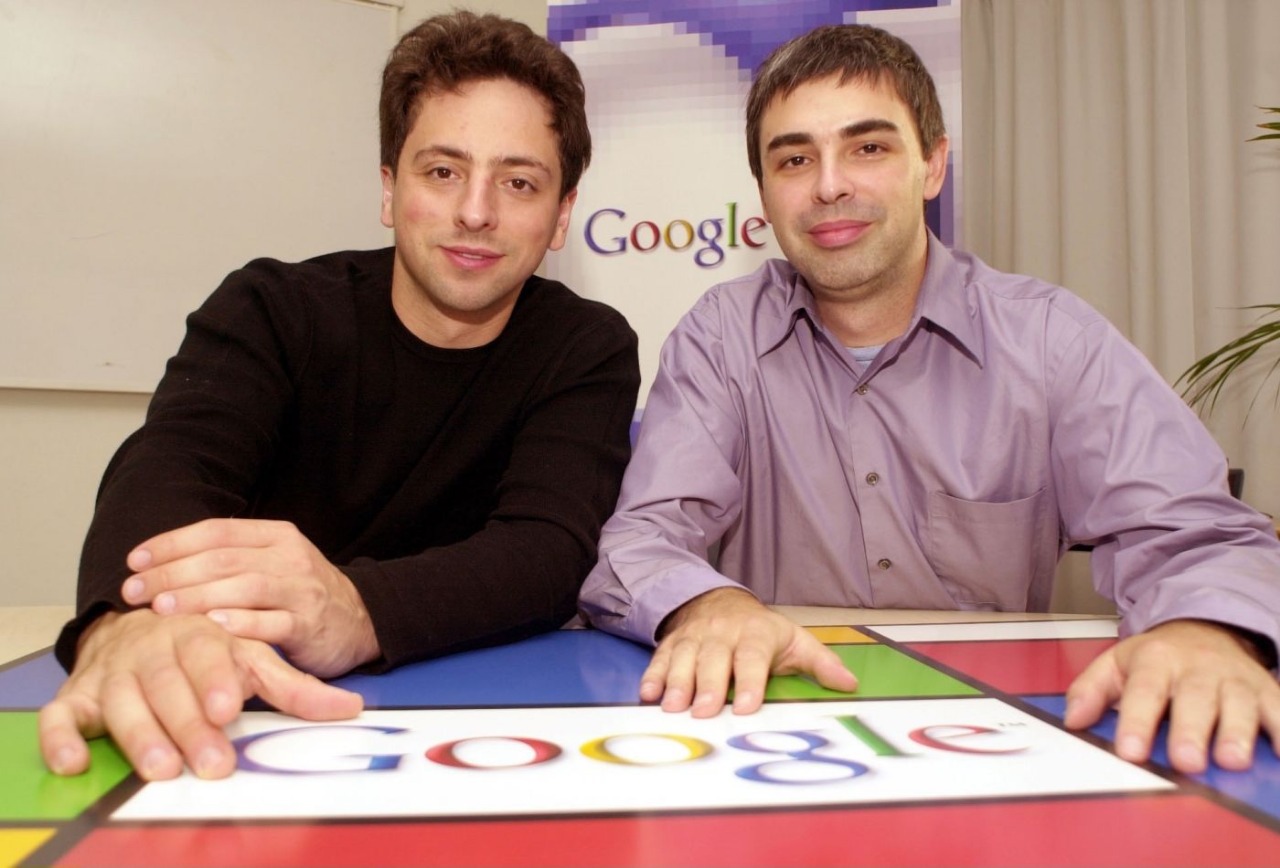
Larry Page and Sergey Brin: The Founders of Google and PageRank
Larry Page, Sergey Brin, and the PageRank Algorithm That Defined Modern Search
At a time when early internet search engines relied primarily on primitive keyword-frequency matching, the co-founders designed an architecture that treated the web like an academic citation network to evaluate link authority.
The Tech TL;DR:
- Core Innovation: Larry Page and Sergey Brin developed the PageRank algorithm in 1998, ranking web pages based on incoming link authority rather than mere keyword density.
- Architectural Shift: Moving away from spam-vulnerable keyword counts, the system crowdsourced objective web quality by analyzing interconnected citation paths.
- Economic Scale: The foundational infrastructure evolved into a commercial powerhouse, transforming global digital economics and enterprise search paradigms.
Engineering Around the Chaos of Early Web Discovery
During the late 1990s, early web directories and search tools like Yahoo and AltaVista struggled with systemic latency and result manipulation. Because these legacy systems essentially counted how many times a specific keyword appeared on a web page, bad actors easily gamed search rankings through keyword stuffing. Page and Brin identified this structural vulnerability while studying at Stanford University.
Initially deployed under the working title “BackRub,” the indexing engine required a complete rethinking of distributed data processing.
# Conceptual snippet representing basic link-weight calculation
def calculate_pagerank(links, damping_factor=0.85, iterations=100):
    n = len(links)
    pr = {node: 1.0 / n for node in links}
    for _ in range(iterations):
        new_pr = {}
        for node in links:
            rank_sum = sum(pr[incoming] / len(links[incoming]) for incoming in links[node])
            new_pr[node] = (1 - damping_factor) / n + damping_factor * rank_sum
        pr = new_pr
    return pr
From Garage Operations to Infrastructure Monoliths
Operating initially out of Susan Wojcicki’s garage in Menlo Park, the startup faced immediate commercial hurdles. Forced to scale independently, they secured a foundational $100,000 check from Sun Microsystems co-founder Andy Bechtolsheim.

The financial turning point arrived in 2000 with the rollout of AdWords (now Google Ads). By replacing intrusive banner ads with contextually relevant, text-based advertising alongside search results, the company established an efficient revenue engine.
Editorial Kicker: The Persistent Legacy of Graph-Based Retrieval
Nearly three decades after its inception in a Stanford dorm room, the core principle of evaluating authority through interconnected nodes remains foundational to digital information retrieval. Whether optimizing traditional search indices or training enterprise retrieval-augmented generation (RAG) pipelines, architects continue to grapple with the same signal-to-noise challenges that Larry Page and Sergey Brin first engineered around in 1998.

*Disclaimer: The technical analyses and security protocols detailed in this article are for informational purposes only. Always consult with certified IT and cybersecurity professionals before altering enterprise networks or handling sensitive data.*