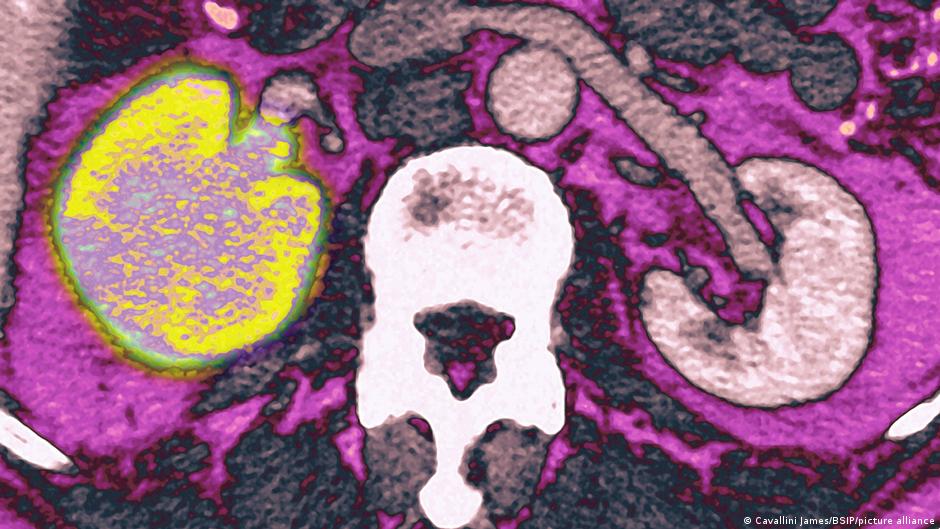
Lancet Oncology: Votrient and Avastin show 63.2-month median survival
A mid-stage clinical trial evaluating the alternating use of two targeted drugs in newly diagnosed advanced kidney cancer patients has yielded a median overall survival rate of 63.2 months, according to research published in The Lancet Oncology. The study, which tested the combination of Novartis’s Votrient and Roche’s Avastin on 51 patients with metastatic clear-cell renal cell carcinoma, contrasts sharply with historical monotherapy outcomes where Votrient alone delivered an overall survival rate between 28.4 and 29.3 months, per data cited in reports from Reuters. The trial protocol was initiated prior to the clinical establishment of immune checkpoint inhibitors as standard-of-care front-line therapy.
- Patients receiving alternating doses of Votrient and Avastin achieved a median overall survival of 63.2 months and a progression-free survival of 24.8 months.
- A subgroup of 33 patients classified with favorable-risk health status at baseline experienced a median overall survival of 76.9 months.
- The trial protocol was initiated prior to the clinical establishment of immune checkpoint inhibitors as standard-of-care front-line therapy.
Trial Evaluates Votrient and Avastin for Renal Cell Carcinoma
The trial enrolled 51 participants, all presenting with clear-cell renal cell carcinoma that had already disseminated throughout the body at the time of initial diagnosis. Conducted before immune checkpoint inhibitors became the preferred therapeutic standard, the study evaluated an alternating administration schedule of Votrient (pazopanib) and Avastin (bevacizumab). Both pharmacological agents inhibit the vascular endothelial growth factor (VEGF) pathway, which stimulates the growth of new blood vessels that supply oxygen and nutrients to tumors. Votrient loses its suppressive effect on the VEGF factor over time, whereas Avastin actively binds and clears the factor from the circulatory system, as outlined by the study investigators. Participants received Novartis’s Votrient and Roche’s Avastin in an alternating rotation.
Combination Therapy Increases Median Overall Survival
Researchers documented a median progression-free survival of 24.8 months among the total cohort of 51 patients, alongside the 63.2-month median overall survival. Within the study, 33 participants evaluated as favorable-risk cases based on baseline health status recorded a median progression-free survival of 28.5 months and a median overall survival of 76.9 months. When Votrient is administered alone as a first-line treatment for patients with previously untreated metastatic clear-cell renal cell carcinoma, the overall survival rate ranges between 28.4 and 29.3 months, while the progression-free survival does not exceed 9.2 months.

Non-Immunotherapy Provides Alternative for Patients with Autoimmune Diseases
The evaluation of this targeted therapy combination highlights distinct clinical and financial trade-offs relative to standard immune checkpoint inhibitors like Merck's Keytruda and Bristol Myers Squibb's Opdivo. Checkpoint inhibitors are strictly contraindicated for patients with pre-existing autoimmune diseases, making non-immunotherapy combinations the primary clinical alternative for these patients. While trial investigators documented side effects including hypertension and elevated liver enzymes, the findings offer an empirical reference point for clinicians designing individualized management plans alongside board-certified oncologists and specialized diagnostic facilities. And this is important given the lower cost of this regimen compared to immunotherapy combinations.
Disclaimer: The information provided in this article is for educational and scientific communication purposes only and does not constitute medical advice. Always consult with a qualified healthcare provider regarding any medical condition, diagnosis, or treatment plan.
